


 Deutsch
 English
 Español
 Français
 Nederlands
 Português


 Share
Share




The AI Energy Paradox: How Data Center Expansion Threatens Climate Goals and Grid Stability
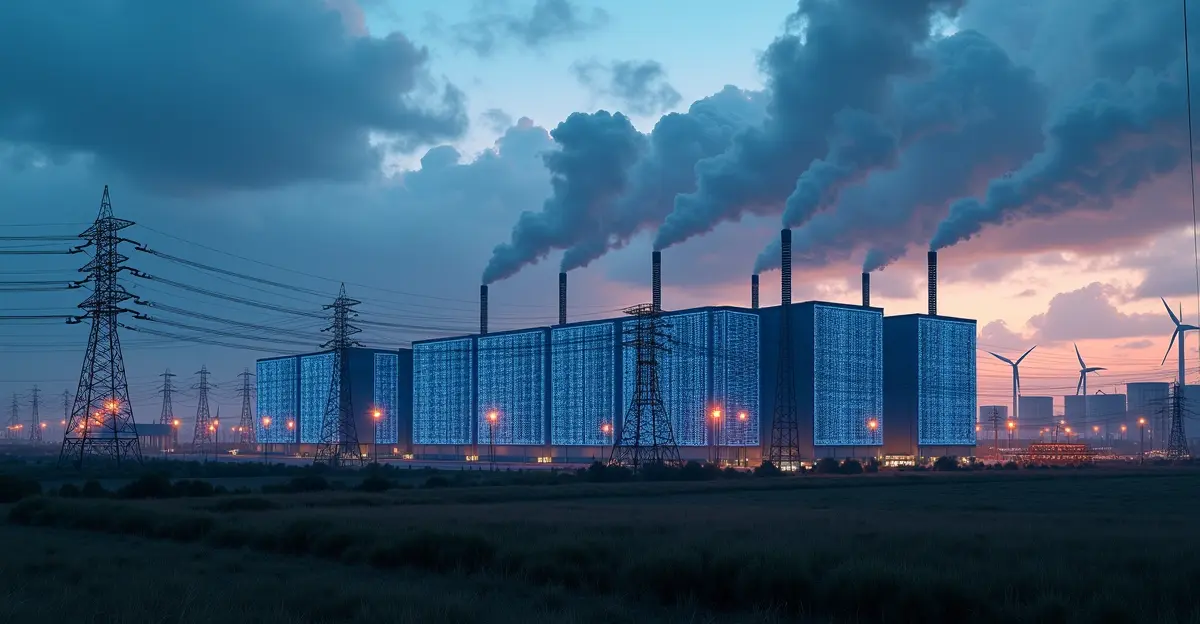
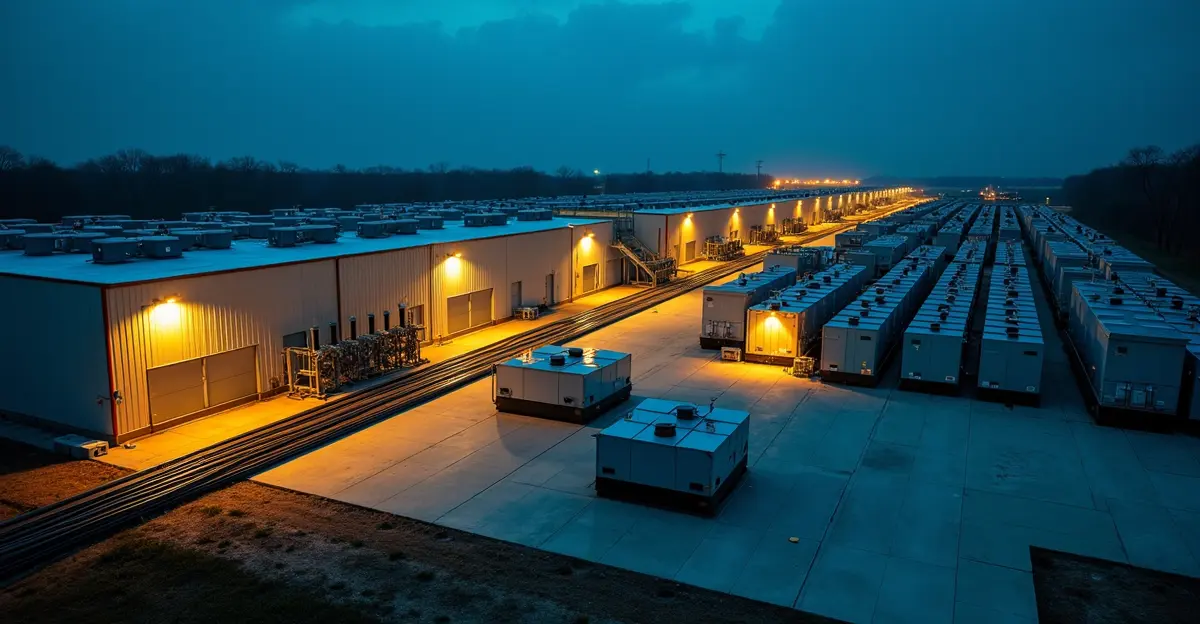
The explosive growth of artificial intelligence is creating an unprecedented energy crisis that threatens to undermine global climate commitments, with new data centers consuming electricity at rates that force utilities to build fossil fuel power plants and potentially reverse decades of emissions reductions. Recent analyses from COP29 and energy sector reports reveal that AI's insatiable power demands are colliding with climate targets just as nations strengthen their commitments to reduce carbon emissions.
What is the AI Energy Paradox?
The AI energy paradox describes the fundamental conflict between artificial intelligence's transformative potential and its massive environmental footprint. While AI promises to optimize energy systems and accelerate climate solutions, the infrastructure required to power AI models—particularly data centers for training and running large language models—consumes electricity at staggering rates. According to research, a single ChatGPT query uses about five times more electricity than a simple web search, while image generation can consume up to 11.49 Wh per image, equivalent to half a smartphone charge.
The Scale of the Problem
Energy consumption by AI data centers is growing exponentially, with estimates suggesting that by 2027, energy costs for AI could reach 85–134 TWh annually—nearly 0.5% of all current global electricity usage. This rapid expansion is occurring precisely when global climate agreements like the Paris Agreement require accelerated emissions reductions. The computation required to train the most advanced AI models doubles every 3.4 months on average, creating an unsustainable trajectory for power consumption.
Fossil Fuel Fallback
Utilities across North America and Europe are responding to AI-driven electricity demand by planning new natural gas power plants, despite climate commitments to phase out fossil fuels. This represents a significant policy reversal, as many regions had been transitioning toward renewable energy sources. The variable renewable energy integration challenges become more pronounced when grid operators must accommodate both intermittent solar and wind power alongside the constant, massive loads from AI data centers.
Geopolitical Dimensions
The AI infrastructure race between major powers—particularly the United States, China, and the European Union—has created a competitive dynamic where energy consumption becomes a strategic advantage. Nations are prioritizing AI development over climate considerations, creating what experts call a "climate versus computation" dilemma. This competition mirrors historical patterns seen during the Cold War arms race, where technological advancement took precedence over environmental concerns.
Regional Impacts
Certain regions face particularly acute challenges. In the United States, data center hubs in Virginia, Texas, and the Pacific Northwest are straining local grids, forcing utilities to delay retirement of coal plants. European nations with ambitious renewable energy targets are finding that AI expansion threatens their ability to meet EU Green Deal commitments. Developing nations, meanwhile, face the dual challenge of building digital infrastructure while addressing climate vulnerabilities.
Technological Solutions and Limitations
Several approaches are being explored to mitigate AI's energy impact:
- More Efficient Hardware: Development of specialized AI chips that consume less power per computation
- Algorithm Optimization: Creating more efficient AI models that achieve similar results with fewer computations
- Renewable Energy Integration: Building data centers near renewable energy sources and developing better energy storage solutions
- Carbon-Aware Computing: Scheduling AI computations for times when renewable energy is most available
However, these solutions face significant challenges. Efficiency gains are often offset by increased usage (the Jevons paradox), while renewable energy integration requires substantial grid upgrades and faces intermittency issues.
Policy Implications
The AI energy paradox presents policymakers with difficult choices. Should governments regulate AI development to protect climate goals? Can carbon pricing mechanisms be extended to include computational carbon footprints? How should international climate agreements address the energy consumption of emerging technologies? These questions are becoming increasingly urgent as AI expansion accelerates.
Expert Perspectives
Energy analysts warn that current trajectories are unsustainable. "We're witnessing a perfect storm where technological ambition collides with physical limits," says Dr. Elena Rodriguez, an energy policy researcher at Stanford University. "The AI industry's growth projections would require electricity infrastructure equivalent to adding several medium-sized countries to the global grid every year."
Climate scientists express particular concern about the timing. "This expansion comes at precisely the wrong moment," notes climate economist Dr. Marcus Chen. "We have less than a decade to dramatically reduce emissions, yet we're building infrastructure that locks in fossil fuel dependence for decades to come."
Future Outlook
The resolution of the AI energy paradox will likely shape both technological development and climate policy for decades. Possible scenarios include:
- Regulatory Intervention: Governments impose energy efficiency standards on AI development
- Technological Breakthrough: Quantum computing or other innovations dramatically reduce energy requirements
- Market-Driven Solutions: Rising energy costs force AI companies to prioritize efficiency
- Climate Compromise: Slower AI development in exchange for maintaining climate commitments
Frequently Asked Questions
How much energy does AI actually consume?
Current estimates suggest AI could consume 85-134 TWh annually by 2027, representing approximately 0.5% of global electricity. Individual queries vary widely, with ChatGPT using about 0.34 Wh per query and image generation consuming up to 11.49 Wh per image.
Why can't renewable energy power all AI data centers?
Renewable energy sources like solar and wind are intermittent, while AI data centers require constant, reliable power. Grids need substantial upgrades to handle both variable renewables and massive, constant loads from data centers.
Are there regulations governing AI energy consumption?
Currently, few specific regulations exist, though some regions are considering carbon accounting for computational activities. The EU's proposed AI Act includes some environmental considerations, but comprehensive regulation remains limited.
Could AI help solve its own energy problem?
Potentially yes—AI is being used to optimize energy grids, improve renewable energy forecasting, and develop more efficient materials. However, these benefits must outweigh the energy costs of running the AI systems themselves.
What can individuals do to reduce AI's energy impact?
Users can be mindful of unnecessary AI queries, choose energy-efficient AI services when available, and support policies that promote sustainable AI development. Companies can prioritize efficiency in their AI implementations.

Follow Discussion