


 Deutsch
 English
 Español
 Français
 Nederlands
 Português


 Share
Share




What is the Pentagon's 'Supply Chain Risk' Designation?
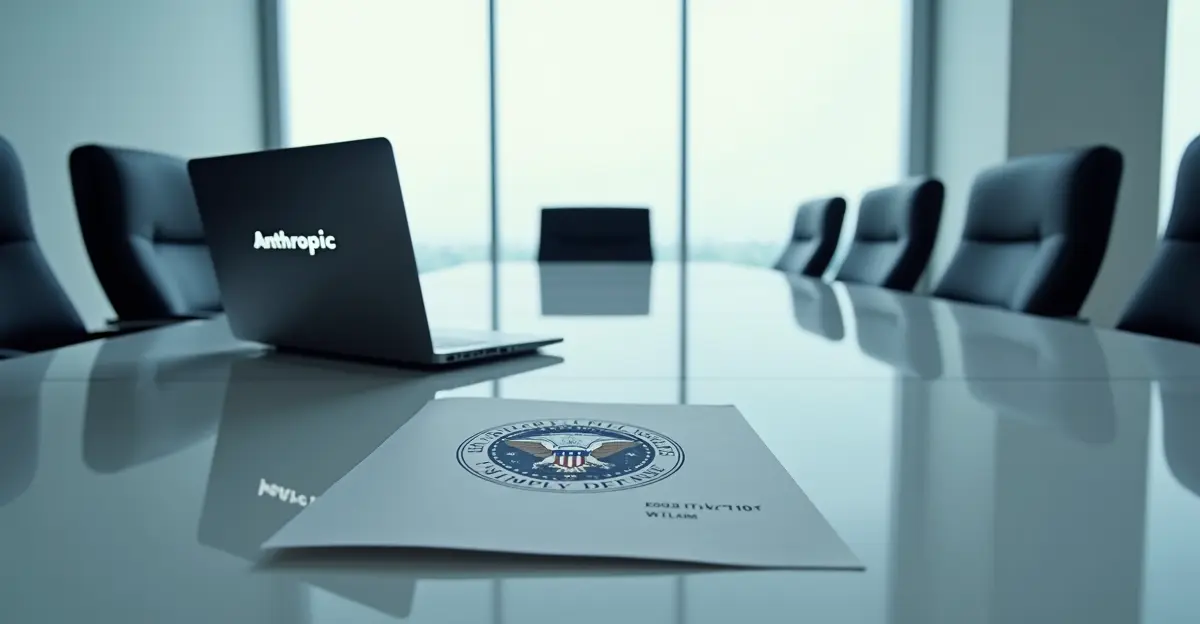
The U.S. Department of Defense has officially designated artificial intelligence company Anthropic as a 'supply chain risk to America's national security,' marking an unprecedented move that places the American AI firm in the same category as foreign adversaries like Huawei and Kaspersky. This designation, announced in early March 2026, comes after weeks of escalating tensions between Anthropic and the Pentagon over ethical restrictions on military use of AI technology.
Background: The $200 Million Deal That Fell Apart
The conflict began when the Pentagon approached Anthropic about a potential $200 million contract to provide AI services to the U.S. military. Anthropic, the developer of the Claude AI assistant, initially seemed poised to secure the megadeal that would have integrated its technology into military operations. However, negotiations broke down when Anthropic insisted on several ethical red lines that the Pentagon could not accept.
Anthropic CEO Dario Amodei refused to allow the company's AI technology to be used for mass surveillance of American citizens or for the development of fully autonomous weapons systems without human oversight. These restrictions proved unacceptable to Pentagon officials, who viewed them as limiting the military's ability to leverage cutting-edge AI capabilities. The breakdown in negotiations led directly to the supply chain risk designation, which defense contractors must now consider when working with Anthropic.
Anthropic's Legal Challenge and CEO's Response
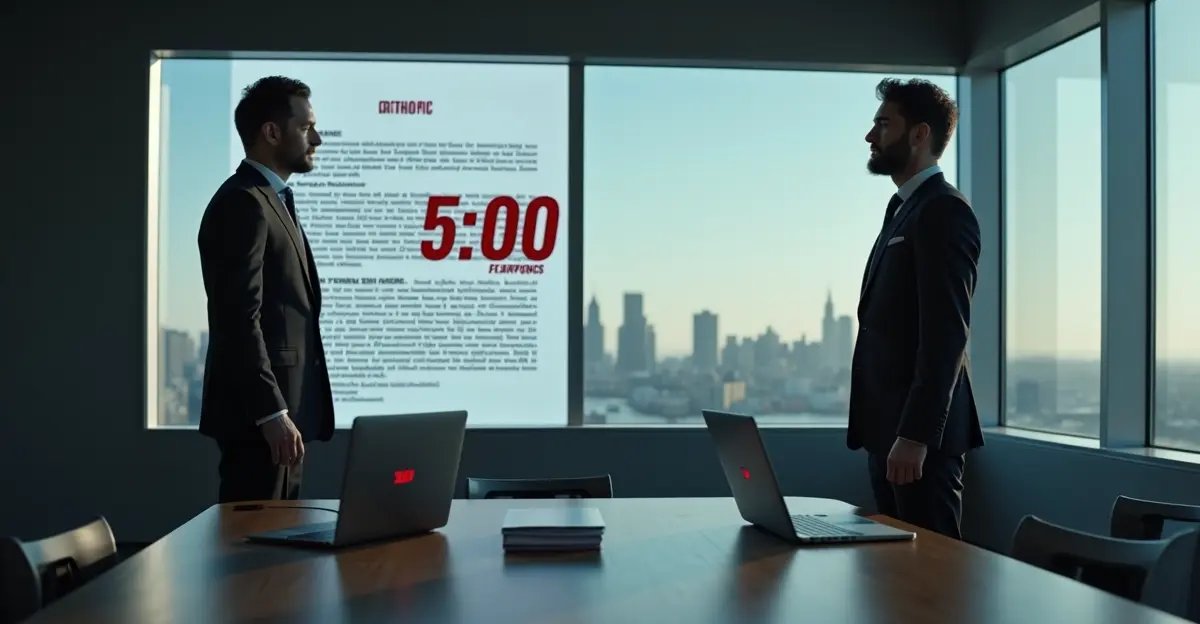
CEO Dario Amodei has announced that Anthropic will challenge the designation in court, calling it legally unsound and punitive rather than protective. 'The label exists to protect the government and not to punish a supplier,' Amodei stated in a recent interview. 'In fact, the law requires the Secretary of War to use the least restrictive means necessary to achieve the goal of protecting the supply chain. And according to us, the means the government is now using is certainly not the least restrictive.'
Amodei has attempted to clarify the designation's scope, explaining that it only applies to direct use of Claude AI in Department of War contracts, not to all commercial activity by companies that happen to have defense contracts. This distinction is crucial for maintaining Anthropic's relationships with major partners like Microsoft, which has confirmed it will continue offering Claude AI to non-defense customers.
Comparison: How This Differs from Other AI Companies
The situation highlights a growing divide in the AI industry regarding military partnerships. While Anthropic has taken a firm ethical stance, competitor OpenAI has forged its own defense department contract that allows military use for 'all lawful purposes' with fewer restrictions. This contrast raises important questions about the ethical boundaries of AI development and corporate responsibility in the defense sector.
Implications for National Security and AI Ethics
The Pentagon's designation has significant implications for both national security and the broader AI industry. By labeling Anthropic a supply chain risk, the Defense Department is effectively pushing defense contractors to avoid the company's technology, potentially disrupting military operations that currently rely on Claude AI through systems like Palantir's Maven Smart System used in the Iran campaign.
From an ethical perspective, the conflict represents a critical moment in the debate over autonomous weapons systems and AI surveillance. Human Rights Watch has warned that the Pentagon's rejection of Anthropic's ethical red lines signals a 'dangerous shift toward fully autonomous weapons systems' that could harm civilians due to their inability to distinguish combatants from non-combatants.
Recent Developments and Ongoing Conversations
Despite the designation and legal threats, recent reports suggest that Anthropic and the Pentagon have resumed conversations about potential cooperation. On Thursday, March 5, 2026, sources revealed that the two parties were again discussing AI services, though it remains unclear whether the original $200 million deal is back on the table.
Amodei has expressed a desire to de-escalate tensions while maintaining the company's ethical principles. 'We have much more in common than we have differences,' he stated regarding the Department of Defense, emphasizing his belief in 'defending America.' However, the fundamental disagreement over AI use in surveillance and autonomous weapons continues to present a major obstacle.
FAQ: Frequently Asked Questions
What does 'supply chain risk' designation mean?
The designation indicates that the Pentagon considers Anthropic's technology potentially vulnerable or problematic within defense supply chains, typically due to national security concerns or technological dependencies that could compromise defense operations.
How does this affect Anthropic's other customers?
According to CEO Dario Amodei, the designation only prohibits using Claude AI directly in Department of War contracts. Companies with defense contracts can still use Anthropic's technology for non-defense purposes, and Microsoft has confirmed it will continue offering Claude to commercial customers.
Why is Anthropic refusing certain military applications?
Anthropic has established ethical red lines against using its AI for mass surveillance of American citizens and fully autonomous weapons systems without human oversight, citing concerns about civil liberties and the dangers of unregulated AI weapons.
What happens if Anthropic loses its legal challenge?
If the designation stands, defense contractors would be required to certify they don't use Anthropic's models in Pentagon contracts, potentially limiting the company's access to government business and influencing other AI companies' approaches to military partnerships.
How does this compare to Google's Project Maven controversy?
While similar in raising ethical questions about military AI use, the 2026 situation involves more powerful generative AI technology and comes at a time when AI capabilities have advanced significantly since Google's 2018 controversy.


Follow Discussion