


 Deutsch
 English
 Español
 Français
 Nederlands
 Português


 Share
Share




What is the Pentagon-Anthropic Ethical AI Conflict?
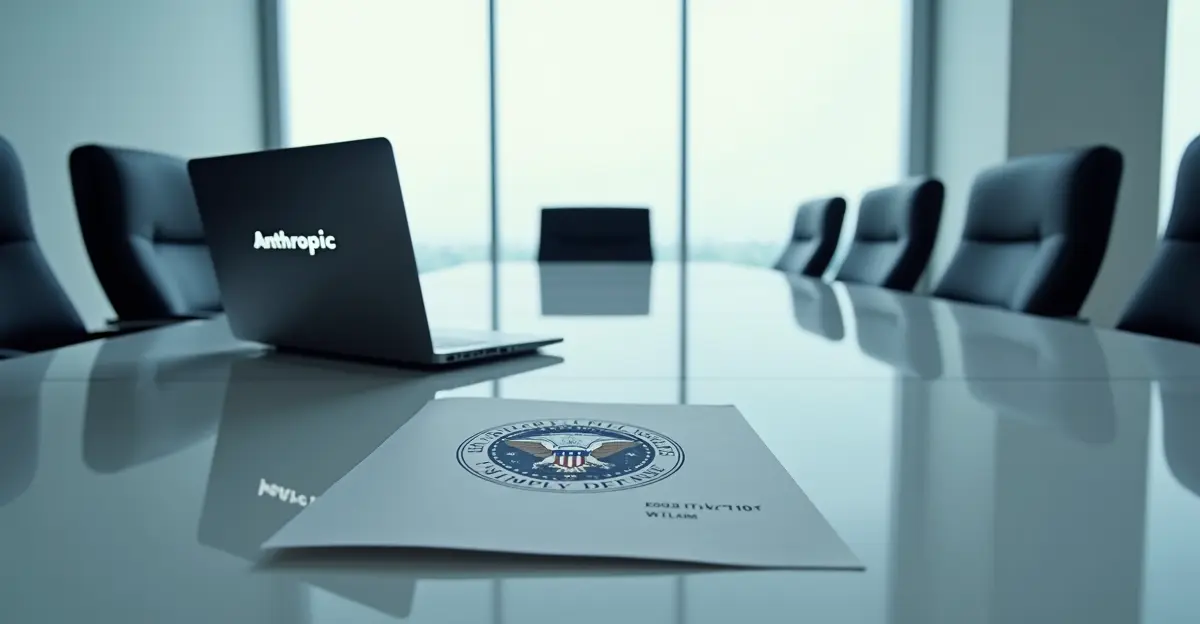
The Pentagon is threatening to sanction AI company Anthropic and sever all ties if the company refuses to abandon its ethical restrictions on military use of artificial intelligence. According to reports from Axios and multiple news sources in February 2026, the U.S. Department of Defense has grown increasingly frustrated with Anthropic's refusal to allow its Claude AI tools to be used for certain military applications, including autonomous weapons development and mass domestic surveillance. This conflict represents a critical showdown between responsible AI development principles and national security priorities that could reshape the entire defense technology landscape.
Background: Anthropic's Ethical Foundations
Anthropic, founded in 2021 by former OpenAI employees Dario and Daniela Amodei, was specifically created with the mission to develop 'safe and responsible AI.' The company operates as a public benefit corporation and has pioneered Constitutional AI training methods where models self-improve based on written ethical principles rather than human feedback alone. As of February 2026, Anthropic has achieved a staggering $380 billion valuation with 2,500 employees and major investments from Amazon ($8 billion), Google ($2 billion), Microsoft, and Nvidia.
CEO Dario Amodei has consistently emphasized the company's commitment to ethical boundaries, particularly regarding autonomous weapons systems and mass surveillance. 'We cannot in good conscience allow our technology to be used for fully autonomous lethal systems or mass domestic surveillance that infringes on civil liberties,' Amodei stated in recent interviews. This principled stance has now put Anthropic on a collision course with the Pentagon's desire for unrestricted access to advanced AI capabilities.
The Pentagon's Demands and Threats
According to multiple reports, the Pentagon wants Anthropic and other AI companies to allow military use of their AI tools for 'all lawful purposes,' including weapons development, intelligence collection, and battlefield operations. The specific areas of contention include:
- Autonomous Weapons Systems: Anthropic prohibits use of Claude for developing fully autonomous weapons where humans are removed from decision-making loops
- Mass Surveillance: The company restricts large-scale domestic surveillance applications that could infringe on civil liberties
- Unrestricted Military Access: The Pentagon wants AI tools available on classified networks without standard company restrictions
The Pentagon has reportedly threatened not only to sever its partnership with Anthropic but also to designate the company as a 'risk in the supply chain.' This designation would effectively place Anthropic on a sanctions list, requiring all defense contractors to cut ties with the AI firm. The U.S. military AI strategy appears to be prioritizing technological advantage over ethical considerations in this escalating conflict.
Claude's Military Applications and Technical Superiority
Despite the ethical restrictions, Anthropic's Claude AI has already demonstrated significant military utility. Reports indicate that Claude was used in the U.S. military's operation to capture former Venezuelan President Nicolas Maduro through Anthropic's partnership with data analytics firm Palantir. The Pentagon acknowledges Claude's technical superiority over competing AI models, particularly in complex reasoning and analysis tasks relevant to defense applications.
This creates a dilemma for military planners: removing Claude from defense systems could impact military readiness and technological advantage, while accepting Anthropic's restrictions limits how the technology can be deployed. The situation highlights the broader tension between AI safety regulations and national security imperatives that is playing out across the defense technology sector.
Broader Implications for AI and Defense
The Pentagon-Anthropic conflict represents more than just a contractual dispute—it signals a fundamental clash between two competing visions for military AI:
| Anthropic's Position | Pentagon's Position |
|---|---|
| Ethical restrictions on autonomous weapons | Full access for all lawful military purposes |
| Limits on mass surveillance applications | Unrestricted intelligence gathering capabilities |
| Constitutional AI principles as non-negotiable | National security priorities as paramount |
| Public benefit corporation structure | Traditional defense contractor relationships |
This conflict comes at a time when nearly 60 nations, including the United States, have endorsed the Political Declaration on Responsible Military Use of Artificial Intelligence and Autonomy. Deputy Defense Secretary Kathleen Hicks recently emphasized the Defense Department's commitment to ethical AI policies while acknowledging the need for rapid AI adoption to maintain military advantage.
Potential Outcomes and Industry Impact
The resolution of this conflict could set important precedents for how AI companies engage with defense agencies worldwide. Several potential outcomes are being discussed in defense and technology circles:
- Compromise Solution: Development of modified AI tools with specific military variants that maintain core ethical principles while meeting defense needs
- Industry Division: Creation of separate 'ethical' and 'military' AI sectors with different companies serving each market
- Regulatory Intervention: Government action to establish clear guidelines for military AI use that balance ethical concerns with security needs
- Market Realignment: Other AI companies adjusting their ethical policies based on the outcome of this high-profile conflict
The stakes are particularly high given Anthropic's $380 billion valuation and its position as OpenAI's primary competitor. The company's unique governance structure through its Long-Term Benefit Trust was specifically designed to ensure responsible AI development, making ethical compromises particularly challenging.
Frequently Asked Questions
What specific ethical restrictions is Anthropic enforcing?
Anthropic prohibits use of its Claude AI for developing fully autonomous weapons systems and for mass domestic surveillance programs that could infringe on civil liberties. The company maintains these restrictions as part of its Constitutional AI framework.
Why does the Pentagon want unrestricted access to AI tools?
The Pentagon believes that AI capabilities are essential for maintaining military advantage and that restricting access to the most advanced AI tools could compromise national security. Defense officials argue that existing laws provide sufficient oversight for military AI applications.
What happens if Anthropic is placed on a sanctions list?
If designated as a 'risk in the supply chain,' all defense contractors would be required to sever ties with Anthropic, effectively cutting the company off from the entire defense sector and potentially impacting its $380 billion valuation.
Are other AI companies facing similar conflicts?
While Anthropic's case is the most prominent, other AI companies including OpenAI, Google, and xAI are also negotiating with defense agencies about military use restrictions. The outcome of the Anthropic conflict could influence these other negotiations.
What is Constitutional AI?
Constitutional AI is Anthropic's proprietary training method where AI models self-improve based on a written constitution of ethical principles rather than relying solely on human feedback, creating more transparent and aligned AI systems.





Follow Discussion