Nederlands
 English
 Deutsch
 Français
 Español
 Português
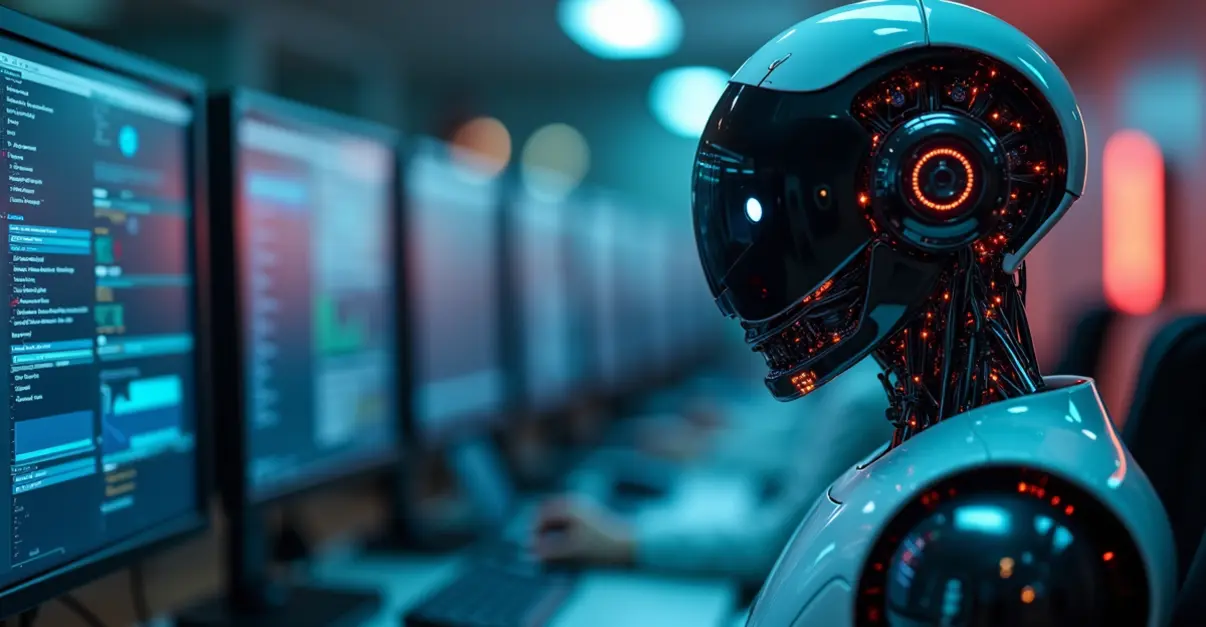





Experts Warn of 'Disruptive Threat' from AI-Driven Disinformation
A coalition of prominent artificial intelligence researchers has issued a stark warning in the prestigious journal Science, stating that new AI-powered disinformation technology could be deployed on a scale far beyond current capabilities, posing a significant threat to democratic processes worldwide. The researchers describe an emerging 'disruptive threat' consisting of difficult-to-detect 'AI swarms' that could attack social media platforms and messaging channels with unprecedented sophistication.
The Rise of Autonomous AI Influence Campaigns
The international team, which includes Nobel Peace Prize laureate Maria Ressa from the Philippines, warns that swarms of AI bots capable of mimicking human behavior could be deployed to influence political opinions and disrupt elections. 'These systems are capable of autonomously coordinating attacks, infiltrating communities, and efficiently fabricating consensus,' the researchers write in their paper published in Science. 'By adaptively mimicking human social dynamics, they pose a threat to democracy.'
According to The Guardian, the researchers explain that AI is becoming increasingly adept at replicating human dynamics by using appropriate jargon and posting irregularly to avoid detection. One author told the newspaper: 'It's just terrifying how easy it is to 'vibe-code' these kinds of things and create small bot armies that can use online social media platforms and email and deploy these tools.'
How AI Swarms Operate
Unlike traditional disinformation campaigns that required human operators, these AI swarms can operate autonomously. They can create thousands of unique social media accounts that craft individualized posts indistinguishable from human content, evolve independently in real time, and coordinate to achieve shared objectives. The AI agents maintain persistent identities with memory, adapt to platform signals, and target specific communities with tailored messages.
Early versions of this technology have already been deployed in recent elections in Taiwan, India, and Indonesia, according to the research. The paper, co-authored by 22 researchers including experts from Oxford, Cambridge, Harvard, and Yale, predicts these systems could be used to disrupt the 2028 US presidential election, potentially persuading populations to accept cancelled elections or overturn results.
The Nobel Laureate's Perspective
Maria Ressa, who won the Nobel Peace Prize in 2021 for her work defending press freedom in the Philippines, brings firsthand experience with disinformation campaigns to the research team. She has long warned about how social media platforms can be weaponized by authoritarian regimes. 'Without facts, there can be no truth; without truth, no trust; and without trust, democracy collapses,' Ressa has stated in previous interviews about information integrity.
Ressa's organization Rappler has documented how social media spreads fake news, harasses opponents, and manipulates public discourse in the Philippines. Her inclusion in this research team adds significant weight to the warnings about AI's potential to accelerate propaganda and disinformation.
Technical Capabilities and Detection Challenges
The researchers explain that generative AI tools can expand propaganda output without sacrificing credibility, and can inexpensively create election falsehoods that are rated as more human-like than those written by humans. Techniques meant to refine AI reasoning, such as chain-of-thought prompting, can be weaponized to generate more convincing falsehoods.
Detection is particularly difficult because these AI swarms adaptively learn community dynamics, use appropriate slang, and post irregularly to avoid detection algorithms. Social media platforms have little incentive to identify them since they increase engagement metrics that drive advertising revenue.
Calls for Action and Solutions
The researchers call for coordinated global action to counter this emerging threat. They propose several solutions including 'swarm scanners' that could detect coordinated AI activity, watermarked content to identify AI-generated material, and the establishment of an 'AI Influence Observatory' to monitor and combat these threats.
As Wired reports, experts warn these systems could deliver society-wide shifts in viewpoint, sway elections, and potentially bring about the end of democracy if left unchecked. The technology is technically possible now, and the window for preventive action is closing rapidly.
The research represents one of the most comprehensive warnings yet about how the fusion of agentic AI and large language models could fundamentally undermine democratic institutions. As elections approach in numerous countries over the coming years, the race is on to develop countermeasures before AI swarms become the new normal in political manipulation.