


 Deutsch
 English
 Español
 Français
 Nederlands
 Português


 Share
Share




Deadly Train Accidents Expose Spain's Railway Safety Crisis
Spain is facing its worst railway safety crisis in over a decade following two catastrophic train accidents within just three days that have claimed at least 43 lives and injured hundreds. The incidents have exposed deep-seated concerns about infrastructure maintenance and safety protocols in what was once considered Europe's premier high-speed rail network.
The Tragic Sequence of Events
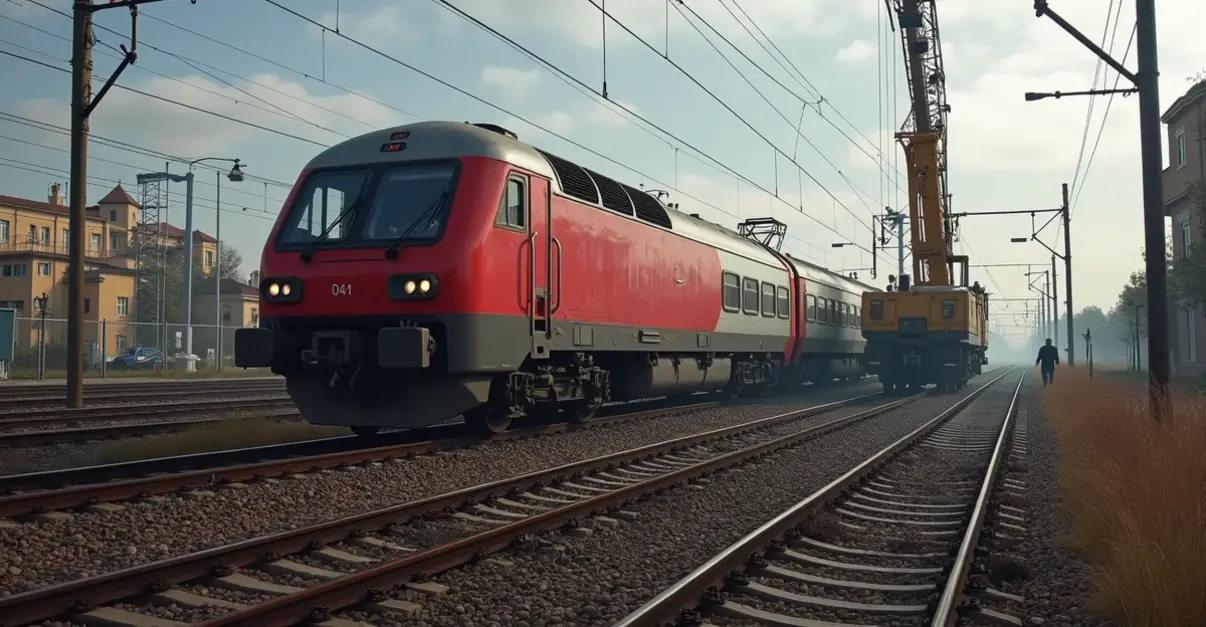
The first and most devastating accident occurred on January 18, 2026, near Adamuz station in Córdoba province. An Iryo high-speed train traveling from Málaga to Madrid derailed while changing tracks, with its last three carriages crossing onto the opposite track. Seconds later, a Renfe train traveling southbound collided with the derailed train at speeds exceeding 200 km/h (130 mph). The impact was catastrophic, with the Renfe train's first two carriages falling down a 4-meter embankment. At least 42 people were killed and 292 injured in what has become Spain's deadliest rail disaster since 2013.
Just two days later, on January 20, a commuter train derailed near Barcelona after a retaining wall collapsed during heavy rainfall, killing the driver and injuring four passengers. The proximity of these tragedies has raised urgent questions about whether they represent isolated incidents or symptoms of systemic failures.
Union Warnings Ignored
Spain's largest train drivers' union, SEMAF, had been sounding alarm bells for months before these tragedies. In August 2025, the union sent a detailed letter to rail infrastructure operator Adif warning about severe wear and tear on critical high-speed routes. 'We face daily problems with countless potholes in the tracks, loose rails, and imbalances in the overhead power lines,' union representatives stated in their warning.
The union specifically highlighted the Madrid-Andalusia corridor where the Adamuz collision occurred, noting that drivers had reported abnormal vibrations and urging temporary speed reductions from 300 km/h to 250 km/h until infrastructure improvements could be made. 'These measures should remain in effect until the rail network is in a suitable condition to safely allow higher speeds,' SEMAF wrote in their August communication.
Infrastructure Under Scrutiny
Spain's railway system operates under a split management model established in 2005 to comply with European Union regulations. Adif, a state-owned company, manages the infrastructure including tracks, signaling, and stations, while Renfe operates train services. This separation was intended to promote competition but has created coordination challenges.
Investigators are now focusing on potential infrastructure failures, particularly on Spain's oldest high-speed line between Madrid and Seville, which still uses outdated German LZB signaling systems instead of the modern European Rail Traffic Management System (ERTMS). The line had undergone a €700 million renovation in May 2025, raising questions about the quality of recent maintenance work.
Political Fallout and Strike Action
The accidents have triggered a political firestorm. Transport Minister Óscar Puente faced criticism after suggesting the drivers' strike call was driven by 'the emotional state of the machinists' following their colleagues' deaths. The opposition Partido Popular called his remarks 'morally reprehensible.'
In response to the tragedies, SEMAF has called for a nationwide strike, demanding urgent safety assurances and accountability from Adif. The union is pushing for criminal liability for those responsible for infrastructure safety. 'We cannot continue risking lives on tracks we've repeatedly warned about,' a union spokesperson stated.
Passenger Concerns and System-Wide Impact
The accidents have caused widespread travel chaos across Spain. Adif has implemented temporary speed limits on the Madrid-Barcelona line and suspended regional trains in Catalonia for inspections. Passengers have taken to social media to share videos showing severe vibrations during their journeys, with one passenger, María Urbaneja, posting a TikTok video 24 hours before the Adamuz crash showing violent shaking in her train, calling the experience 'a disgrace.'
Spain boasts nearly 4,000 kilometers of high-speed rail, second only to China globally. However, the recent tragedies have exposed vulnerabilities in what was once a point of national pride. As investigations continue, travelers face ongoing disruptions, delays, and uncertainty about when normal service will resume.
The coming weeks will determine whether these accidents were tragic coincidences or evidence of systemic infrastructure neglect that requires fundamental reforms to Spain's railway management and maintenance systems.

Follow Discussion