


 Deutsch
 English
 Español
 Français
 Nederlands
 Português


 Share
Share




Spain's Deadly Train Crash Investigation Points to Rail Fracture
Preliminary findings from Spain's worst rail disaster in over a decade indicate that a fractured rail likely caused the catastrophic high-speed train collision that killed 45 people near Adamuz, Andalusia, on January 18, 2026. According to the Spanish Ministry of Transport's investigation commission, the fracture existed 'before the Iryo train derailed on Sunday', contradicting earlier suggestions that the damage might have been a consequence rather than a cause of the accident.
The Tragic Sequence of Events
The disaster unfolded around 7:40 PM when an Iryo high-speed train traveling from Málaga to Madrid derailed near Adamuz, Córdoba. The train's rear carriages jumped onto an adjacent track, where approximately 20 seconds later, an Alvia train traveling from Madrid to Huelva collided with the derailed wagons at speeds around 200 km/h. The impact caused both trains to derail, with the Alvia's first two carriages plunging several meters down an embankment.
Spanish Transport Minister Óscar Puente described the accident as 'extremely strange', noting it occurred on a straight, recently renovated section of track. 'The track where the accident happened was renovated last year,' Puente stated, adding that €700 million had been invested in the infrastructure, which was supposedly 'in perfect condition.'
Wider Safety Concerns and Union Response
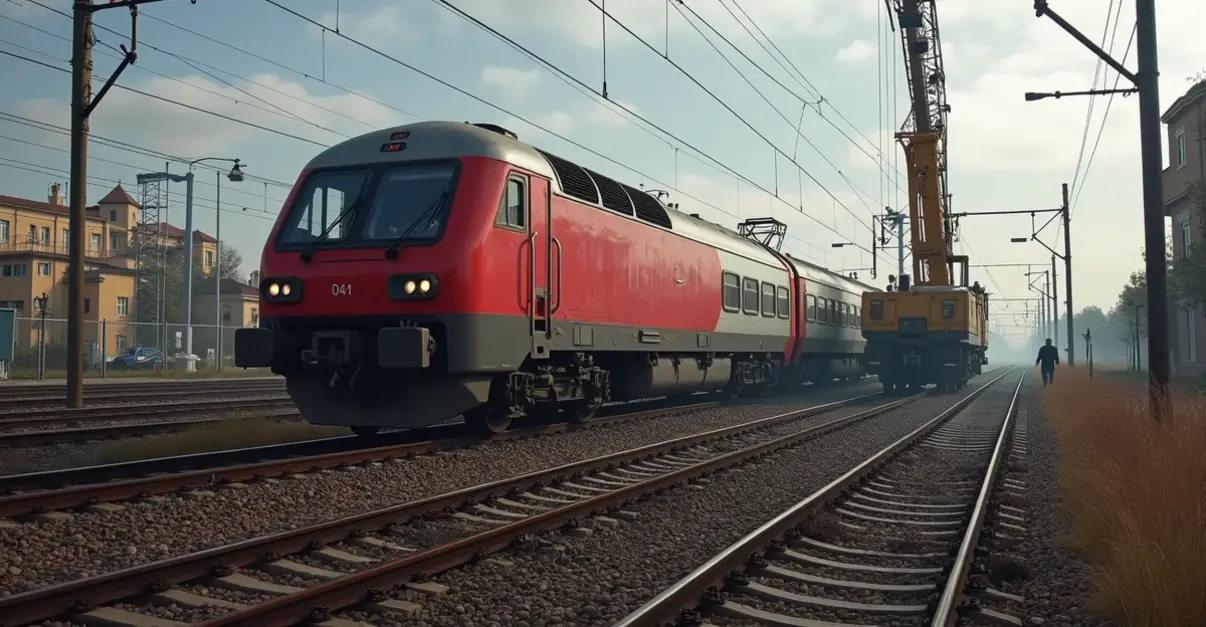
The Adamuz tragedy was followed by three additional rail incidents across Spain within days, prompting widespread safety concerns. On Monday, a train near Barcelona struck debris from a collapsed wall, killing a trainee driver and injuring 37 people. The same day, another train derailed near Blanes due to stones on the track, and on Tuesday, a passenger train collided with a construction crane in Cartagena.
These incidents have triggered alarm among Spanish train drivers, with the Spanish Train Drivers' Union (SEMAF) calling for a nationwide strike. Union representatives argue that the accidents expose systemic safety failures. 'Drivers encounter countless holes in the track and loose rails daily on multiple high-speed routes,' a union spokesperson told media, highlighting what they describe as deteriorating infrastructure conditions.
Investigation and Political Fallout
The Railway Accident Investigation Commission (CIAF) is conducting what promises to be a lengthy investigation into the Adamuz disaster. While human error has been 'practically ruled out', questions remain about maintenance practices and inspection protocols on Spain's extensive high-speed network, which at 3,973 kilometers is Europe's longest.
The tragedy has sparked political controversy, with opposition parties criticizing rail safety management and government transparency. Meanwhile, Spain has declared three days of national mourning, with King Felipe VI and Prime Minister Pedro Sánchez visiting the accident site to offer condolences to victims' families.
As investigators continue examining the 30-centimeter crack found at the crash site and marks on train wheels, the Spanish public awaits answers about whether this represents an isolated failure or indicates deeper systemic problems in one of Europe's most advanced rail networks.




Follow Discussion