


 Deutsch
 English
 Español
 Français
 Nederlands
 Português


 Share
Share




Ukraine Ammunition Delivery Timelines 2026: Complete Guide to Allied Logistics & Battlefield Effects
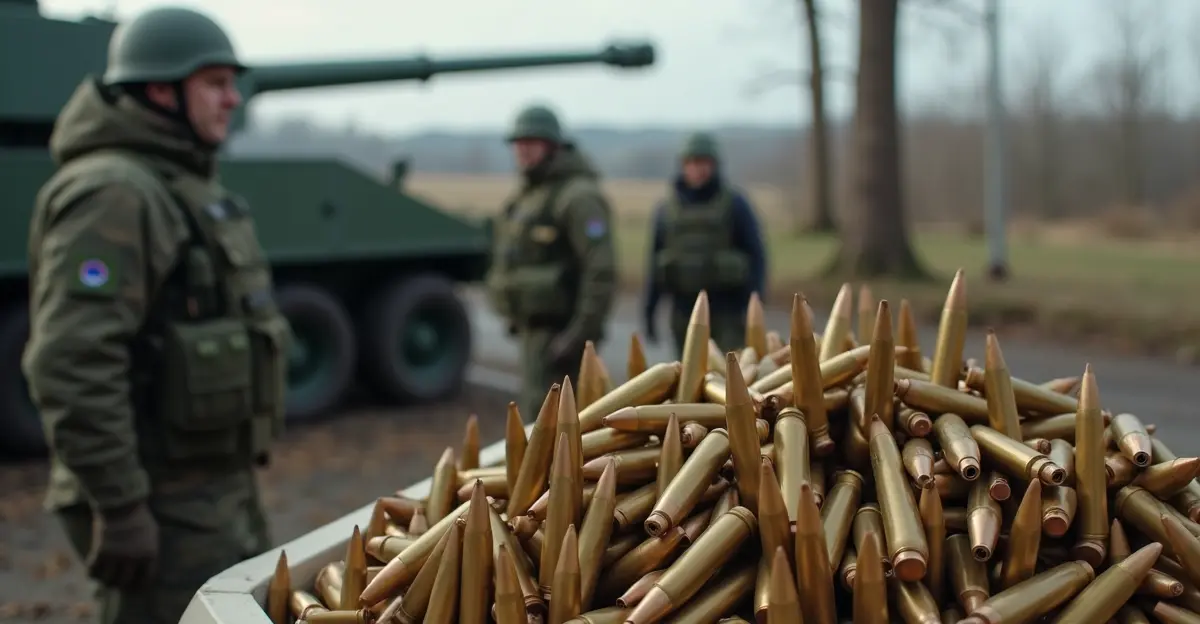
As the conflict in Ukraine enters its fourth year in 2026, the critical factor determining battlefield outcomes has shifted from frontline combat capabilities to the complex logistics of ammunition delivery. Ukraine's ability to hold defensive lines and conduct counter-offensive operations now hinges on the rhythm and pace of allied munition shipments, with delivery timelines becoming the decisive variable in the war's strategic equation. According to military experts, maintaining consistent delivery schedules is more crucial than total volume, as this determines whether Ukrainian artillery can effectively conduct counter-battery combat and defend positions day after day against Russia's overwhelming artillery advantage.
What Are Ukraine's Ammunition Delivery Timelines?
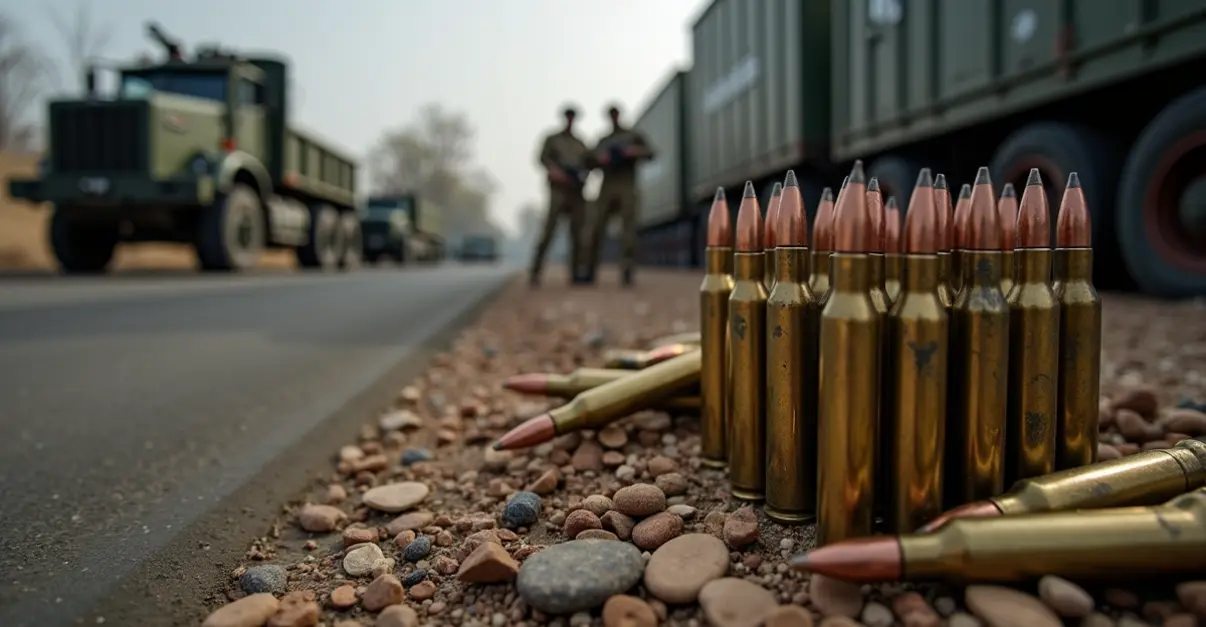
Ukraine ammunition delivery timelines refer to the complex scheduling, transportation, and distribution processes that bring artillery shells, rockets, and other munitions from allied production facilities to Ukrainian frontline units. In 2026, these timelines face unprecedented challenges as NATO nations struggle to ramp up production while maintaining consistent delivery schedules. The Czech Shell Bridge initiative has emerged as a critical pipeline, delivering approximately 1 million rounds with a target of 1.8 million by year-end, but European factories have failed to meet their planned 2025 production targets, pushing goals to 2026.
The Four Main Ammunition Sources for Ukraine in 2026
Ukraine currently receives ammunition from four primary sources, each with distinct delivery timelines and logistical challenges:
1. Czech Shell Bridge Initiative
The Czech-led initiative represents the most consistent delivery pipeline, having already delivered about 1 million artillery rounds with a target of 1.8 million by the end of 2025. However, political changes in the Czech Republic and gunpowder production bottlenecks have created uncertainty in these supply lines. According to military expert Mykhailo Samus, 'Maintaining consistent delivery rhythm is more crucial than total volume, as this determines whether Ukrainian artillery can effectively conduct counter-battery combat and defend positions day after day.'
2. European Production Facilities
European nations have struggled to meet their ambitious production targets, with the European Union failing to reach its planned 2025 ammunition production goals. This shortfall has pushed targets to 2026, creating delivery timeline gaps that directly impact Ukrainian defensive capabilities. The NATO ammunition interoperability problem further complicates these deliveries, as Ukrainian forces must manage 17 different types of 155mm howitzers and nearly 50 models of high-explosive shells from various NATO nations.
3. U.S. Production Under PURL Mechanism
The United States has implemented the PURL (Prioritized Urgent Requirements List) mechanism to accelerate ammunition production, but recent Department of Defense Inspector General reports reveal significant delays. A November 2025 DODIG audit found the U.S. Army failed to effectively procure ammunition in five of seven contracts, did not enforce delivery timelines, and may have overpaid suppliers. The Pentagon is now imposing penalties on contractors like Northrop Grumman and Global Military Products for late shipments of artillery ammunition intended for Ukraine, with delays reaching up to 18 months for large-caliber shells.
4. Ukraine's Domestic Production
Ukraine has significantly expanded its domestic ammunition production capabilities, but these facilities operate under constant threat of Russian missile strikes and face material shortages. The country's ability to maintain consistent production timelines depends on securing raw materials and protecting manufacturing infrastructure from aerial attacks.
Critical Delivery Timeline Challenges in 2026
Production Bottlenecks and Industrial Capacity
NATO faces systemic industrial bottlenecks including decades of underinvestment, offshoring, dependence on just-in-time logistics, and material shortages. According to the Atlas Institute, 'Russia currently produces artillery shells at four times NATO's annual rate, achieving a five-to-one firing advantage over Ukraine.' Russian artillery production expanded from 0.4 million rounds in 2022 to an estimated 4.2 million annually by 2025, while NATO struggles to meet Ukraine's monthly requirement of 356,000 rounds.
Interoperability Problems
The Ukraine war has exposed critical ammunition interoperability problems within NATO despite existing standardization agreements. While NATO's STANAGs and the 2009 Joint Ballistics Memorandum of Understanding were designed for technical compatibility, Ukrainian forces operating multiple artillery systems have revealed that physical compatibility doesn't guarantee accurate first-round effects. Key issues include software incompatibilities (like US fuze setters not recognizing allied fuzes) and safety concerns with older ammunition types like M107 rounds that can't handle modern propellants.
Transportation and Distribution Logistics
The physical movement of ammunition from production facilities to Ukrainian frontline units presents immense challenges. Transportation routes must navigate through multiple countries, avoid Russian interdiction efforts, and maintain security throughout the supply chain. The Ukraine war logistics challenges have forced NATO to develop new distribution networks and protection protocols for ammunition shipments.
Battlefield Effects of Delivery Timeline Variations
Artillery Fire Rhythm and Effectiveness
When ammunition deliveries arrive consistently, Ukrainian artillery units can maintain optimal firing rhythms of 5-10 rounds per day per tube, enabling effective counter-battery operations and defensive fire. However, when deliveries experience delays or irregular schedules, Ukrainian units must conserve ammunition, reducing their firing rates to 1-2 rounds per day and ceding artillery superiority to Russian forces.
Defensive Line Stability
Consistent ammunition deliveries directly correlate with defensive line stability. During periods of reliable supply in early 2025, Ukrainian forces successfully held defensive positions against Russian assaults. However, during supply gaps in late 2025, Ukrainian units reported having to ration artillery fire, allowing Russian forces to advance in several sectors.
Counter-Offensive Capabilities
Ukraine's ability to conduct localized counter-offensives depends entirely on ammunition availability. Successful operations require concentrated artillery preparation and sustained fire support, which are impossible without predictable ammunition delivery timelines. The 2025 Ukrainian artillery operations demonstrated that even limited counter-offensives require ammunition stockpiles built up over weeks of consistent deliveries.
Expert Perspectives on 2026 Delivery Outlook
Military analysts express cautious optimism about 2026 delivery timelines but emphasize significant challenges remain. According to defense experts, NATO's 2026 target of 267,000 rounds monthly would only achieve parity with current Russian production, insufficient for credible deterrence. Secretary General Mark Rutte warns Russia may pose a military threat by 2029, highlighting the urgent need to address this strategic ammunition gap. Ukrainian forces have developed expedient solutions including compatibility matrices and the Kropyva system for generating firing tables from test shots, but true interoperability requires developing and distributing comprehensive firing tables for all NATO equipment combinations.
FAQ: Ukraine Ammunition Delivery Timelines 2026
1. What is the current status of ammunition deliveries to Ukraine in 2026?
In 2026, Ukraine receives ammunition from four main sources: the Czech Shell Bridge initiative, new European factories, U.S. production under the PURL mechanism, and Ukraine's own domestic production. However, Europe failed to meet its planned 2025 ammunition production targets, pushing goals to 2026, creating delivery timeline uncertainties.
2. Why are ammunition delivery timelines more important than total volume?
Consistent delivery rhythm allows Ukrainian artillery to maintain optimal firing rates for counter-battery combat and defensive operations. Irregular deliveries force units to ration fire, ceding artillery superiority to Russian forces who maintain consistent production and delivery schedules.
3. What are the main challenges to ammunition delivery timelines?
Key challenges include production bottlenecks in NATO countries, ammunition interoperability problems with different artillery systems, transportation security risks, political uncertainties in supplier nations, and Russia's continued targeting of Ukrainian logistics infrastructure.
4. How does Russian ammunition production compare to NATO deliveries?
Russia produces artillery shells at four times NATO's annual rate, achieving a five-to-one firing advantage over Ukraine. Russian artillery production expanded from 0.4 million rounds in 2022 to an estimated 4.2 million annually by 2025, while NATO struggles to meet Ukraine's monthly requirement.
5. What solutions are being developed for delivery timeline problems?
Solutions include the Czech Shell Bridge initiative for consistent deliveries, accelerated European production targets for 2026, U.S. penalty enforcement for contractor delays, Ukrainian development of compatibility matrices for different ammunition types, and NATO-wide efforts to address interoperability issues.
Conclusion: The Race Against Time
As 2026 progresses, Ukraine's ammunition delivery timelines have become the critical variable determining battlefield outcomes. The race between NATO's industrial mobilization and Russia's established production capacity will decide whether Ukrainian forces can maintain defensive lines and conduct effective operations. With Secretary General Mark Rutte warning that Russia may pose a military threat by 2029, addressing the strategic ammunition gap through reliable delivery timelines has become NATO's most urgent priority. The success of Ukraine's defense, and potentially European security itself, now depends on transforming delivery schedules from unpredictable variables into consistent, reliable lifelines to the frontline.
Follow Discussion