


 Deutsch
 English
 Español
 Français
 Nederlands
 Português


 Share
Share




Public Acceptance Critical for Urban Air Mobility Success
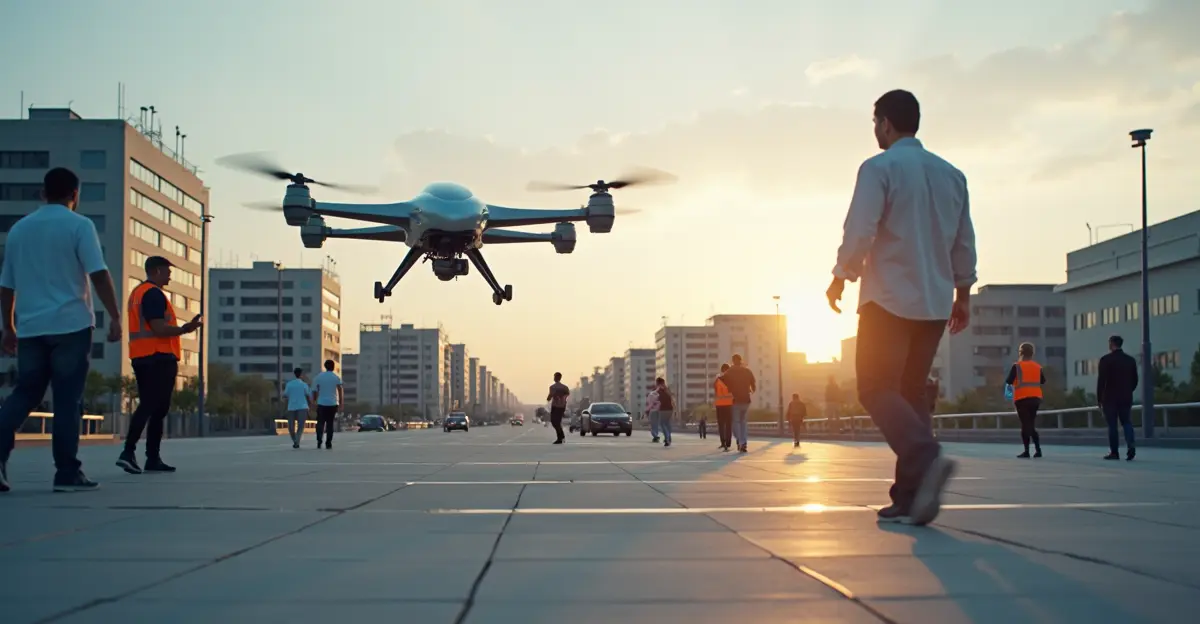
As cities worldwide prepare for the era of flying taxis and drone deliveries, new research reveals that public acceptance remains the biggest hurdle for Urban Air Mobility (UAM) systems. Recent studies examining noise pollution, safety concerns, visual impacts, and traffic integration show that community buy-in will determine whether these futuristic transportation systems take flight.
Noise Pollution: The Silent Barrier
According to NASA research, noise remains one of the most significant concerns for urban residents. Electric vertical takeoff and landing (eVTOL) aircraft, while quieter than traditional helicopters, still generate substantial noise during takeoff and landing operations. 'The acoustic signature of distributed electric propulsion systems presents unique challenges for urban environments,' explains Dr. Sarah Chen, an aerospace engineer at NASA. 'We're working on developing noise prediction models that can help cities plan for these operations.'
Safety Perceptions Drive Public Trust
A comprehensive 2025 study analyzing 427 survey responses found that perceived safety directly influences public trust in UAM systems. The research revealed that trust mediates the relationship between safety perceptions and behavioral intention to adopt these new technologies. 'People need to feel confident that these aircraft won't fall out of the sky,' says Professor Michael Rodriguez, lead researcher on the study. 'Transparent safety standards and clear communication about emergency protocols are essential for building public confidence.'
Visual Pollution Concerns Emerge
Research published in Drones journal has developed quantitative methods to measure visual pollution from UAM operations. The study found that the number of visible aircraft and their distance from observers are the primary factors contributing to visual pollution. Interestingly, people showed greater tolerance for visual impacts when aircraft were used for emergency medical services. 'The public is more accepting of visual intrusion when there's a clear public benefit,' notes Dr. Elena Martinez, the study's principal investigator.
Traffic Integration Challenges
NASA's airspace integration research highlights the complexity of managing UAM traffic alongside traditional aviation. The development of advanced air traffic management systems is crucial for preventing congestion and ensuring safety in increasingly crowded urban skies. 'We're essentially building a new layer of transportation infrastructure above our cities,' says aviation expert James Wilson. 'The integration challenge is unprecedented in scale and complexity.'
Economic Factors and Environmental Awareness
The 2025 acceptance study also revealed that high price sensitivity significantly curtails public acceptance of UAM services. However, environmental awareness demonstrated a modest positive impact and could partially offset the negative effects of high costs. 'People are willing to pay more if they believe they're contributing to cleaner urban transportation,' explains Professor Rodriguez. 'This creates an opportunity for operators to position UAM as an environmentally friendly alternative to ground transportation.'
The Path Forward
As UAM technology continues to advance, researchers emphasize that addressing public concerns must be a priority. Noise mitigation strategies, transparent safety protocols, careful urban planning, and strategic pricing will all play crucial roles in gaining community acceptance. The success of urban air mobility ultimately depends not just on technological innovation, but on winning the hearts and minds of the people who will live beneath these new aerial highways.


Follow Discussion