


 Deutsch
 English
 Español
 Français
 Nederlands
 Português


 Share
Share




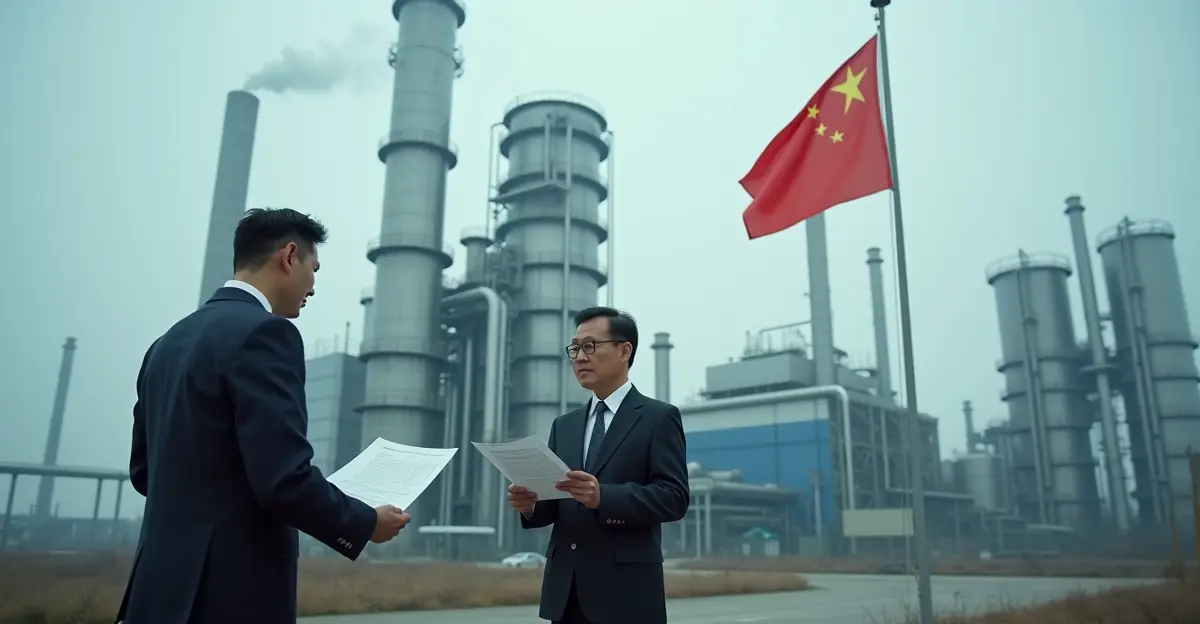
In a decisive escalation of its critical minerals strategy, China has imposed sweeping export controls on rare earth elements and permanent magnets, leveraging its commanding 91% share of global refining capacity to reshape industrial supply chains worldwide. By December 2025, Beijing began enforcing a new licensing regime that requires foreign entities to obtain Chinese approval for products containing Chinese-sourced rare earths — even if processed abroad — creating cascading shortages for Western automakers, defense contractors, and AI data center operators. This article examines the strategic implications of this supply chain weaponization, the astronomical price premiums emerging outside China, and whether Western mining projects can realistically close the gap before critical industrial sectors face structural bottlenecks.
What Are China's New Rare Earth Export Controls?
China's rare earth export controls, introduced in phases throughout 2025, represent the most aggressive use of critical mineral leverage since the 2010 rare earth crisis. On April 4, 2025, China's Ministry of Commerce (MOFCOM) announced new licensing requirements for seven rare earth elements — samarium, gadolinium, terbium, dysprosium, lutetium, scandium, and yttrium — along with their oxides, alloys, and compounds. Exporters must now obtain either an Individual License (single shipment) or a General License (multiple shipments), with application processing times of up to 45 working days.
Then, on October 9, 2025, Beijing imposed extraterritorial jurisdiction for the first time in its export control history. Under these rules, foreign entities must obtain Chinese licenses when exporting certain rare earth items from one foreign country to another — a mechanism similar to the U.S. reexport concept. The controls apply to products containing at least 0.1% of 13 specified rare earth elements, regardless of origin. MOFCOM also introduced an "Affiliates Rule" (50% Rule) that presumes denial of export licenses for importers on China's entity or watch list and their subsidiaries where listed entities hold 50% or greater ownership. Measures (1) and (2) had a grace period until December 1, 2025, while measure (3) took immediate effect.
However, on November 9, 2025, following a meeting between President Xi Jinping and President Trump in Busan, South Korea, China announced a one-year delay on certain extraterritorial measures. Yet Beijing retained the April 2025 licensing system requiring case-by-case approval for seven rare earth elements, effectively maintaining a stranglehold on Western military and high-tech manufacturers. The 2025 rare earth crisis thus entered a new phase of managed scarcity.
Price Premiums and Supply Bottlenecks
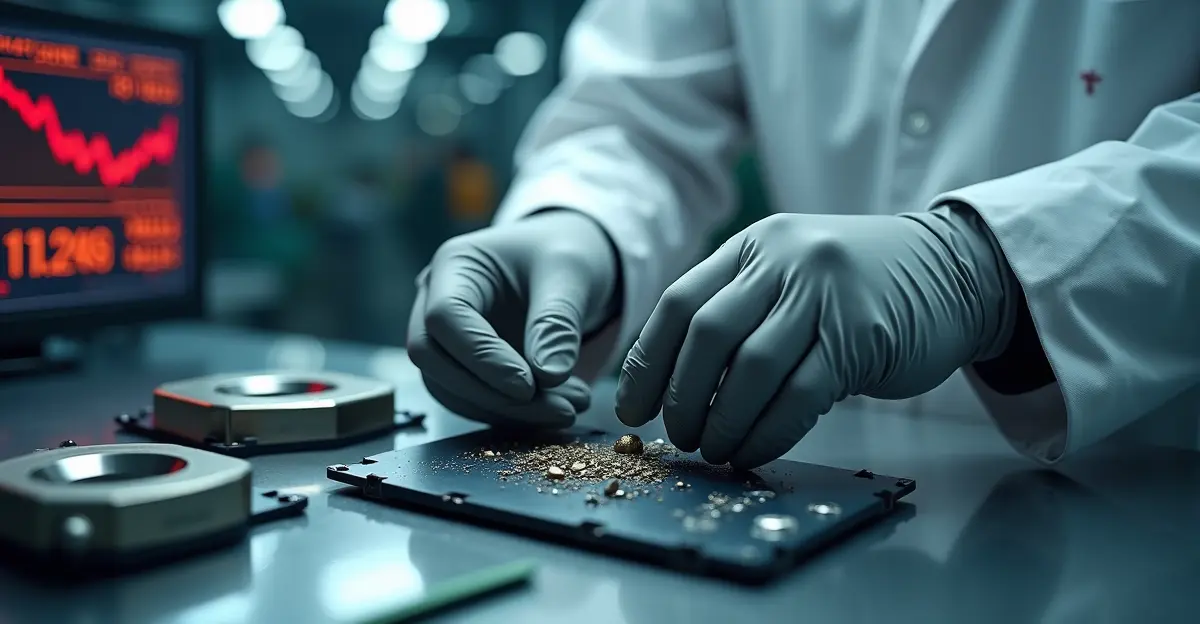
The impact of these controls has been dramatic. According to the International Energy Agency, European rare earth prices reached up to six times those in China, severely undermining the cost competitiveness of rare earth-based products manufactured outside China. Benchmark Mineral Intelligence reports that praseodymium-neodymium (PrNd) oxide prices surged approximately 30% in Q1 2026 alone, driven by tight mining quotas, higher raw material costs, and aggressive Japanese procurement. Heavy rare earths like dysprosium and terbium remain especially tight outside China due to restricted exports and strong aerospace demand.
A multi-institutional analysis published by Rare Earth Exchanges reveals that licensing approval rates for European firms have fallen below 25%, while over 80% of European companies depend on Chinese supply chains for minerals essential to defense, EVs, and renewable energy. The report argues that China is weaponizing control — not scarcity — using temporary, reversible restrictions to maintain pricing power and extract strategic concessions while simultaneously discouraging large-scale Western investment in alternative supply chains.
For Western manufacturers, the consequences are immediate. NdFeB permanent magnets — which represent approximately 96% of global rare earth magnet demand and are critical for EV motors, wind turbines, and defense systems — now face raw material costs that have risen 89% year-on-year, according to Mainrich Magnets. With raw materials making up 70% of magnet costs, manufacturers face severe budget pressure. The rare earth magnet supply chain is undergoing a structural shift from stable commodity to strategic asset.
Western Mining Projects: Can They Close the Gap?
In response to China's tightening grip, Western nations are accelerating rare earth mining and processing projects. MP Materials, the largest rare earth producer outside China, secured a $400 million U.S. Department of Defense investment and is evaluating a $1.2 billion magnet campus in Texas. Lynas Rare Earths, the Australian producer, projects 53% production growth despite power disruptions at its Kalgoorlie facility. Australia's government has provided a $1.65 billion loan to Iluka Resources for rare earth refining.
Midstream capacity is expanding but remains fragile. Energy Fuels now operates commercial NdPr refining at its White Mesa mill in Utah. Neo Performance Materials opened Europe's first mass-production magnet facility in Estonia. France's Carester targets late-2026 commissioning for its rare earth separation plant. REalloys, through an exclusive offtake agreement with the Saskatchewan Research Council — operator of North America's only operational non-Chinese rare earth processing plant — is building a fully non-Chinese supply chain for defense-grade alloys, positioning itself as the only North American company able to meet the Pentagon's January 2027 ban on Chinese-sourced rare earths in defense supply chains.
Yet the scale of the challenge remains daunting. The Rare Earth Exchanges analysis concludes that rebuilding independent alternatives would take 20-30 years, far exceeding the current geopolitical window. Western nations face a narrow 12-18 month window to act decisively or accept prolonged vulnerability. The Western rare earth mining projects underway represent a promising start, but they are nowhere near sufficient to replace Chinese dominance in the near term.
Impact on Key Industrial Sectors
The cascading effects of China's rare earth controls are being felt across multiple industries. In the automotive sector, EV manufacturers face rising costs and potential production delays for electric motors that rely on NdFeB magnets. Defense contractors confront a January 2027 Pentagon deadline to eliminate Chinese-sourced rare earths from supply chains, with few compliant alternatives available. AI data center operators, who require rare earth magnets for cooling systems and power management, are seeing project timelines slip as component costs soar.
The rare earth supply chain bottlenecks of 2026 are not merely a pricing issue — they represent a structural realignment of global industrial power. As one industry analyst noted, "We are witnessing the most consequential critical minerals realignment since the 2010 rare earth crisis, but this time China has learned from that episode and is wielding its leverage with surgical precision."
Frequently Asked Questions
What rare earth elements are affected by China's 2025-2026 export controls?
China's controls cover seven rare earth elements under the April 2025 licensing system: samarium, gadolinium, terbium, dysprosium, lutetium, scandium, and yttrium, along with their oxides, alloys, compounds, and mixtures. The October 2025 extraterritorial rules apply to products containing at least 0.1% of 13 specified rare earth elements.
How much does China dominate global rare earth processing?
China controls approximately 90-91% of global rare earth refining capacity, according to multiple sources including the IEA and industry analyses. This dominance gives Beijing extraordinary leverage over global supply chains for EVs, wind turbines, defense systems, and electronics.
Can Western rare earth projects replace Chinese supply by 2027?
While projects like MP Materials, Lynas, and REalloys are making progress, most analysts agree that building fully independent Western rare earth supply chains will take 20-30 years. The Pentagon's January 2027 ban on Chinese-sourced rare earths in defense supply chains creates an urgent deadline that few non-Chinese suppliers can currently meet.
Why are European rare earth prices six times higher than Chinese prices?
China's export controls and licensing system have created an artificial scarcity outside China. With approval rates for European firms below 25% and Chinese domestic prices kept low through state policy, the price differential reflects both supply constraints and the strategic premium Beijing extracts from foreign buyers.
What is the 50% Rule in China's export controls?
MOFCOM's "Affiliates Rule" (50% Rule) presumes denial of export license applications from importers on China's export control entity list or watch list, as well as their branches and subsidiaries where listed entities hold 50% or greater ownership. This mirrors similar rules previously imposed by the U.S. Bureau of Industry and Security.
Conclusion: A Narrow Window for Action
China's rare earth export controls represent a masterful exercise of strategic leverage, exploiting near-monopoly processing capacity to extract economic and geopolitical concessions. For Western nations, the path forward is fraught with difficulty. The 12-18 month window identified by analysts demands urgent action: accelerating ally-shoring deals with Australia, Japan, Canada, and Southeast Asian refining centers; funding supply chain transitions and permitting reform; and building strategic stockpiles to buffer against future disruptions.
The rare earth export controls 2026 have permanently altered the landscape of global critical mineral supply chains. Whether the West can adapt in time to prevent structural bottlenecks in defense, energy, and technology sectors remains the defining industrial challenge of this decade.



Follow Discussion