
 Deutsch
 English
 Español
 Français
 Nederlands
 Português







Landmark Ruling Challenges Presidential Trade Authority
In a sweeping decision that could reshape U.S. trade policy, the U.S. Court of International Trade has unanimously declared that emergency tariffs imposed under the International Emergency Economic Powers Act (IEEPA) exceed presidential authority and must be rescinded. The May 28, 2025 ruling represents one of the most significant judicial interventions in trade policy in decades, with immediate implications for billions of dollars in international commerce.
The court's decision specifically targets three categories of tariffs: a 20% levy on Chinese products related to fentanyl trafficking, 25% tariffs on Canadian and Mexican goods tied to border security concerns, and a 10% worldwide reciprocal tariff announced in April 2025. 'The Constitution vests the power to lay and collect taxes, including tariffs, in Congress, not the President,' wrote Chief Judge Timothy C. Stanceu in the 45-page opinion. 'While IEEPA grants the President broad emergency powers, it does not authorize the imposition of tariffs on this scale without clear congressional authorization.'
Legal Battle Reaches Federal Circuit
The government immediately appealed the decision to the U.S. Court of Appeals for the Federal Circuit, which granted a temporary stay on May 29, 2025, allowing the tariffs to remain in effect while the legal process unfolds. However, in a dramatic development on August 29, 2025, the Federal Circuit issued a 7-4 decision largely upholding the lower court's ruling. 'This represents a fundamental check on executive overreach in trade policy,' said trade attorney Maria Rodriguez of Global Trade Law Partners. 'The courts are drawing a clear line: emergency powers have limits, and massive tariff programs require congressional approval.'
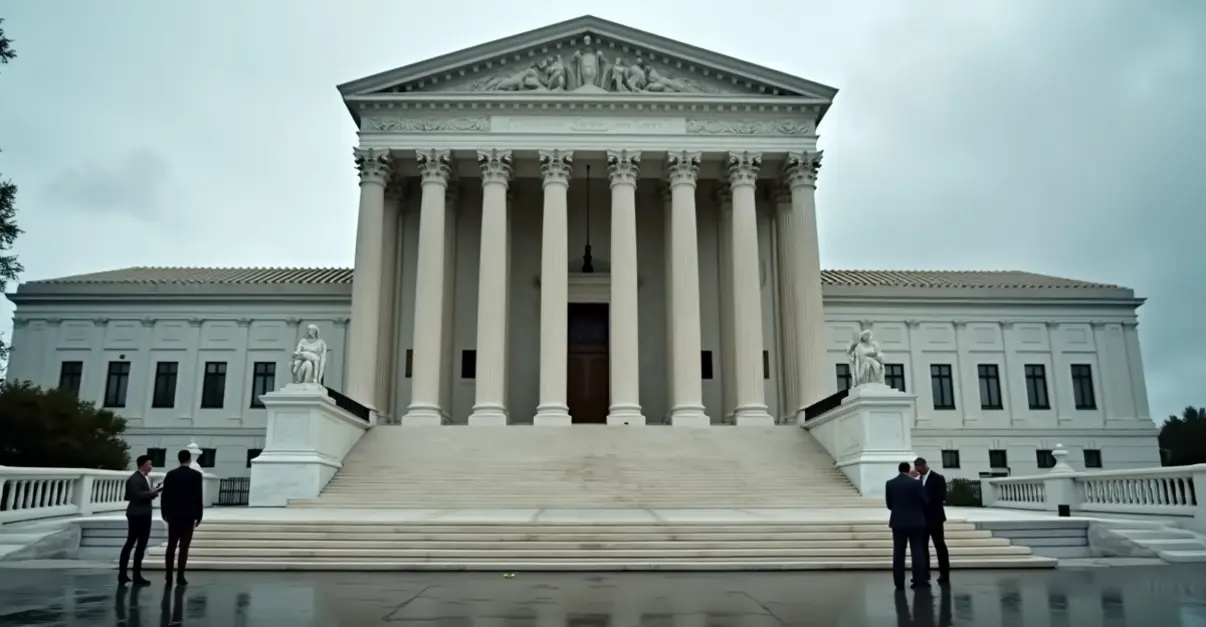
The Federal Circuit's decision has been stayed until October 14, 2025, pending appeal to the U.S. Supreme Court, which has already agreed to hear the case on an expedited basis. Oral arguments are scheduled for November 5, 2025, setting the stage for a potential landmark Supreme Court decision on presidential trade authority.
Business Implications and Compliance Challenges
For businesses engaged in international trade, the ruling creates both opportunities and compliance headaches. While the court declared the tariffs illegal for all importers, it did not automatically order refunds of duties already paid. 'Importers will need to track affected entries and potentially file individual lawsuits for reimbursement,' explained compliance specialist David Chen of Thomson Reuters. 'This creates a complex patchwork of potential claims that could take years to resolve.'
The ruling specifically exempts tariffs imposed under other authorities, including Section 232 national security tariffs on steel and aluminum and Section 301 tariffs on Chinese goods related to intellectual property concerns. This distinction creates a compliance minefield for importers who must now navigate which tariffs remain valid and which have been invalidated.
Constitutional Questions and Trade Remedies
At the heart of the legal battle are fundamental constitutional questions about the separation of powers. The court invoked both the nondelegation doctrine and the major questions doctrine, arguing that Congress cannot delegate its core taxing authority to the executive branch without clear limitations. 'When tariffs affect trillions of dollars in trade, that's a major question requiring clear congressional authorization,' stated constitutional law professor Amanda Wright of Georgetown University.
The economic stakes are enormous. According to government estimates cited in court documents, the affected tariffs could generate between $2.3 and $3.3 trillion in revenue over their projected lifespan. This scale, the court argued, transforms what might otherwise be legitimate emergency measures into what amounts to a massive tax program requiring congressional approval.
Global Trade Implications
The ruling has immediate implications for U.S. trade relations with China, Canada, and Mexico—America's three largest trading partners. Canadian Trade Minister Sarah Johnson welcomed the decision, stating, 'This ruling confirms what we've maintained all along: these tariffs were unjustified and violated established trade rules.' Chinese officials have been more cautious in their response, but industry groups have indicated they will seek refunds for duties paid under the invalidated tariffs.
For compliance professionals, the immediate advice is clear: maintain detailed records of all tariff payments and affected entries. 'Document everything,' advises international trade consultant Robert Kim. 'Even if refunds aren't automatic, having complete records will be essential for any future claims.' Businesses should also monitor the Supreme Court proceedings closely, as a final decision could come as early as spring 2026.
The case represents a significant test of presidential authority in an era of increasing trade tensions. With the Supreme Court now poised to weigh in, the final chapter in this legal saga could redefine the balance of power between Congress and the executive branch on trade matters for generations to come.



Follow Discussion