


 Deutsch
 English
 Español
 Français
 Nederlands
 Português


 Share
Share




Historic Trade Deal Postponed After 25 Years of Negotiations
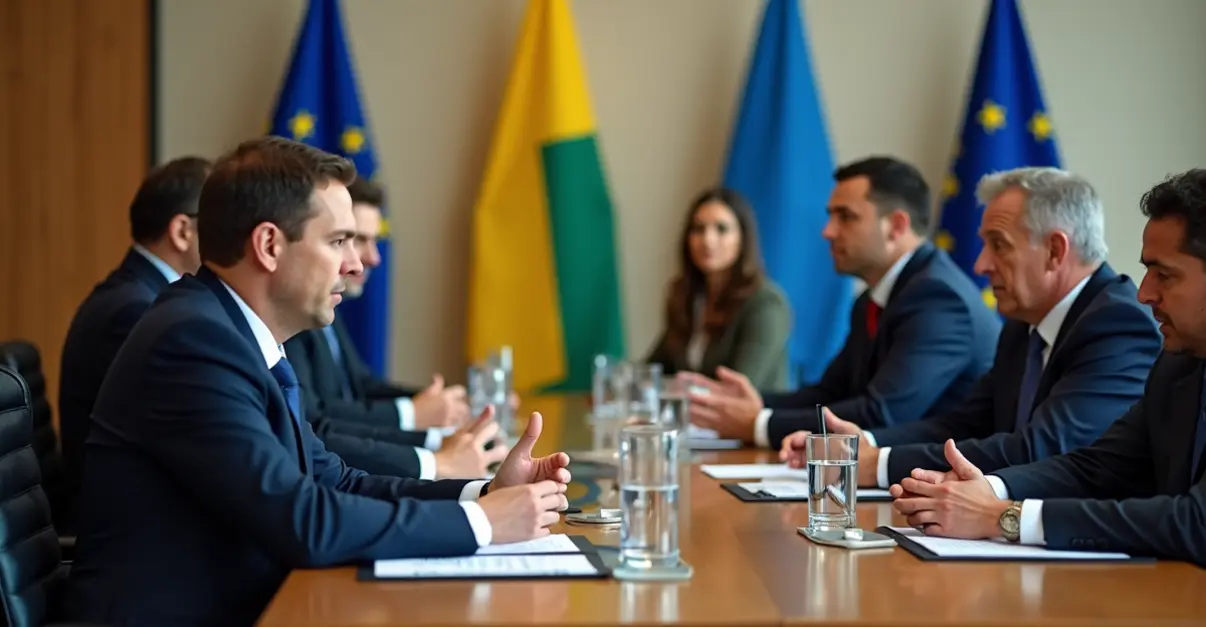
The European Union has postponed the signing of its landmark free trade agreement with the Mercosur bloc until January 2026, marking yet another delay in what has become one of the longest-running trade negotiations in modern history. The decision came during a tense EU summit in Brussels where thousands of farmers protested outside, demanding stronger protections for European agriculture.
The EU-Mercosur Association Agreement, which would create the world's largest free-trade area covering nearly 800 million people, was supposed to be signed on December 21, 2025, at a summit in Foz do Iguaçu, Brazil. However, last-minute resistance from Italy, backed by France and several other member states, forced European Commission President Ursula von der Leyen to announce a postponement.
'We have reached out to our Mercosur partners and agreed to postpone slightly the signature. This deal is crucially important for Europe – economically, diplomatically, and geopolitically,' von der Leyen stated on social media platform X.
Farmer Fury and Political Pressure
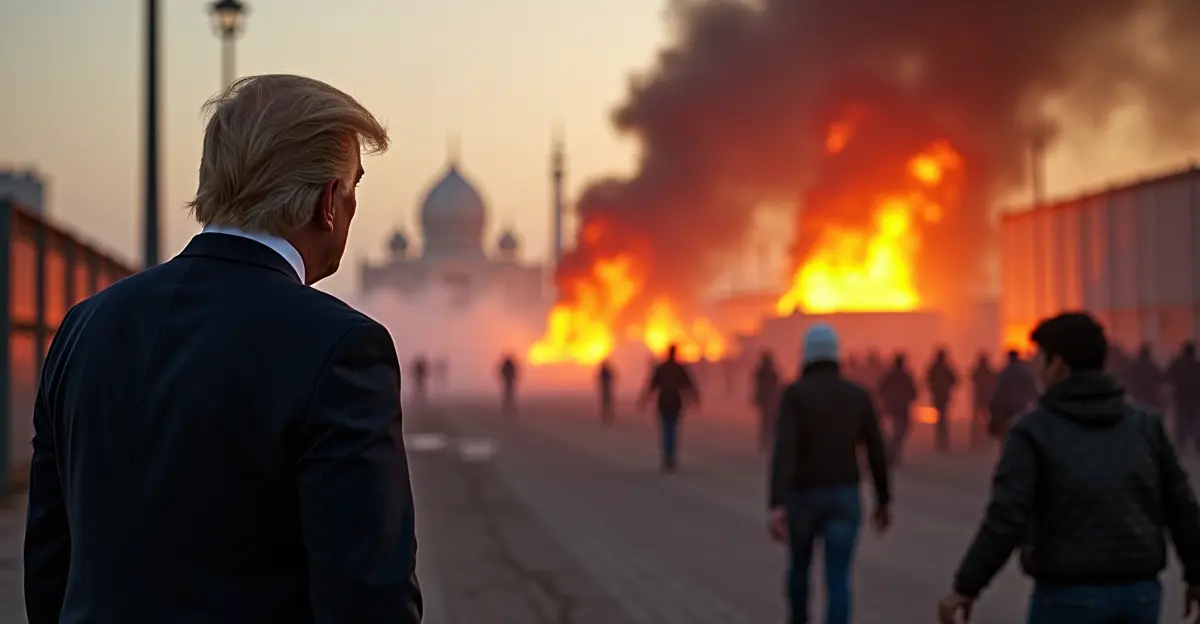
The postponement came as up to 10,000 farmers from across Europe descended on Brussels, blocking streets with tractors and clashing with police. Protesters lit fires, set off fireworks, and hurled potatoes and bottles at law enforcement, who responded with tear gas and water cannons. Similar demonstrations occurred in Strasbourg, Liège, and other European cities.
French President Emmanuel Macron, facing intense pressure from his country's agricultural sector, emerged as a key opponent of signing the deal in its current form. 'It would be premature to sign the deal in the coming days,' Italian Prime Minister Giorgia Meloni told parliament, explaining that Italy needed more time to secure adequate safeguards for its farmers.
The protests reflect deep-seated fears among European farmers that cheaper agricultural imports from South America would undercut their livelihoods. According to the European Council, negotiators had agreed on safeguard measures just days before the planned signing, but these proved insufficient to calm the agricultural sector's concerns.
What's at Stake in the Agreement
The EU-Mercosur deal, first proposed in 1999 and reaching an agreement in principle in 2019, would progressively eliminate tariffs on most goods traded between the two blocs. The European Union would gain better access for its vehicles, machinery, wines, and spirits to Latin American markets, while Mercosur countries (Brazil, Argentina, Uruguay, and Paraguay) would see reduced barriers for their agricultural exports including beef, sugar, soybeans, and honey.
According to the Wikipedia entry on the agreement, the combined population of the two blocs represents about 25% of global GDP. The EU is already Mercosur's second-largest trading partner in goods, with exports worth €57 billion in 2024.
German Chancellor Friedrich Merz emphasized the strategic importance of the deal: 'If the European Union wants to remain credible in global trade policy, decisions must be made now, and the decision can only be that Europe approves it.' Germany, along with Spain, Denmark, Sweden, and Finland, strongly supports the pact as a way to boost exports and reduce dependence on Chinese and American markets.
Safeguard Clauses and Environmental Concerns
The key sticking points revolve around agricultural safeguards and environmental standards. The European Parliament and Council reached a provisional agreement on December 17, 2025, establishing rules to protect the EU's agricultural sector. These include mechanisms to suspend tariff preferences for sensitive products like poultry, beef, eggs, citrus, and sugar if imports surge unexpectedly.
However, as reported by Reuters, environmental groups and some member states want stronger commitments on deforestation and pesticide standards. The Bulgarian National Grain Producers Association highlighted the dilemma: 'Applying double standards to cheaper imports, which meet lower environmental and ethical requirements, compromises the efforts of EU farmers to adhere to higher standards.'
Polish Prime Minister Donald Tusk confirmed his country's continued opposition, while Spain's Pedro Sánchez expressed frustration at the delay, arguing the deal would boost the EU's geopolitical weight. Brazilian President Luiz Inácio Lula da Silva, who had previously warned that Brazil wouldn't sign later if the deal failed now, showed flexibility after speaking with Meloni, agreeing to a short delay.
What Happens Next
The agreement now faces a critical test in January 2026. It requires approval from at least 15 of the 27 EU member states representing 65% of the EU population. France, Italy, Poland, Ireland, Austria, and Hungary currently form a blocking minority.
MEP Gabriel Mato, the European Parliament's rapporteur on the file, expressed optimism about the safeguards: 'Today, we send a clear message: we can move forward with the Mercosur agreement without leaving our farmers unprotected.'
As European farmers continue to protest and political divisions persist, the fate of this historic trade deal hangs in the balance. The coming weeks will determine whether 25 years of negotiations will finally bear fruit or if fundamental differences between European agricultural protectionism and global trade ambitions prove irreconcilable.




Follow Discussion