


 Deutsch
 English
 Español
 Français
 Nederlands
 Português


 Share
Share




Google's Willow Quantum Breakthrough: A Paradigm Shift in Global Technology Competition
Google's December 2024 announcement of the Willow quantum chip represents a paradigm-shifting breakthrough that fundamentally alters the global technology power balance at a critical moment in US-China tech competition. The 105-qubit superconducting quantum processor completed computations in under five minutes that would take current supercomputers 10 septillion years—a timescale vastly exceeding the age of the universe. This achievement marks the most convincing prototype for scalable logical qubits to date and signals a new era in computational supremacy with profound implications for national security, economic competition, and technological sovereignty.
What is the Willow Quantum Chip?
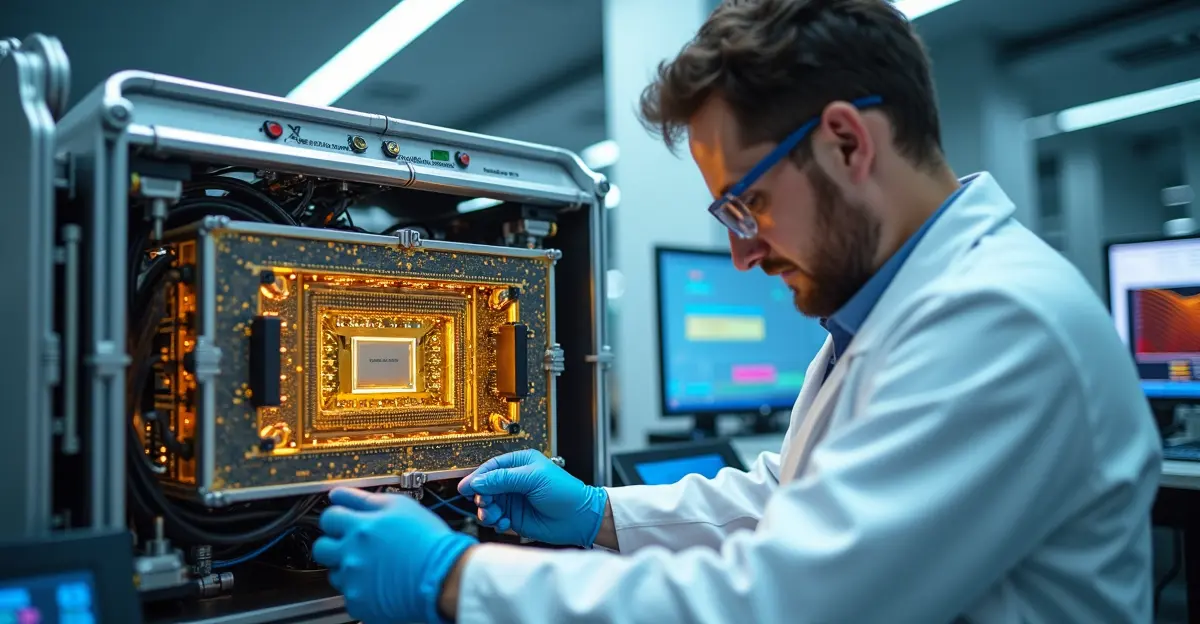
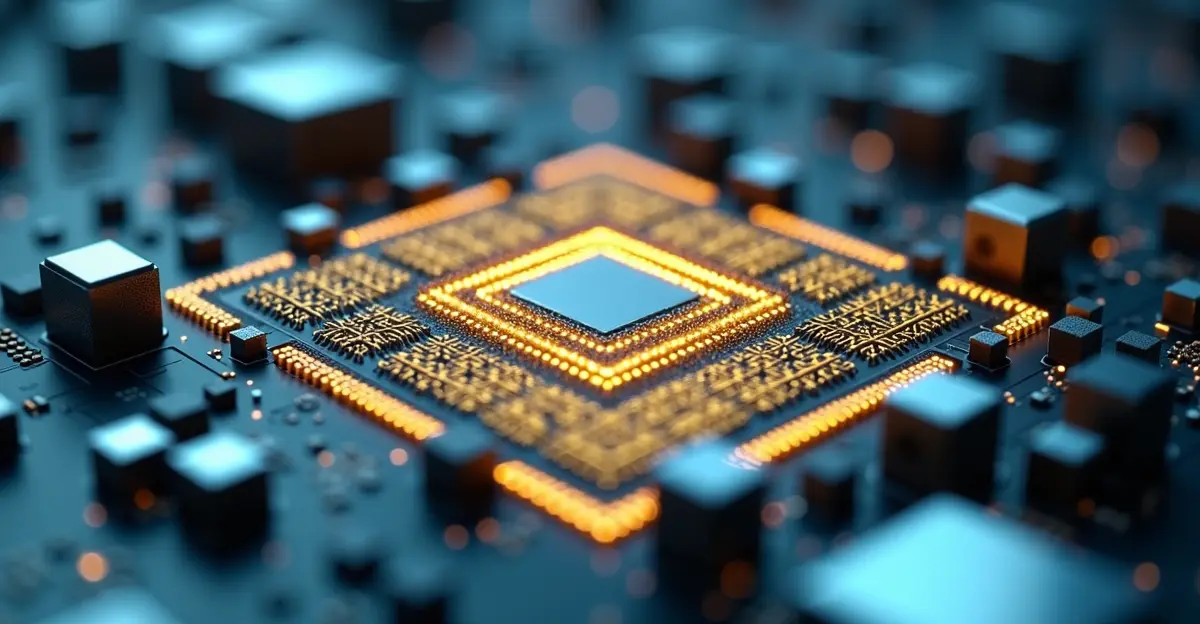
The Willow processor is Google Quantum AI's 105-qubit superconducting quantum computing chip that achieves 'below-threshold' quantum error correction—a milestone solving a 30-year challenge in quantum computing. Unlike previous quantum systems where errors increased with scale, Willow demonstrates exponential error reduction as more qubits are added, with T1 coherence time improved from Sycamore's 20 microseconds to 100 microseconds. Fabricated in Google's specialized Santa Barbara facility, Willow represents what experts call the first practical demonstration that useful, large-scale quantum computers can be built, validating quantum computing's potential to solve problems beyond classical computers' reach.
Immediate Implications for AI Development and Computational Supremacy
The Willow breakthrough arrives at a pivotal moment in the US-China technology competition, where quantum supremacy has become a critical national asset. While the U.S. leads in quantum research through its distributed innovation ecosystem, China has deployed industrial-scale funding—approximately $15 billion in government investment—and centralized coordination to seize dominance in quantum systems. China currently leads in quantum communications with a 12,000-kilometer network and publishes more quantum-related research papers annually than any other country.
Google's achievement demonstrates that American private-sector innovation can still outpace state-directed approaches, but the race remains intensely competitive. According to the U.S.-China Economic and Security Review Commission, the first country to achieve quantum supremacy will gain disproportionate advantages in encryption, materials science, energy production, medical research, and intelligence collection. The Willow chip's ability to perform calculations in minutes that would take classical supercomputers millennia validates quantum computing's potential to accelerate artificial intelligence development through quantum-enhanced machine learning algorithms.
Cybersecurity Paradigms and National Security Considerations
The Willow breakthrough has immediate implications for global cybersecurity, introducing what experts call 'Harvest Now, Decrypt Later' risks. Adversaries could collect encrypted data today—including government communications, financial transactions, and military secrets—to decrypt later when quantum computers become sufficiently powerful. This threat has accelerated global efforts toward quantum-safe encryption standards.
In August 2024, the U.S. National Institute of Standards and Technology (NIST) released its first three finalized post-quantum encryption standards after an eight-year global effort involving 82 algorithm submissions from 25 countries. Microsoft's Quantum Safe Program aims to make its infrastructure quantum-resistant by 2033, two years ahead of most government deadlines. Meanwhile, China has already deployed quantum key distribution across its extensive communication networks, creating a parallel quantum security infrastructure.
Semiconductor Supply Chain Strategies and Technological Sovereignty
The Willow chip's fabrication in Google's Santa Barbara facility highlights growing concerns about semiconductor supply chain security in quantum computing. Unlike classical semiconductors dominated by Asian manufacturing, quantum chips require specialized fabrication facilities with extreme environmental controls. This creates opportunities for reshoring critical manufacturing capabilities but also raises questions about access to rare materials and specialized equipment.
Nations are increasingly viewing quantum technology through the lens of technological sovereignty, with the European Union launching its Quantum Flagship initiative and countries like the UK, India, and Pakistan making significant investments. The strategic importance of controlling the quantum computing supply chain has intensified geopolitical tensions, leading to U.S. export controls on quantum hardware components and creating an environment of suspicion and secrecy reminiscent of the semiconductor wars.
The Emerging Quantum Divide and Global Power Structures
Google's Willow breakthrough risks accelerating what experts call the 'quantum divide'—a growing gap between quantum-capable nations and those without access to this transformative technology. This divide could reshape global economic and military power structures more profoundly than previous technological revolutions.
Countries with quantum capabilities could gain advantages in:
- Financial modeling and risk assessment
- Drug discovery and medical research
- Materials science and energy production
- Climate modeling and environmental solutions
- Military intelligence and strategic planning
The strategic responses from competing nations have been swift. China's Tianyan-504 recently surpassed the 500-qubit threshold while matching international standards for qubit lifetime and readout fidelity. Russia, the UK, and other nations are also investing heavily, recognizing that quantum technology represents not just an economic opportunity but a fundamental component of future national security.
Expert Perspectives on the Quantum Race
Industry leaders offer contrasting views on the timeline for practical quantum applications. Nvidia CEO Jensen Huang suggests quantum computers may still be 20 years away from practical applications, while Meta's Mark Zuckerberg estimates 10-30 years. However, Google's Willow achievement demonstrates that the foundational hardware challenges are being solved faster than many anticipated.
'The Willow chip represents the most convincing evidence yet that scalable quantum computing is achievable,' says Dr. Eleanor Vance, quantum computing researcher at Stanford University. 'While practical applications remain years away, the breakthrough validates the fundamental physics and engineering approaches that will eventually deliver quantum advantage across multiple domains.'
Strategic Responses and the Race for Quantum-Safe Standards
The global response to quantum computing threats has accelerated standardization efforts. NIST's post-quantum cryptography standards represent the primary tools for general encryption and digital signatures in the post-quantum era. Organizations worldwide are beginning implementation, recognizing that full integration will take years but must begin immediately given the 'Harvest Now, Decrypt Later' threat.
Microsoft's comprehensive Quantum Safe Program involves three phases: integrating post-quantum cryptography into foundational components by 2029, enabling early adoption, and gradually making quantum-safe capabilities default. This approach reflects the broader industry recognition that the transition to quantum-resistant systems represents one of the most significant cybersecurity challenges of our time.
FAQ: Google's Willow Quantum Breakthrough
What makes Google's Willow chip different from previous quantum processors?
Willow achieves 'below-threshold' quantum error correction, meaning errors decrease exponentially as more qubits are added—solving a 30-year challenge in quantum computing. It also demonstrated unprecedented computational speed, completing in minutes what would take classical supercomputers 10 septillion years.
How does Willow affect current encryption systems?
While Willow itself doesn't break current encryption, it validates that quantum computers capable of breaking RSA and ECC encryption are achievable. This has accelerated global efforts to develop and implement quantum-safe encryption standards before such attacks become practical.
What are the immediate practical applications of quantum computing?
Current quantum computers remain largely experimental, but near-term applications include quantum chemistry simulations, optimization problems, and quantum-enhanced machine learning. Practical large-scale applications are estimated to be 10-30 years away.
How does the US quantum position compare to China's?
The US leads in quantum research through private-sector innovation (Google, IBM, Microsoft) and academic excellence, while China leads in quantum communications and has deployed massive state funding ($15 billion) with tight military integration. China publishes more quantum research papers annually.
What should organizations do to prepare for quantum computing?
Organizations should begin inventorying sensitive data with long-term value, assessing cryptographic vulnerabilities, planning migration to post-quantum cryptography standards, and developing quantum literacy among security teams.
Conclusion: The New Quantum Geopolitics
Google's Willow quantum breakthrough represents more than a technical achievement—it signals the beginning of a new era in global technology competition where quantum capabilities will increasingly determine economic and military advantage. As nations race to develop quantum technologies while protecting against quantum threats, the strategic landscape is being fundamentally reshaped. The coming decade will see intensified competition in quantum hardware, software, and standards, with profound implications for global power structures, economic development, and national security. The quantum race has entered its most critical phase, and Google's Willow chip has just raised the stakes.

Follow Discussion