


 Deutsch
 English
 Español
 Français
 Nederlands
 Português


 Share
Share




Virtual Workplaces Beyond Earth
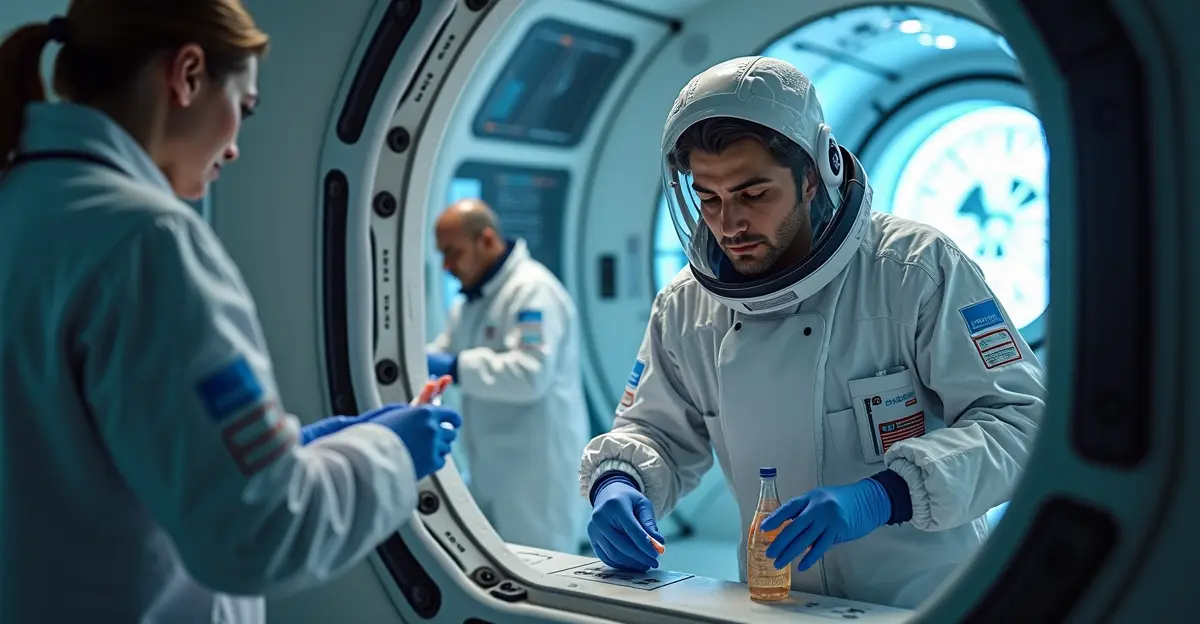
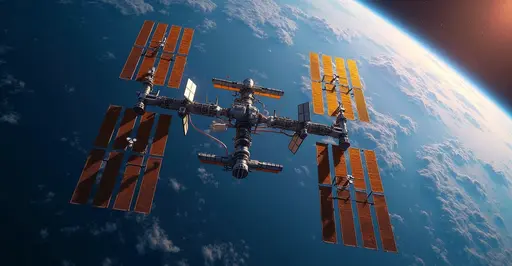
As humanity pushes further into the cosmos, telepresence technology is transforming how we operate in space. NASA's Expedition 73 crew aboard the International Space Station (ISS) is pioneering advanced remote operations systems that could redefine deep space exploration. These systems allow astronauts to control robots, conduct experiments, and even perform repairs in locations too hazardous for humans - all from the safety of the orbital outpost.
How Space Telepresence Works
Space telepresence combines high-fidelity video systems, haptic feedback interfaces, and near-zero latency communication networks. Operators wear specialized gloves and VR headsets that transmit their movements to robotic avatars in real-time. The system provides force feedback, allowing users to "feel" objects they manipulate remotely. Recent upgrades deployed on the ISS in 2025 have reduced latency to under 0.4 seconds for Earth-orbital operations.
Current Applications in Orbit
Astronauts are currently using telepresence for:
- External station maintenance without risky spacewalks
- Controlling rovers on the lunar surface from orbit
- Performing delicate scientific experiments in vacuum chambers
- Remote medical diagnostics using specialized tools
NASA's partnership with companies like Owl Labs has led to the development of 4K 360° camera systems that capture every detail of remote environments, making operators feel truly present at distant worksites.
Deep Space Implications
The technology could revolutionize future Mars missions. "Imagine astronauts orbiting Mars controlling surface operations in real-time without the 20-minute communication delay," says Dr. Elena Rodriguez, NASA's lead teleoperations specialist. "This eliminates the most dangerous phases of planetary exploration while maximizing scientific return."
Private space companies are also investing heavily in the technology. NASA recently demonstrated a prototype system that allowed an Earth-based operator to assemble a solar array mockup in simulated Martian conditions with 98% accuracy.
Future Developments
Upcoming innovations include:
- AI-assisted predictive movement for delayed environments
- Neural interface controls for more intuitive operation
- Miniaturized systems for small satellite maintenance
- Holographic workspaces projected inside spacecraft
As we prepare for humanity's next giant leap, telepresence is proving to be the ultimate workplace flexibility - enabling humans to work anywhere in the solar system without leaving orbit.

Follow Discussion