


 Deutsch
 English
 Español
 Français
 Nederlands
 Português


 Share
Share




The Race to Harvest Moon Water Heats Up
Space agencies and private companies have announced ambitious new missions to extract water from the Moon's surface. This breakthrough could revolutionize space exploration by providing drinking water, breathable oxygen, and rocket fuel for future lunar bases.
Why Lunar Water Matters
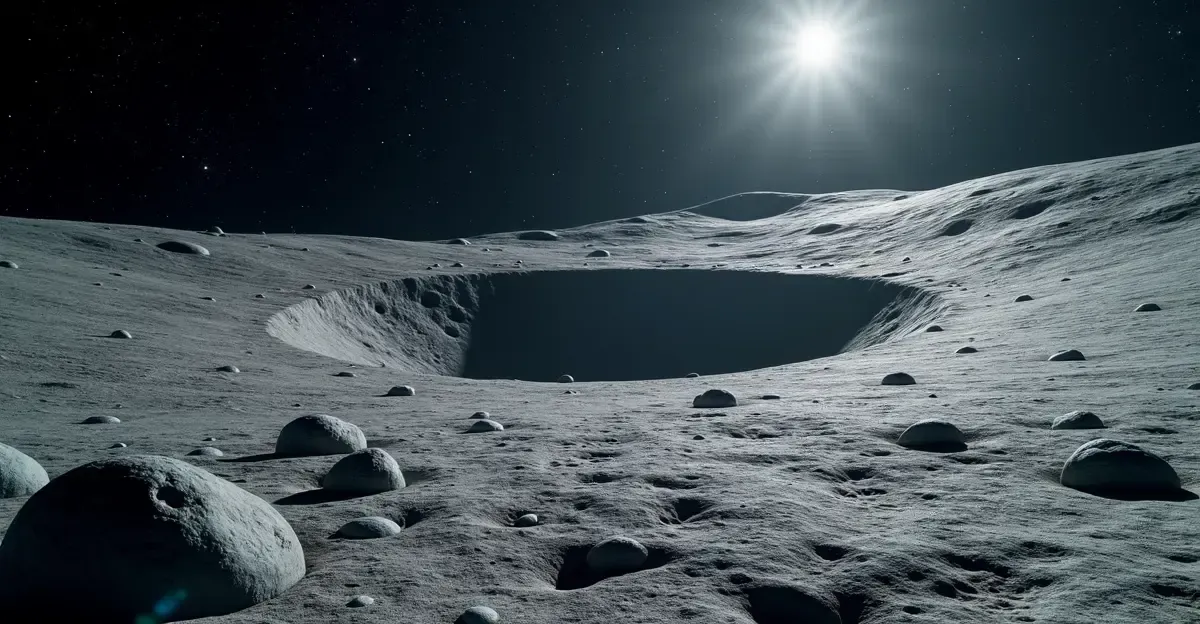
Scientists have confirmed frozen water exists in permanently shadowed craters near the Moon's poles. This ice isn't surface sheets but tiny chunks mixed with lunar soil. NASA's previous experiments detected water molecules in the Moon's thin atmosphere too.
Water is heavy and expensive to launch from Earth. Being able to harvest it on the Moon would make sustainable lunar colonies possible. Water can be split into hydrogen for fuel and oxygen for breathing through electrolysis.
New Extraction Missions Launching
Japanese company ispace has partnered with Takasago Thermal Engineering to test thermal mining technology. Their Mission 2 lunar lander launched in January 2025 and will attempt water extraction in June 2025. "Demonstrating water extraction technology will significantly contribute to future space resource utilization," said ispace CEO Takeshi Hakamada.
Meanwhile, NASA's PRIME-1 mission (launching late 2024) will test drilling and ice analysis near the Moon's south pole. Scientists are also exploring microwave technology to extract water from icy lunar soil.
Technical Challenges
Extracting water on the Moon presents unique difficulties:
- Operating in extreme cold (-230°C in shadowed areas)
- Working with abrasive lunar dust (regolith)
- Designing equipment that works in low gravity
- Minimizing power consumption
Takasago's thermal mining approach uses heat to vaporize ice, which is then collected and condensed. This builds on their Mission 2 experiment attempting the first lunar water electrolysis.
What This Means for Space Exploration
Successful water extraction would be a game-changer:
- Enable refueling stations for Mars missions
- Support long-term lunar habitats
- Reduce mission costs by using local resources
- Create new space industries and economic opportunities
As Takasago President Kazuhito Kojima stated: "We aim to demonstrate the feasibility of water resource extraction to establish the foundation for scientific and industrial activities integrating Earth and the Moon."


Follow Discussion