


 Deutsch
 English
 Español
 Français
 Nederlands
 Português


 Share
Share




Hydrogen Halos Discovery: 33,000 Cosmic Reservoirs Found in Early Universe
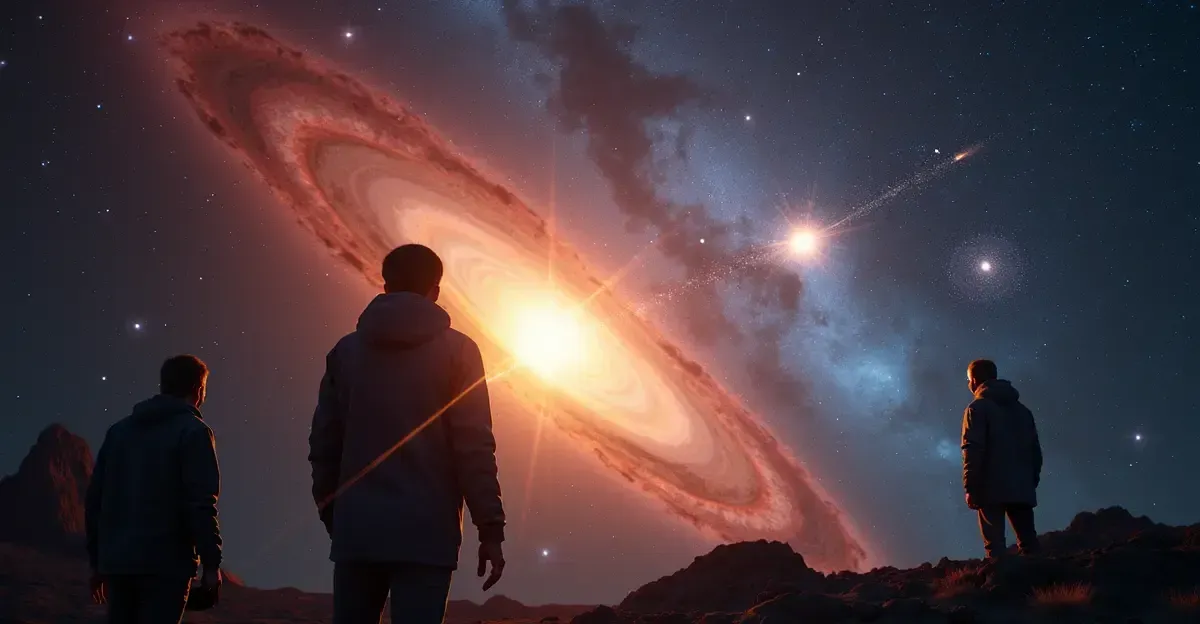
Astronomers have made a groundbreaking discovery that fundamentally changes our understanding of the early universe, identifying more than 33,000 gigantic hydrogen gas halos surrounding young galaxies from 10 to 12 billion years ago. This represents a tenfold increase from the previously known 3,000 such structures and confirms that these cosmic reservoirs were common rather than rare during the peak star formation period known as Cosmic Noon.
What Are Hydrogen Halos?
Hydrogen halos, also known as Lyman-alpha nebulae, are enormous clouds of neutral hydrogen gas that surround galaxies in the early universe. These structures range from tens of thousands to hundreds of thousands of light-years across and serve as the primary fuel source for star formation. Unlike stars or galaxies, hydrogen gas doesn't emit light on its own but glows when energized by ultraviolet radiation from nearby stars, making it challenging to detect without specialized instruments.
The discovery was made using data from the Hobby-Eberly Telescope Dark Energy Experiment (HETDEX), which has been conducting an unprecedented survey of the cosmos. 'We have the largest statistical census bridging Lyman-alpha halos and blobs across Cosmic Noon,' said lead researcher Erin Mentuch Cooper in the study published in The Astrophysical Journal.
The HETDEX Breakthrough
The HETDEX project represents a quantum leap in astronomical observation capabilities. Using the Hobby-Eberly Telescope in Texas, researchers have collected nearly half a petabyte of data covering an area equivalent to over 2,000 full Moons. This massive survey has allowed astronomers to detect typical hydrogen halos rather than just the brightest, most extreme examples that previous studies could identify.
'Our observations cover a portion of the sky larger than 2000 full moons,' explained Karl Gebhardt, principal investigator of HETDEX. 'The scale is enormous and unprecedented.' The instrument delivers 100,000 spectra per observation, creating a dataset that has revealed thousands of previously hidden cosmic structures.
Key Findings from the Research
- 33,000+ halos identified: Up from just 3,000 previously known
- 10-12 billion years old: Dating from the Cosmic Noon epoch
- Common occurrence: Nearly half of examined galaxies show halos
- Massive scale: Halos range from 10,000 to 100,000+ light-years across
- Diverse morphology: From symmetrical clouds to irregular 'amoeba-like' structures
Why This Discovery Matters
This discovery provides crucial evidence for how galaxies formed and grew during the universe's most active period of star formation. The hydrogen halos represent the raw material from which stars were born, and their abundance confirms theoretical models predicting that galaxies drew from vast reservoirs of gas to fuel their rapid growth. Similar to how the James Webb Space Telescope discoveries have revolutionized our view of early galaxies, this finding provides direct observational evidence of the gas reservoirs that powered cosmic evolution.
The research also reveals that standard measurement methods may underestimate galaxy brightness by about 30% by missing emissions from these extended halos. This has significant implications for how astronomers calculate galaxy properties and understand cosmic evolution.
Cosmic Noon: The Universe's Peak Star Formation Era
Cosmic Noon refers to the period approximately 10-12 billion years ago when the universe was about 3 billion years old and galaxies were forming stars at their maximum rate. During this epoch, galaxies grew rapidly by drawing hydrogen gas from their surroundings to create new stars. The newly discovered halos provide direct evidence of this process on a massive scale.
'These are the largest statistical census bridging Lyman-alpha halos and blobs across Cosmic Noon,' the researchers noted in their paper. The diversity of halo shapes – from football-shaped clouds around single galaxies to sprawling structures containing multiple galaxies – suggests complex interactions and gas flows during this critical period.
Future Implications and Research Directions
With tens of thousands of hydrogen halos now identified, astronomers can shift from simply finding these structures to understanding their physics in detail. The massive catalog allows researchers to study the morphological variety of halos and test different models of galaxy formation and evolution. This breakthrough comes at a time when other astronomical discoveries, like those from the Hubble Space Telescope legacy observations, are also reshaping our understanding of cosmic history.
'Now we can focus on individual halos and look much more closely at the physics and mechanisms at play there,' said co-author Dustin Davis. 'Then we can adjust or reject the models and start over.' This represents a fundamental shift from searching for needles in haystacks to having a complete toolbox for understanding early universe physics.
Frequently Asked Questions
What are hydrogen halos made of?
Hydrogen halos consist primarily of neutral hydrogen gas, the most abundant element in the universe and the fundamental building block for star formation.
How were these halos detected?
They were detected using the HETDEX survey, which analyzes light spectra to identify the characteristic Lyman-alpha emission line produced when hydrogen gas is energized by nearby stars.
Why is this discovery important?
This discovery confirms that hydrogen reservoirs were common around early galaxies, providing direct evidence for how galaxies fueled their rapid growth during the universe's peak star formation period.
What is Cosmic Noon?
Cosmic Noon refers to the period 10-12 billion years ago when the universe was about 3 billion years old and galaxies were forming stars at their maximum rate.
How does this affect our understanding of galaxy formation?
The discovery provides observational evidence that galaxies drew from vast hydrogen reservoirs to fuel star formation, supporting theoretical models of galaxy growth during the early universe.
Sources and Further Reading
Primary research: 'The Largest Statistical Census Bridging Lyα Halos and Blobs across Cosmic Noon' - The Astrophysical Journal
HETDEX Project: Hobby-Eberly Telescope Dark Energy Experiment
Additional coverage: Phys.org coverage of the discovery
This discovery represents a major milestone in observational cosmology, providing the largest statistical sample of early universe hydrogen reservoirs ever compiled. As astronomers continue to analyze the HETDEX data, we can expect further insights into the fundamental processes that shaped our cosmic history, much like how recent exoplanet discoveries have transformed our understanding of planetary systems.


Follow Discussion