


 Deutsch
 English
 Español
 Français
 Nederlands
 Português


 Share
Share




Astrobiology Breakthrough: Radiation May Fuel Microbial Life
In a stunning development that could revolutionize our search for extraterrestrial life, new research reveals that cosmic rays - previously considered deadly to organisms - might actually power microbial ecosystems beneath the icy surfaces of moons like Europa and Enceladus. A groundbreaking study published in the International Journal of Astrobiology introduces the concept of a 'Radiolytic Habitable Zone' where cosmic radiation could sustain life in cold, dark environments.
The Radiation Revolution
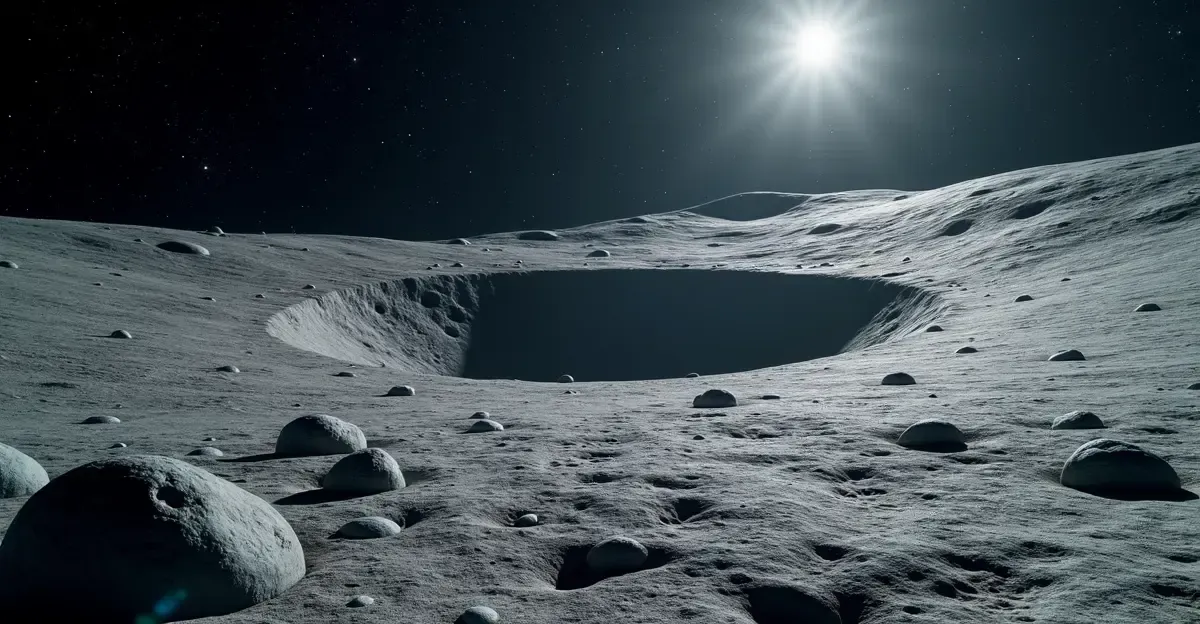
Led by Dr. Dimitra Atri at New York University Abu Dhabi, the research team discovered that when cosmic rays penetrate thin atmospheres or ice layers, they trigger a process called radiolysis - breaking apart water molecules to release electrons that certain bacteria can use as energy. 'This fundamentally changes where we should look for life in the universe,' Dr. Atri told reporters. 'Instead of focusing only on sunlit environments, we now have compelling evidence that life could thrive in the cold, dark subsurface oceans of icy moons.'
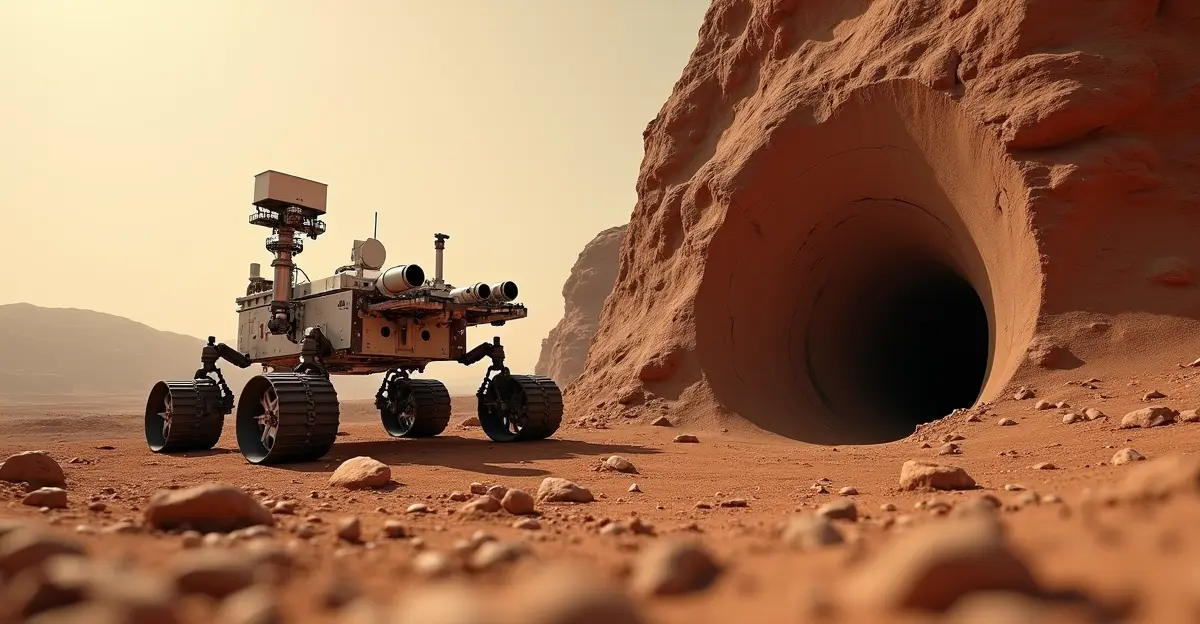
The study used computer simulations to model how cosmic rays interact with subsurface environments on Mars, Europa, and Enceladus. Surprisingly, Enceladus emerged as the most promising candidate, with simulations showing potential biomass concentrations peaking around 2 meters below its icy surface. 'Enceladus has everything we're looking for,' explained Dr. Atri. 'Subsurface oceans confirmed by the Cassini mission, hydrothermal activity, organic molecules, and now we've shown it has the energy source to power microbial communities.'
Europa's Hidden Potential
Jupiter's moon Europa has long fascinated astrobiologists with its subsurface ocean containing more water than all of Earth's oceans combined. The Europa Clipper mission, launched in October 2024, is specifically designed to investigate this potential habitat. Recent tests of its REASON radar instrument during a Mars flyby in March 2025 demonstrated perfect performance, giving scientists confidence in its ability to penetrate Europa's icy shell.
'The successful Mars test was crucial,' said mission scientist Dr. Elena Rodriguez. 'We now know our radar can detect water pockets and potentially even reach the subsurface ocean. Combined with this new research about cosmic rays powering life, we're more excited than ever about what we might find.'
Enceladus: The Prime Candidate
Saturn's moon Enceladus has become the focus of intense astrobiological interest following Cassini's discovery of massive water plumes erupting from its south pole. These plumes contain salt, organic compounds, and evidence of hydrothermal activity - all ingredients for life as we know it. The proposed Enceladus Orbilander mission, currently NASA's second-highest priority flagship mission, would both orbit and land on the moon to conduct comprehensive life detection.
'Enceladus is giving us free samples of its ocean through those plumes,' noted Dr. Michael Wong, an astrobiologist at the SETI Institute. 'The combination of confirmed liquid water, hydrothermal vents, organic molecules, and now this cosmic ray energy source makes it arguably the most promising place to search for life in our solar system.'
Future Missions and Implications
The discovery of the Radiolytic Habitable Zone has profound implications for future space exploration. It suggests that billions of cold, dark worlds across the galaxy could potentially host life, dramatically expanding the search parameters for habitable environments. Both NASA and ESA are now reevaluating mission strategies to focus on subsurface exploration and radiation-driven chemistry.
'This is a paradigm shift in astrobiology,' concluded Dr. Atri. 'We're no longer limited to looking for Earth-like conditions. Life could be thriving in places we previously considered uninhabitable, powered by the very radiation we thought would kill it.' As missions like Europa Clipper and potential Enceladus explorers prepare to investigate these icy worlds, the possibility of discovering extraterrestrial microbial life has never seemed more realistic.



Follow Discussion