


 Deutsch
 English
 Español
 Français
 Nederlands
 Português


 Share
Share




Antimatter Transport Breakthrough: CERN Successfully Moves Antiprotons by Truck
In a historic scientific achievement, researchers at CERN have successfully transported antimatter over the road for the first time, marking a major breakthrough in particle physics research. The groundbreaking test involved moving 92 antiprotons in a specially designed container aboard a truck across the CERN campus near Geneva, Switzerland, opening new possibilities for studying one of the universe's greatest mysteries.
What is Antimatter and Why is This Transport Breakthrough Significant?
Antimatter is the mirror opposite of ordinary matter, with particles carrying opposite electrical charges. When matter and antimatter meet, they annihilate each other in a burst of energy, making antimatter extremely difficult to handle and study. For over forty years, scientists at CERN have been studying antimatter, but the equipment used to trap antideeltjes interferes with other sensitive instruments. This successful transport test represents a crucial step toward moving antimatter to specialized facilities where it can be studied with unprecedented precision.
The significance of this achievement cannot be overstated. As research leader Stefan Ulmer explained, 'This is the beginning of a new era of precision measurements.' The ability to transport antimatter safely could revolutionize our understanding of fundamental physics and potentially explain one of cosmology's biggest mysteries: why the universe contains mostly matter when the Big Bang should have created equal amounts of matter and antimatter.
The Groundbreaking Test: How Scientists Transported Antimatter
The successful test involved several critical components and careful planning:
The Specialized Container Design
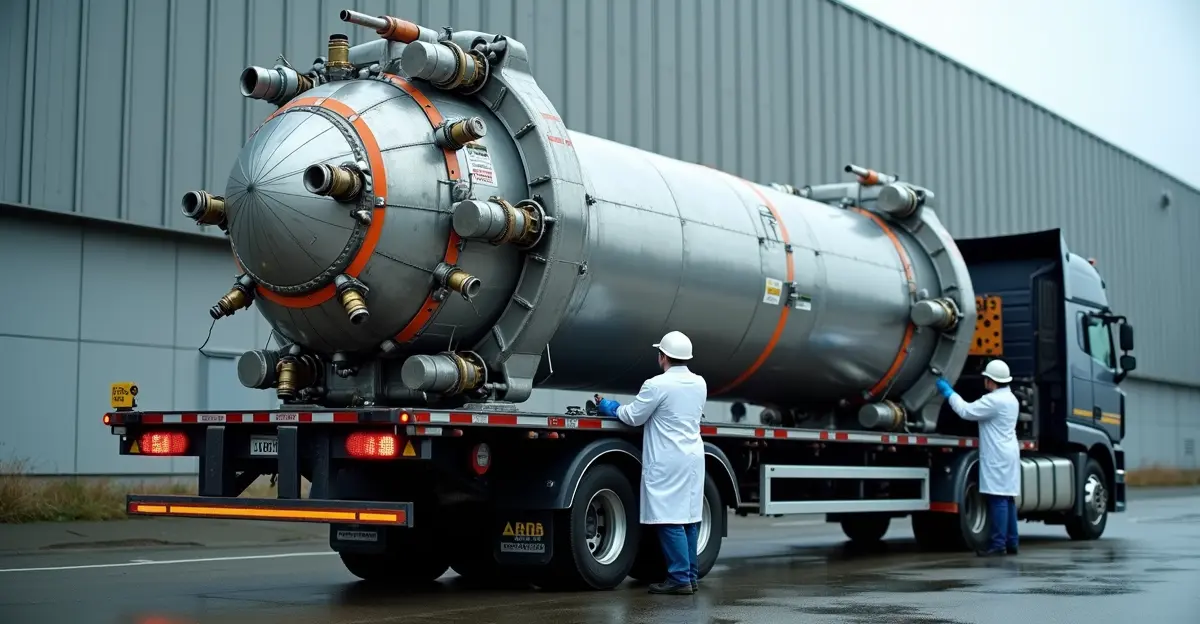
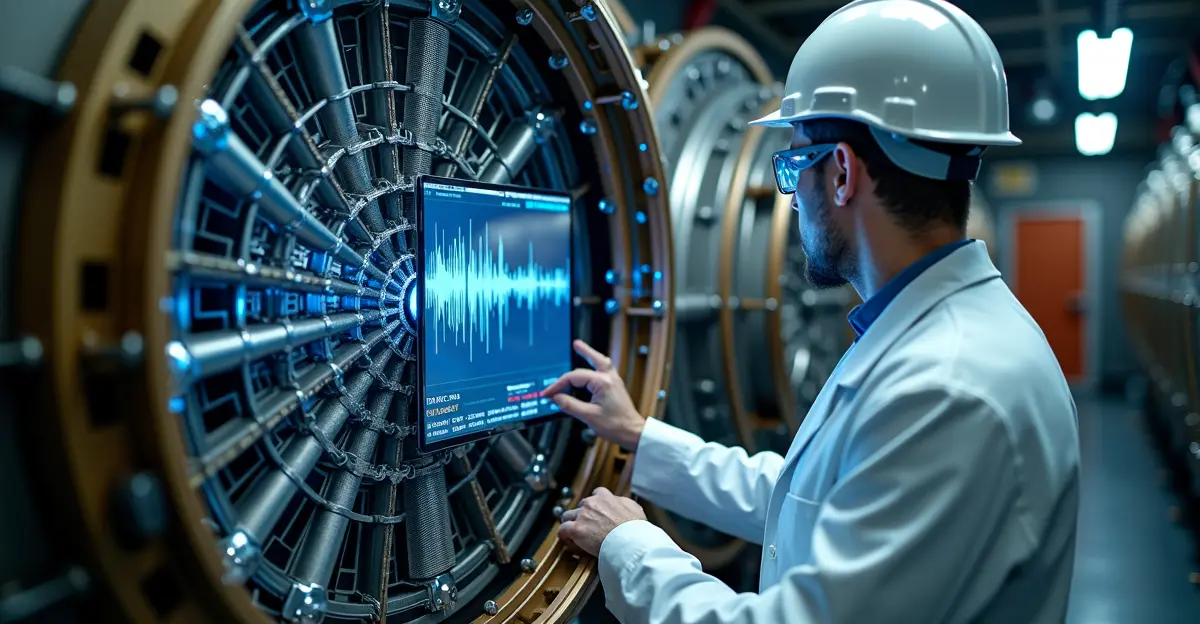
Researchers developed a revolutionary container that keeps antiprotons suspended in magnetic and electric fields at an astonishing -269 degrees Celsius (-452°F). This extreme cold and magnetic suspension prevents contact with regular matter, which would cause immediate annihilation. The device measures approximately the size of two large freezers and weighs about one ton, making it significantly more practical than previous storage systems used in particle physics laboratories.
The Transport Process
On March 24, 2026, scientists loaded the container containing 92 antiprotons onto a truck at CERN's facilities. The vehicle then completed a half-hour test drive around the research campus, covering several kilometers before returning safely to the laboratory. The most critical moment came when researchers confirmed that antiprotons had survived the journey. 'The particles have returned and they are still in the container,' Ulmer reported enthusiastically.
Engineering Challenges Overcome
Transporting antimatter presented numerous engineering hurdles. The system had to withstand acceleration, braking, and potential road imperfections without compromising the delicate magnetic fields. Even a small pothole could have meant the end of the precious antiproton cargo. Remarkably, the safety systems worked perfectly, and researchers are still analyzing exactly how many antiprotons survived the journey.
Scientific Implications: Unlocking the Secrets of the Universe
This transportation breakthrough has profound implications for several areas of scientific research:
- Big Bang Research: Studying antimatter could reveal why our universe is dominated by ordinary matter when theoretical models predict equal amounts of both should have been created during the Big Bang
- Precision Measurements: The ability to move antimatter to specialized facilities like the one in Düsseldorf, Germany, could enable measurements 100 times more precise than currently possible
- Fundamental Physics: Better understanding of antimatter properties could test fundamental symmetries in physics and potentially reveal new physical principles
The ultimate goal is to transport antimatter 800 kilometers to a research institute in Düsseldorf, where superior measurement equipment awaits. This would represent a major advancement in quantum physics research capabilities.
Safety Considerations and Future Developments
Despite the exotic nature of antimatter, the transport posed minimal safety risks. Even if all 92 antiprotons had annihilated simultaneously, the energy released would have been detectable only with the most sensitive scientific instruments. The real challenge lies in practical logistics rather than safety concerns.
Current limitations include the container's battery life of just four hours, while the planned journey to Düsseldorf would require approximately ten hours. Researchers are now working on developing a generator system that would enable longer transports, with hopes of reaching the German facility by 2029.
Frequently Asked Questions About Antimatter Transport
What exactly is antimatter?
Antimatter consists of particles that are mirror opposites of ordinary matter particles, with opposite electrical charges. When matter and antimatter meet, they annihilate each other, releasing energy.
Why is transporting antimatter so difficult?
Antimatter annihilates upon contact with regular matter, requiring extreme isolation in magnetic fields and ultra-cold temperatures (-269°C) to prevent accidental contact during transport.
What practical applications could this breakthrough enable?
While immediate practical applications are limited, the ability to study antimatter more precisely could lead to breakthroughs in fundamental physics, potentially informing future energy technologies and advancing our understanding of the universe's origins.
How much antimatter was transported in the test?
The test involved 92 antiprotons, an extremely small amount that represents significant progress in antimatter handling despite its minuscule quantity.
What's next for antimatter research at CERN?
Researchers plan to develop longer-lasting power systems for the transport container and aim to complete the 800-kilometer journey to Düsseldorf by 2029, enabling unprecedented precision measurements.




Follow Discussion