


 Deutsch
 English
 Español
 Français
 Nederlands
 Português


 Share
Share




Antimatter Transport Guide: CERN's Historic First Road Test Explained
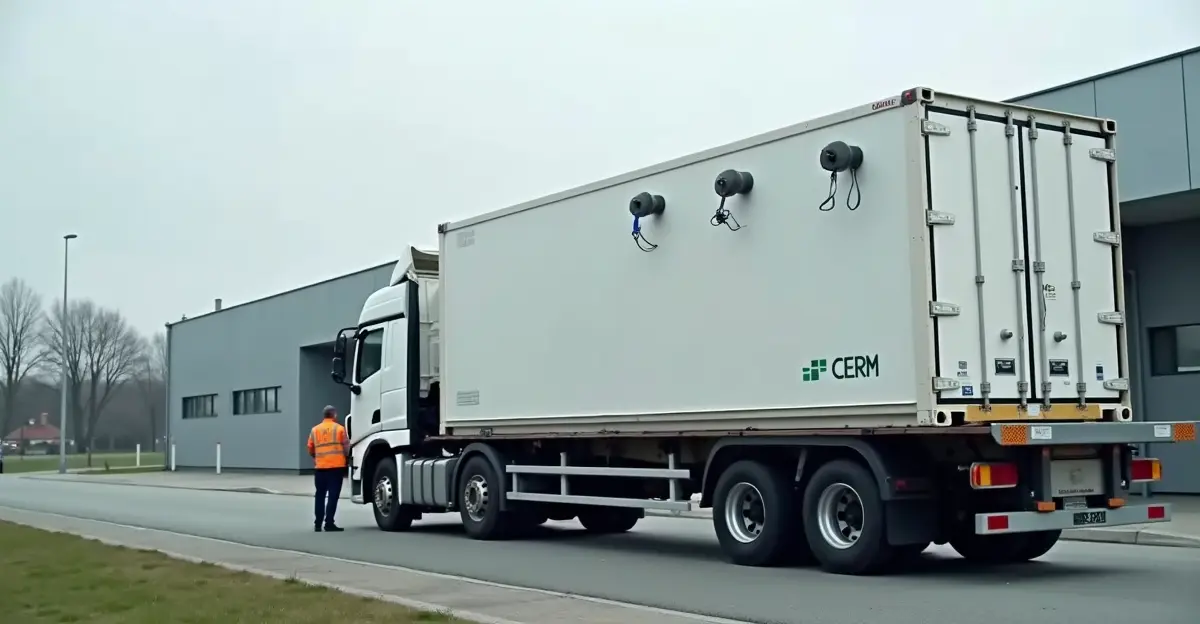
In a groundbreaking scientific achievement, researchers at CERN have successfully conducted the world's first road transport of antimatter, marking a historic milestone in particle physics research. On March 24, 2026, scientists at the European Organization for Nuclear Research loaded a specially designed container holding hundreds of antiprotons onto a truck for a 30-minute test drive around their Geneva campus, demonstrating for the first time that this exotic material can be safely transported over land.
What is Antimatter and Why is This Transport Significant?
Antimatter represents one of the most mysterious substances in the universe - it's the exact opposite of regular matter, with particles having opposite charges to their matter counterparts. When matter and antimatter meet, they annihilate each other in a burst of pure energy. This fundamental property has made antimatter notoriously difficult to study and transport. The successful road test at CERN represents a major breakthrough because it opens the door to transporting antimatter to specialized laboratories that can conduct more precise measurements than possible at CERN's main facility.
The transport system, known as BASE-STEP (Symmetry Tests in Portable Antiproton Experiments), uses a sophisticated Penning trap that maintains antiprotons in near-perfect vacuum conditions at temperatures of -269°C (-452°F). The container weighs approximately 1,000 kilograms (2,200 pounds) and measures 2 meters long, 1.5 meters high, and 1 meter wide. Despite its substantial size, this represents a significant miniaturization compared to previous antimatter containment systems.
The Engineering Marvel Behind Antimatter Transport
How the Container Works
The antimatter transport container employs multiple layers of protection to prevent annihilation:
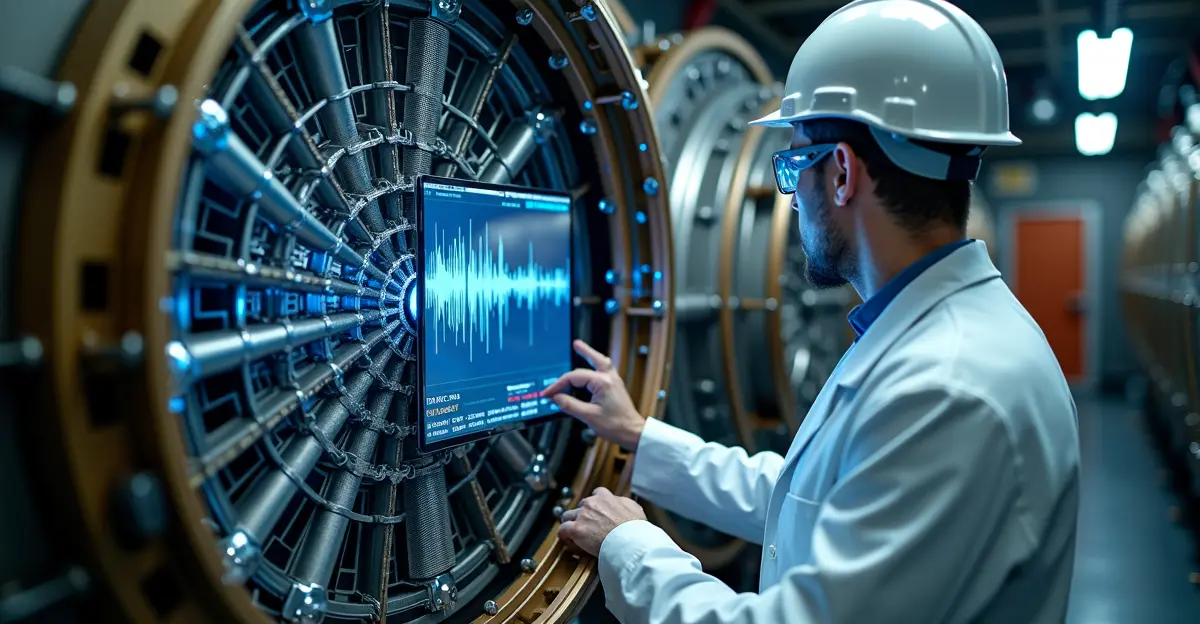
- Magnetic Containment: Superconducting magnets generate powerful magnetic fields that keep antiprotons suspended away from container walls
- Cryogenic Cooling: Liquid helium maintains temperatures near absolute zero (-269°C)
- Ultra-High Vacuum: The interior replicates the vacuum of space to prevent contact with air molecules
- Real-Time Monitoring: Sensors continuously track the antiprotons during transport
Project leader Christian Smorra explained the system's safety: 'The worst that can happen is we have to go back to the antimatter factory to refill the cylinder. Even if all thousand particles annihilated at once, the energy released would be less than a billionth of sunlight hitting your skin.'
Safety and Scale Considerations
Despite antimatter's dramatic portrayal in science fiction, the actual quantities being transported are minuscule. The container holds approximately 0.000000000000000000000167 grams of antiprotons - an amount so small that complete annihilation would release negligible energy. This safety factor was crucial in obtaining regulatory approval for the transport experiment.
The Bigger Picture: Solving the Universe's Greatest Mystery
This transportation breakthrough isn't just a technical achievement - it's a crucial step toward solving one of physics' greatest mysteries: why does our universe contain matter instead of nothing? According to cosmological theories, the Big Bang should have created equal amounts of matter and antimatter, which should have annihilated each other completely. Yet somehow, matter survived to form galaxies, stars, planets, and life.
The ability to transport antimatter to specialized facilities like Heinrich Heine University in Düsseldorf will enable scientists to conduct experiments with 100 times greater precision than currently possible at CERN. These measurements could reveal subtle differences between matter and antimatter that explain the cosmic imbalance. Similar to the 2025 discovery of CP violation in baryons, this research could provide crucial insights into fundamental physics.
Historical Context and Future Applications
Antimatter research has a rich history dating back to Paul Dirac's 1928 theoretical prediction and Carl Anderson's 1932 experimental discovery of the positron (anti-electron), both earning Nobel Prizes. CERN has been at the forefront of antimatter research for over four decades, producing and storing antimatter at their Antimatter Factory - the only facility in the world capable of these operations.
The successful test paves the way for future applications:
- 2029 Delivery to Düsseldorf: Planned 800-kilometer transport to Germany for precision experiments
- European Research Network: Potential for multiple laboratories to conduct independent antimatter research
- Medical Applications: Improved understanding could enhance positron emission tomography (PET) scanning technology
- Fundamental Physics: Testing theories beyond the Standard Model of particle physics
As Dr. Smorra noted, 'This isn't just about moving particles from point A to point B. It's about opening new frontiers in our understanding of the universe's fundamental nature.' The technology developed for this transport could have applications in quantum computing and precision measurement technologies, similar to advances seen in quantum entanglement research.
Frequently Asked Questions About Antimatter Transport
Is transporting antimatter dangerous?
No, the quantities are so minuscule that even complete annihilation would release negligible energy - less than sunlight hitting your skin.
How much antimatter is being transported?
Approximately 1,000 antiprotons weighing 0.000000000000000000000167 grams - an incredibly small amount for scientific research.
Why transport antimatter instead of conducting experiments at CERN?
Specialized laboratories like Heinrich Heine University in Düsseldorf have equipment 100 times more sensitive than CERN's Antimatter Factory, enabling more precise measurements.
What happens if the container fails during transport?
The antiprotons would annihilate upon contact with air or container materials, releasing negligible energy. The main loss would be scientific data, not safety risk.
When will antimatter be transported to other countries?
CERN plans the first international transport to Düsseldorf, Germany in 2029, pending successful extended testing of the transport system.




Follow Discussion