


 Deutsch
 English
 Español
 Français
 Nederlands
 Português


 Share
Share




Far-right lawyer and political outsider Abelardo de la Espriella has narrowly won Colombia's presidential runoff election on June 21, 2026, defeating leftist senator Iván Cepeda by less than one percentage point in the tightest presidential race in modern Colombian history. With 49.66% of the vote (12.9 million ballots) against Cepeda's 48.70%, De la Espriella — known as 'El Tigre' — becomes the most-voted presidential candidate ever in Colombia. U.S. President Donald Trump swiftly congratulated the president-elect, signaling a major realignment in U.S.-Colombia relations and a broader rightward shift across Latin America.
Colombia's Razor-Thin Election Results
The June 21 runoff capped a deeply polarized campaign. Preliminary results from the National Registry, with 99.94% of ballot boxes counted, showed De la Espriella with 12,953,317 votes to Cepeda's 12,705,116 — a margin of fewer than 250,000 votes. Turnout reached approximately 63.6%, among the highest in Colombian history. De la Espriella dominated the populous Andean highland departments including Antioquia, Santander, and Cundinamarca, while Cepeda won 19 of Colombia's 32 departments, sweeping the Caribbean and Pacific coasts, the south, and Bogotá.
Cepeda has announced plans to challenge the results from approximately 33,000 ballot boxes (27% of the total), citing irregularities. However, analysts note that during the first round, a similar mass scrutiny netted Cepeda only 15,000 additional votes, making a reversal unlikely. The official binding tally is expected within a week, with the inauguration scheduled for August 7, 2026.
Who Is Abelardo de la Espriella?
Born in Bogotá on July 31, 1978, and raised in Montería, De la Espriella is a 47-year-old criminal defense lawyer, businessman, and naturalized U.S. citizen who lived in Miami for over a decade. He founded the Defenders of the Homeland (Defensores de la Patria) political movement in 2024. A millionaire who promoted his own rum and wine brands, he has never held elected office.
De la Espriella gained notoriety defending high-profile clients linked to right-wing paramilitaries, including former President Álvaro Uribe, who was convicted in 2025 to 12 years of house arrest for ties to paramilitary death squads. He also represented Alex Saab, a businessman accused of money laundering for Venezuela's Nicolás Maduro. His father, a magistrate and close friend of Uribe, instilled early political connections.
Hardline Security Platform: 'Iron Fist' Against Crime
De la Espriella campaigned on a radical security overhaul, vowing to end Colombia's decades-long internal conflict within 90 days. His flagship proposal involves building at least ten mega-prisons in isolated jungle areas, modeled after El Salvador's controversial facilities under President Nayib Bukele. The prisons would be privately financed and operated under 80-year concessions, with a new military-veteran oversight body replacing the current prison authority INPEC.
He also promised to bomb 'narco-camps' from the air, impose tougher sentences, and dismantle criminal networks with an 'iron fist.' The proposals resonate deeply with a population traumatized by violence: Colombia recorded 14,780 homicides in 2025 — the highest since 2015 — and a homicide rate of 25.8 per 100,000 inhabitants. Coca cultivation and cocaine production have surged to all-time records, fueling armed group expansion. The Colombia drug violence crisis has driven many voters toward hardline solutions.
Economic and State Reform
Inspired by Argentina's libertarian President Javier Milei, De la Espriella has pledged to slash Colombia's large state apparatus, firing hundreds of thousands of civil servants. He advocates for lower taxes, expanded oil and mining exploration, and closer trade ties with the United States. His economic vision represents a sharp break from outgoing leftist President Gustavo Petro's progressive social spending and 'Total Peace' strategy, which failed to curb violence or arrest coca production.
Trump's Embrace and Latin America's Rightward Shift
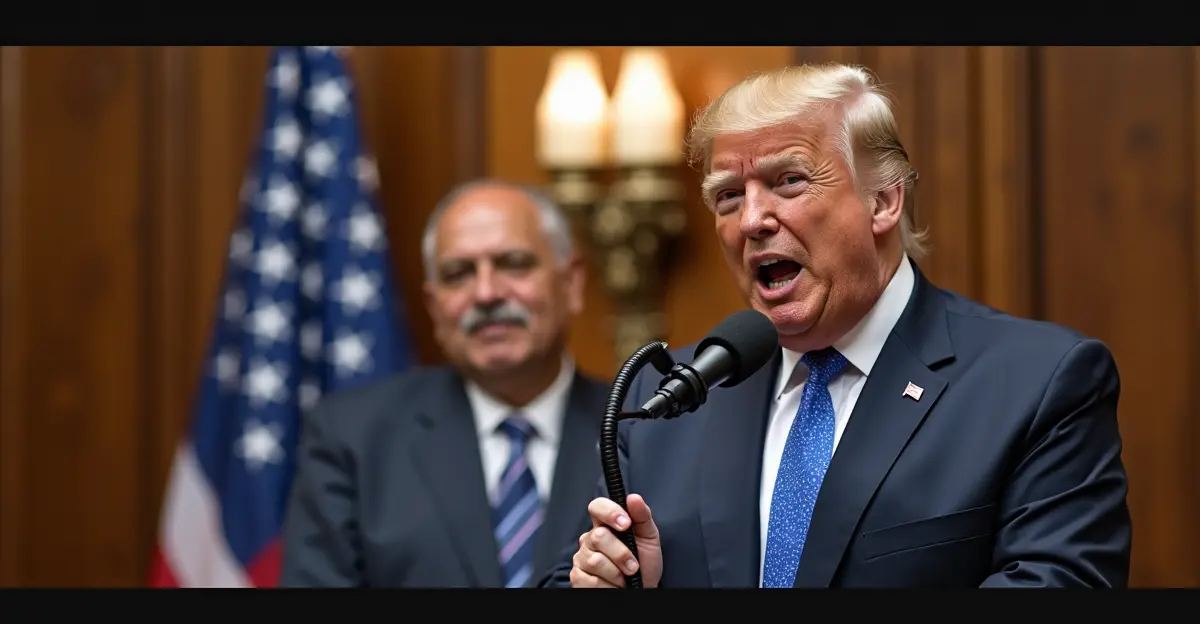
Trump's early congratulatory call underscores the geopolitical stakes. De la Espriella's victory adds Colombia to a growing list of right-wing, Trump-aligned governments in Latin America, joining El Salvador's Bukele, Argentina's Milei, and Ecuador's Daniel Noboa. The Latin America rightward political shift has accelerated since Trump's return to the White House, with the U.S. president actively backing conservative candidates across the region.
De la Espriella has pledged close cooperation with Washington on counter-narcotics, including supporting U.S. strikes on suspected drug boats in the Caribbean — operations that have killed over 200 people since September 2025. He also backs tougher immigration enforcement, aligning with Trump's crackdown. Outgoing President Petro had clashed with the Trump administration over drug policy and faced potential U.S. 'decertification' for failing to meet anti-drug cooperation benchmarks.
Later this year, Brazil's presidential election will test whether the rightward wave continues. Leftist President Luiz Inácio Lula da Silva faces Flávio Bolsonaro, son of imprisoned former President Jair Bolsonaro. Trump has already signaled he will intervene, as he did in Colombia, Argentina, and Honduras.
Challenges Ahead: Divided Congress and Polarized Nation
Despite his electoral victory, De la Espriella faces formidable obstacles. His Defenders of the Homeland movement holds only four of 108 Senate seats, forcing him to negotiate with traditional conservative parties. The Colombia political polarization 2026 runs deep: nearly half the electorate voted for Cepeda's leftist platform, and protests are expected if the official results confirm De la Espriella's win.
Human rights groups have condemned his mega-prison plan as a potential humanitarian disaster, while his proposed bombing of rural areas raises legal and ethical concerns. Economists warn that mass civil service layoffs could destabilize public services in a country where the state's reach is already limited in many regions.
Still, De la Espriella's supporters see him as a necessary disruptor. 'Colombia has tried conciliation for decades. It hasn't worked. We need a leader who isn't afraid to be tough,' said María Fernanda López, a 34-year-old shop owner in Medellín. The new president will be inaugurated on August 7, and the world will be watching whether 'El Tigre' can deliver on his promises — or whether Colombia's deep-seated problems will prove resistant to even the sharpest claws.
Frequently Asked Questions
Who won the 2026 Colombian presidential election?
Far-right candidate Abelardo de la Espriella won the runoff on June 21, 2026, with 49.66% of the vote against leftist Iván Cepeda's 48.70%, a margin of fewer than 250,000 votes.
What are De la Espriella's main policies?
He advocates an 'iron fist' security approach including building ten mega-prisons, bombing narco-camps, mass civil service layoffs, lower taxes, expanded oil exploration, and closer ties with the U.S.
Why did Trump congratulate De la Espriella?
Trump views De la Espriella as an ally in counter-narcotics, immigration enforcement, and countering Chinese influence in Latin America. His victory strengthens the network of right-wing, Trump-aligned leaders in the region.
Is the election result final?
Not yet. Cepeda has challenged results from 33,000 ballot boxes. The official binding tally is expected within a week. However, analysts consider a reversal unlikely given the narrow margin and precedent from the first round.
When will De la Espriella take office?
The inauguration is scheduled for August 7, 2026, as mandated by the Colombian constitution.




Follow Discussion