


 Deutsch
 English
 Español
 Français
 Nederlands
 Português


 Share
Share




What is the White House Ballroom Controversy?
The ongoing legal battle over President Donald Trump's $400 million White House ballroom construction reached a critical juncture on April 18, 2026, when a federal appeals court ruled that construction can continue for now. This decision represents a temporary victory for the Trump administration in a complex legal dispute that pits presidential authority against historic preservation concerns and congressional oversight. The 90,000-square-foot ballroom project, which would replace the demolished East Wing of the White House, has sparked intense debate about executive power, funding mechanisms, and the preservation of national landmarks.
Background: The East Wing Demolition and Legal Challenge
In October 2025, President Trump ordered the demolition of the White House's East Wing to make way for what he described as a "state-of-the-art ballroom" that would accommodate up to 1,000 guests for formal events. The existing East Room, with its 200-person capacity, had long been criticized by Trump as inadequate for hosting world leaders and large diplomatic gatherings. The demolition marked the first major structural change to the White House complex since the Truman Balcony was added in 1948, immediately drawing criticism from preservationists.
The National Trust for Historic Preservation filed a lawsuit challenging the president's authority to proceed without congressional approval, arguing that Trump was merely a "custodian" of the White House for future presidential families, not its owner. U.S. District Judge Richard Leon initially sided with the preservation group in March 2026, ordering a halt to above-ground construction while allowing below-ground work on national security facilities to continue. Leon famously stated, "He is not the owner" in reference to President Trump's relationship to the White House property.
The Appeals Court Ruling: Key Details and Implications
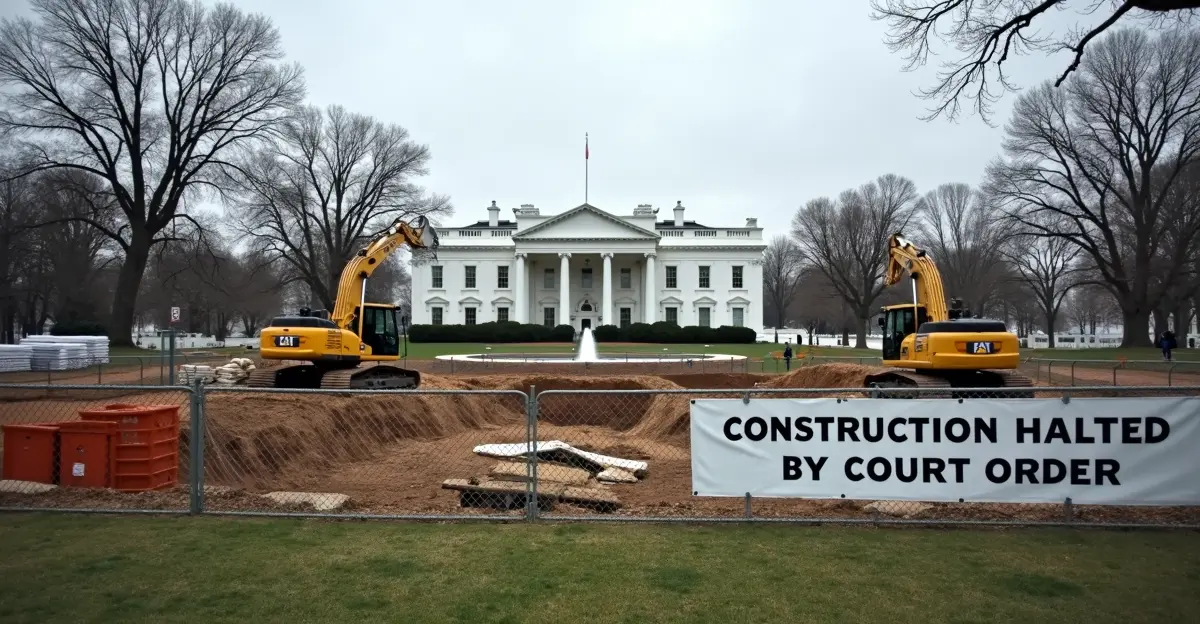
On April 18, 2026, a three-judge panel from the U.S. Court of Appeals for the District of Columbia Circuit granted a stay of Judge Leon's order, allowing construction to proceed until at least June 5, 2026, when a full hearing is scheduled. The court's decision represents a significant but temporary legal victory for the Trump administration, which had argued that halting construction would cause "grave national-security harms."
What the Ruling Means
The appeals court emphasized that its decision should not be interpreted as a ruling on the merits of the case. Instead, it represents a procedural victory that allows work to continue while legal challenges are considered. This development is particularly significant given the complex interplay between presidential authority and congressional oversight in federal property management.
Key aspects of the ruling include:
- Construction can proceed on both above-ground and below-ground elements
- The stay will remain in effect until the June 5 hearing
- The court acknowledged national security concerns raised by the administration
- No final determination has been made about the project's legality
Funding Controversy and Security Concerns
One of the most contentious aspects of the ballroom project involves its funding mechanism. President Trump has claimed that the $400 million construction cost will be covered entirely by private donations from major corporations including Meta, Apple, Amazon, and other wealthy donors. However, critics point out that security costs—estimated at tens of millions of dollars—will be borne by American taxpayers.
The administration's national security argument proved persuasive to the appeals court. White House lawyers contended that stopping construction would leave critical security infrastructure incomplete, potentially compromising the safety of the president and visiting dignitaries. This argument echoes similar concerns raised during other presidential construction projects throughout American history.
Historical Context and Preservation Concerns
The White House East Wing, demolished in fall 2025, was originally constructed during the Theodore Roosevelt administration's 1902 renovation and expanded during Franklin D. Roosevelt's presidency. Preservationists argue that the demolition represents an irreversible loss of historical fabric, while the Trump administration maintains that the new ballroom will enhance the White House's functionality for future administrations.
The National Trust for Historic Preservation has emphasized that their lawsuit isn't about opposing modernization but about ensuring proper legal processes are followed. "This isn't about whether we need a new ballroom," said a Trust spokesperson. "It's about whether any president has the unilateral authority to fundamentally alter a national historic landmark without congressional approval."
What Happens Next: The June 5 Hearing and Beyond
The appeals court has scheduled a full hearing for June 5, 2026, where both sides will present detailed arguments about the legal merits of the case. This hearing will likely address several critical questions:
- Does the president have inherent authority to modify White House structures?
- What role should Congress play in approving major renovations?
- How should national security concerns be balanced against preservation interests?
- What precedents exist for presidential construction projects?
The outcome of this hearing could have far-reaching implications for executive branch authority and the management of federal properties. Regardless of the June 5 decision, legal experts anticipate that the case will likely reach the Supreme Court, given its constitutional significance and the high stakes involved.
FAQ: White House Ballroom Construction Controversy
Why is the White House ballroom construction controversial?
The controversy stems from three main issues: the demolition of the historic East Wing without congressional approval, the $400 million price tag with mixed public/private funding, and questions about presidential authority over federal property.
What did the appeals court actually decide?
The appeals court granted a temporary stay, allowing construction to continue until a June 5 hearing. This is not a final ruling on the case's merits but a procedural decision that prevents work stoppage during the appeals process.
Who is paying for the ballroom construction?
President Trump claims private donations will cover the $400 million construction cost, while American taxpayers will fund security infrastructure. Critics question the transparency of these funding arrangements.
What happens if the court ultimately rules against the administration?
If courts ultimately find the construction unlawful, the administration could be required to halt work, potentially restore the site, or seek congressional approval to proceed.
How does this affect future presidential renovations?
The case will establish important precedents about presidential authority over White House modifications and the balance between executive power and congressional oversight.

Follow Discussion