


 Deutsch
 English
 Español
 Français
 Nederlands
 Português


 Share
Share




India Census 2026: World's Largest Population Count Explained
India has launched the world's largest national census, a monumental exercise that will count and analyze the country's population of over 1.4 billion people for the first time in 15 years. This historic census, which began on April 1, 2026, represents the most comprehensive demographic survey ever undertaken globally and marks India's 16th national population count since independence in 1947.
What is the India Census 2026?
The India Census 2026 is a decennial population count mandated by the Census Act of 1948 that aims to collect detailed demographic, social, and economic data from every household across the country's 28 states and 8 union territories. With a budget of ₹11,718 crore (approximately $1.24 billion) and involving over 3 million government officials, this census will provide crucial data for policy planning, resource allocation, and development initiatives across the world's most populous nation.
Key Features and Methodology
Two-Phase Approach
The census follows a structured two-phase methodology designed for comprehensive data collection:
- Phase 1 (April-September 2026): House listing and housing census focusing on living conditions, amenities, and household assets
- Phase 2 (February 2027): Population enumeration collecting demographic, social, and economic data
Digital Innovation
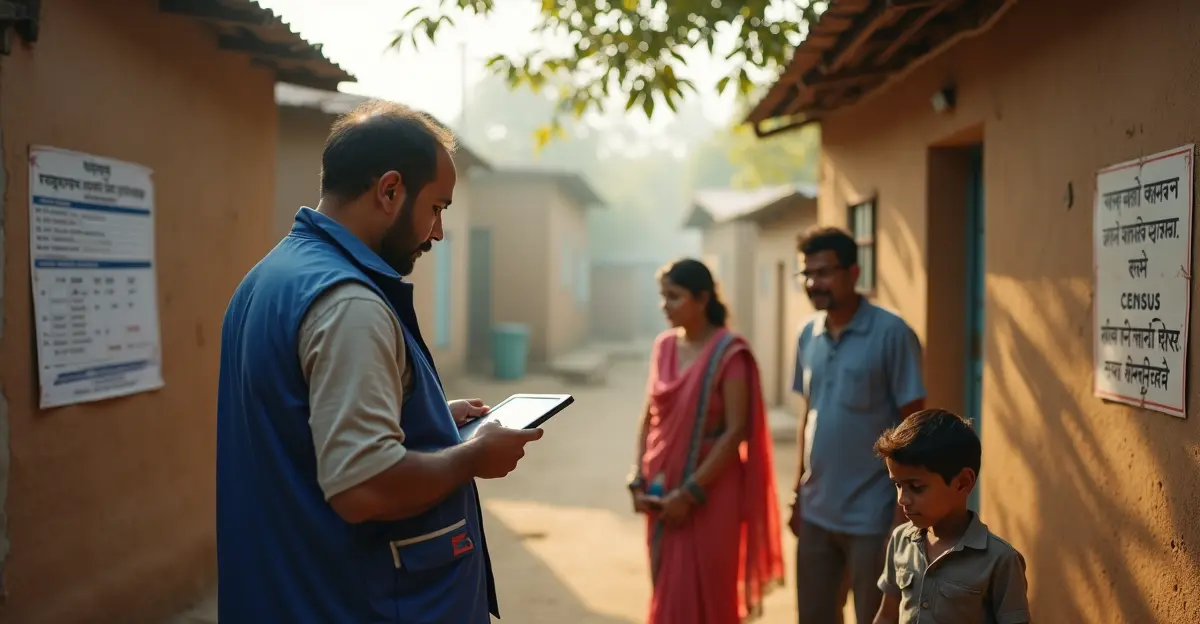
For the first time, the census introduces fully digital data collection through mobile applications and online self-enumeration at se.census.gov.in. Citizens can now submit their data online in 16 languages before enumerator visits, marking a significant technological advancement from previous paper-based methods.
The Caste Census Controversy
One of the most politically sensitive aspects of the India Census 2026 is the inclusion of comprehensive caste data collection for the first time since 1931. The caste system, a thousands-year-old hierarchical social structure based on heredity, will be systematically documented across all social groups.
"The caste census will provide empirical data for equitable policy formulation and social justice initiatives," explained Mritunjay Kumar Narayan, head of the census coordinating commission, during the official announcement.
Proponents argue that caste data is essential for:
- Accurate identification of beneficiaries for government welfare programs
- Evidence-based affirmative action policies
- Democratizing representation for marginalized communities
However, critics express concerns about potential social divisions and the logistical challenges of accurately categorizing India's estimated 4.7 million caste names and sub-castes.
Historical Context and Delays
The India Census 2026 arrives after significant delays from its originally scheduled 2021 timeline. The COVID-19 pandemic forced postponement, but subsequent delays raised questions among data analysts and scientists. India last conducted a census in 2011, which recorded a population of 1.21 billion. Since then, United Nations estimates suggest India has surpassed China to become the world's most populous nation with over 1.42 billion people.
"Scientists will breathe a sigh of relief because the census is finally starting and not being delayed further," noted Devi Boerema, South Asia correspondent. "The census is an important tool to see if government programs are achieving their goals."
Impact and Implications
Policy and Governance
The census data will fundamentally reshape India's governance landscape by providing accurate demographic information for:
| Area | Impact |
|---|---|
| Welfare Programs | Targeted allocation of resources to marginalized communities |
| Political Representation | Potential redrawing of electoral boundaries based on population shifts |
| Economic Planning | Evidence-based development initiatives and infrastructure projects |
| Social Justice | Data-driven affirmative action policies for historically disadvantaged groups |
Verification of Government Promises
The census will serve as an independent verification mechanism for government initiatives, including the popular campaign promise that every household would have a toilet and electric lighting by 2019. This data transparency could have significant political implications, similar to how international demographic surveys influence policy debates worldwide.
FAQs: India Census 2026
When will the India Census 2026 be completed?
The census is scheduled for completion in March 2027, with Phase 1 running from April to September 2026 and Phase 2 in February 2027.
How can citizens participate in the census?
Residents can either self-enumerate online at se.census.gov.in or wait for enumerator visits during the designated periods for their state or union territory.
Why is caste data being collected after so many decades?
Caste enumeration aims to address decades of data gaps and enable more equitable resource distribution, though it remains politically sensitive due to concerns about social divisions.
What makes this census different from previous ones?
Key innovations include digital data collection, online self-enumeration, comprehensive caste data collection for the first time since 1931, and a budget of over ₹11,700 crore.
How will the census data be used?
The data will inform government policies, welfare programs, infrastructure planning, and provide crucial demographic insights for India's development trajectory over the next decade.




Follow Discussion