


 Deutsch
 English
 Español
 Français
 Nederlands
 Português


 Share
Share




German Superwahljahr Explained: Baden-Württemberg Election Tests Greens vs CDU
Germany's Superwahljahr (super election year) officially begins today with the crucial Baden-Württemberg state election, where the Greens and CDU are locked in a neck-and-neck battle that could reshape German politics. With both parties polling at 28% according to the latest ZDF survey, this southwestern state's 11 million residents are voting in what many consider a bellwether for Germany's political direction in 2026.
What is Germany's Superwahljahr?
Germany's Superwahljahr refers to 2026's packed election calendar featuring five state elections across the country. Baden-Württemberg kicks off this political marathon, followed by elections in Rhineland-Palatinate, Saxony-Anhalt, Thuringia, and Berlin. This election cycle serves as a critical test for Chancellor Friedrich Merz's CDU government after ten months in office and could significantly impact the German federal coalition dynamics in Berlin.
The Baden-Württemberg Showdown: Özdemir vs Hagel
Cem Özdemir: The Pragmatic Green
Cem Özdemir, the 60-year-old German-Turkish politician and former Federal Minister of Agriculture, leads the Greens' campaign with a surprisingly pragmatic approach. Born in Urach to Turkish guest workers, Özdemir could become Germany's first state premier of Turkish descent. His campaign strategy has been notably moderate, with posters barely featuring the Green party logo and instead focusing on his personal brand. 'The mood is absolutely good,' says Green party member Julian Dietzschold during a flyer campaign in Heidelberg. 'Even people I wouldn't expect are responding positively to us, and especially to our lead candidate.'
Özdemir's campaign centers on economic protection rather than traditional green policies. 'With me, there will be no policy against Baden-Württemberg as a production location for cars,' he declares, signaling flexibility on the transition to electric vehicles that could extend production of combustion engine cars if industry demands it.
Manuel Hagel: The CDU Challenger
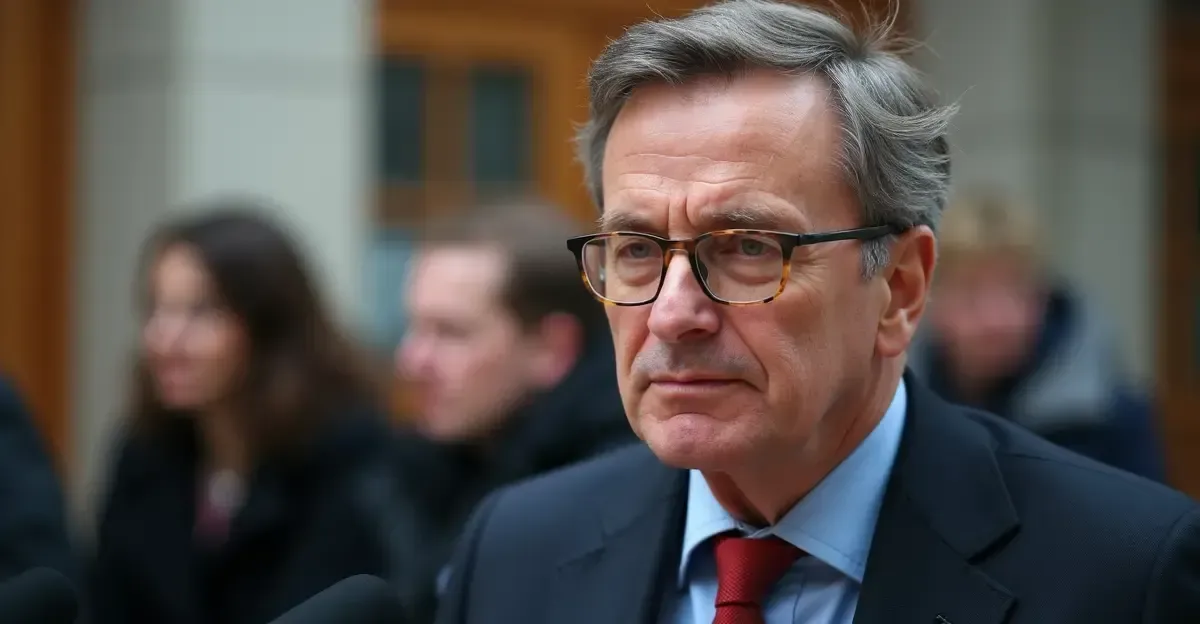
CDU candidate Manuel Hagel, 37, represents the conservative challenge to Green dominance in a state the CDU ruled for 60 years before 2011. Hagel has promised to 'take good care of Kretschmann's legacy' while opening a 'new chapter' for the state. However, his campaign faced turbulence when an old video surfaced showing him making inappropriate comments about schoolgirls during a classroom visit, drawing widespread criticism as sexist and inappropriate.
Economic Anxiety in Germany's Industrial Heartland
The election occurs amid severe economic challenges in Baden-Württemberg, home to automotive giants Bosch, Mercedes-Benz, and Porsche. Recent layoff waves have fueled fears that the region could become 'a European version of Detroit,' referencing the decline of America's auto capital. Over 40,000 jobs were lost last year alone, with major companies implementing massive restructuring.
This economic anxiety explains the rise of the far-right Alternative for Germany (AfD), polling at 18% - double their 2021 result. 'Precisely because of the high prosperity, there is much fear of losing it. They play on that,' explains Dietzschold about the AfD's appeal. The German automotive industry crisis has become a central election issue, with all parties scrambling to address voter concerns about economic security.
Key Election Dynamics and Party Prospects
Coalition Mathematics
With both major parties refusing to cooperate with the AfD under Germany's 'firewall' policy, the most likely outcome remains a continuation of the Green-CDU coalition that has governed since 2016. This partnership would maintain a stable majority despite political differences, reflecting the pragmatic politics that have characterized Baden-Württemberg under outgoing Premier Winfried Kretschmann.
Smaller Parties' Survival Battle
The election represents an existential test for several smaller parties:
- FDP: The liberal party faces potential elimination from its last remaining state parliament, with lead candidate Nicole Büttner promising to shave her head if they fail to clear the 5% threshold
- Die Linke: The Left party could enter the state parliament for the first time, polling just above the threshold
- SPD: The Social Democrats face potential marginalization with results possibly below 10%
Voting System and Electoral Reforms
Baden-Württemberg uses a mixed-member proportional representation system with a 5% electoral threshold. A significant reform for 2026 lowers the voting age to 16, potentially impacting youth engagement and election outcomes. The state's 120-seat Landtag will be elected through a combination of direct mandates and party lists, with results expected to be announced shortly after polls close at 18:00 local time.
National Implications of the Baden-Württemberg Result
Today's election carries profound implications for German national politics. As the first major electoral test for Chancellor Merz's government, the results will signal voter sentiment on federal policies and could influence the 2026 European political landscape. A strong Green performance would bolster the party's national standing despite their current 12% federal polling, while a CDU victory would strengthen Merz's position ahead of subsequent state elections.
FAQ: Baden-Württemberg Election 2026
When are results expected?
Exit polls will be released immediately after polls close at 18:00 CET, with official results following throughout the evening.
What happens if no party wins a majority?
Given the firewall against the AfD, the most likely coalition remains Greens and CDU, who currently govern together and would maintain a stable majority.
Why is Baden-Württemberg so important?
As Germany's third-largest state and economic powerhouse, its political direction influences national policy, particularly on industrial and environmental issues.
What are the key election issues?
Economic security, automotive industry transition, education, and infrastructure dominate voter concerns.
How does this affect Chancellor Merz?
A CDU victory would strengthen his position, while a Green win could pressure his government on environmental policies.
Follow Discussion