


 Deutsch
 English
 Español
 Français
 Nederlands
 Português


 Share
Share




Takaichi's Historic Mandate for Economic Reform
Japanese Prime Minister Sanae Takaichi has secured a historic landslide victory in Sunday's snap election, giving her Liberal Democratic Party (LDP) an overwhelming mandate to implement sweeping economic reforms aimed at reviving Japan's stagnant economy. The LDP won 316 of the 465 seats in the House of Representatives—a commanding 68% majority that represents the largest parliamentary share for any single party in post-war Japan.
'This victory gives us the clear mandate we need to jumpstart Japan's economy after decades of stagnation,' Takaichi declared in a post-election address. 'We will lower taxes, increase government spending, and create the conditions for sustainable growth.'
Unprecedented Political Power
Together with coalition partner the Japan Innovation Party, Takaichi now commands a two-thirds supermajority that allows her to override any opposition in the upper house and push through legislation without compromise. This level of political control is unprecedented in modern Japanese politics and provides Takaichi with what analysts are calling 'the most powerful mandate of any Japanese prime minister in living memory.'
The 64-year-old conservative leader, who became Japan's first female prime minister in October 2025, called the snap election just three months into her term to seek voter approval for her ambitious economic agenda. Her gamble paid off spectacularly, with voters apparently endorsing her pro-business platform despite concerns about Japan's massive public debt.
Economic Challenges and Promises
Japan's economy, the world's fourth largest, has struggled with what economists call the 'Lost Decades'—a period of prolonged stagnation that began with the collapse of Japan's asset bubble in the early 1990s. Average annual GDP growth has hovered around 1% for over three decades, well below other industrialized nations.
Takaichi has promised to break this cycle through a combination of tax cuts and increased government spending. Her signature campaign promise—a temporary suspension of Japan's 8% consumption tax on food and beverages—has proven popular with voters struggling with inflation but has raised concerns among investors about Japan's fiscal sustainability.
'The market reaction shows investors are worried about how Japan will fund these policies,' noted Tokyo-based economist Kenji Watanabe. 'With debt-to-GDP already above 230%, every new spending commitment raises questions about long-term stability.'
Defense and Geopolitical Implications
The election victory also strengthens Takaichi's hand in foreign policy, particularly regarding Japan's defense posture amid rising tensions with China. She has already increased defense budgets and signaled a more assertive stance on regional security issues, including Taiwan.
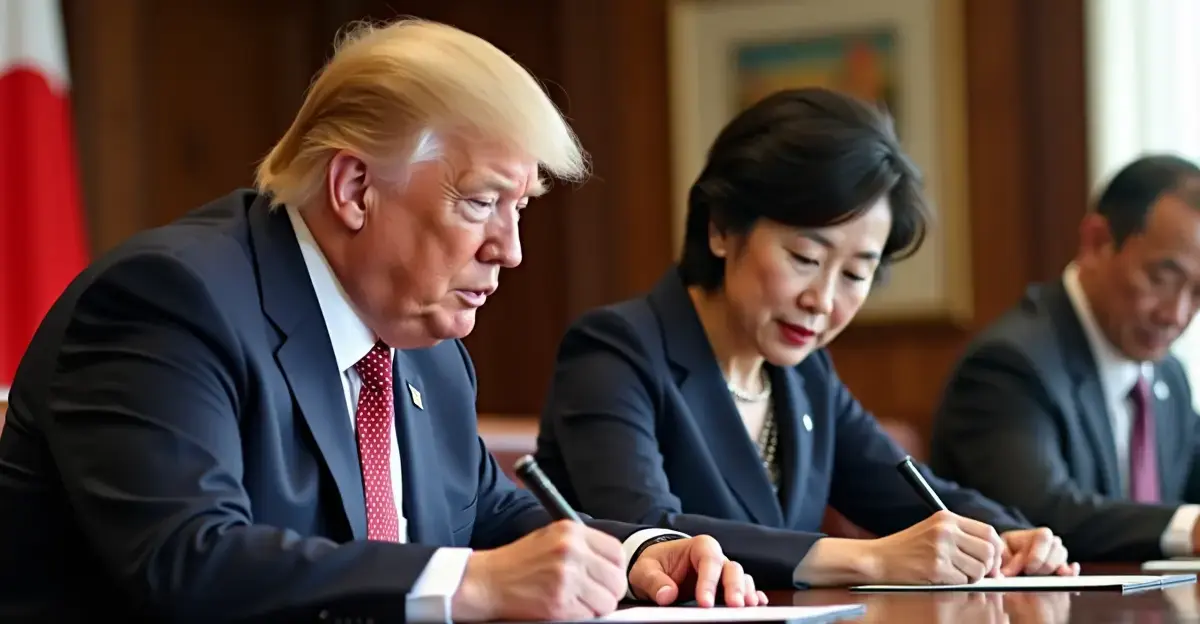
U.S. President Donald Trump has endorsed Takaichi and invited her to the White House, highlighting the strong U.S.-Japan alliance. 'Prime Minister Takaichi understands the importance of a strong defense and economic partnership,' Trump stated in a congratulatory message.
However, critics warn that Takaichi's nationalist positions and revisionist views on Japan's World War II history could strain relations with neighboring countries, particularly China and South Korea.
Path Forward
With her supermajority secured, Takaichi now faces the challenge of delivering on her economic promises while managing Japan's enormous debt burden. Her government must balance short-term stimulus with long-term fiscal responsibility—a delicate task that will test her leadership in the coming months.
The election results have boosted market confidence, with Japan's Nikkei 225 stock index jumping following the announcement. However, the real test will come as Takaichi begins implementing her economic agenda and navigating the complex challenges of Japan's aging population, technological transformation, and shifting global economic landscape.



Follow Discussion