


 Deutsch
 English
 Español
 Français
 Nederlands
 Português


 Share
Share




Congressional Hearing Reveals Deep Divisions on Tech Regulation
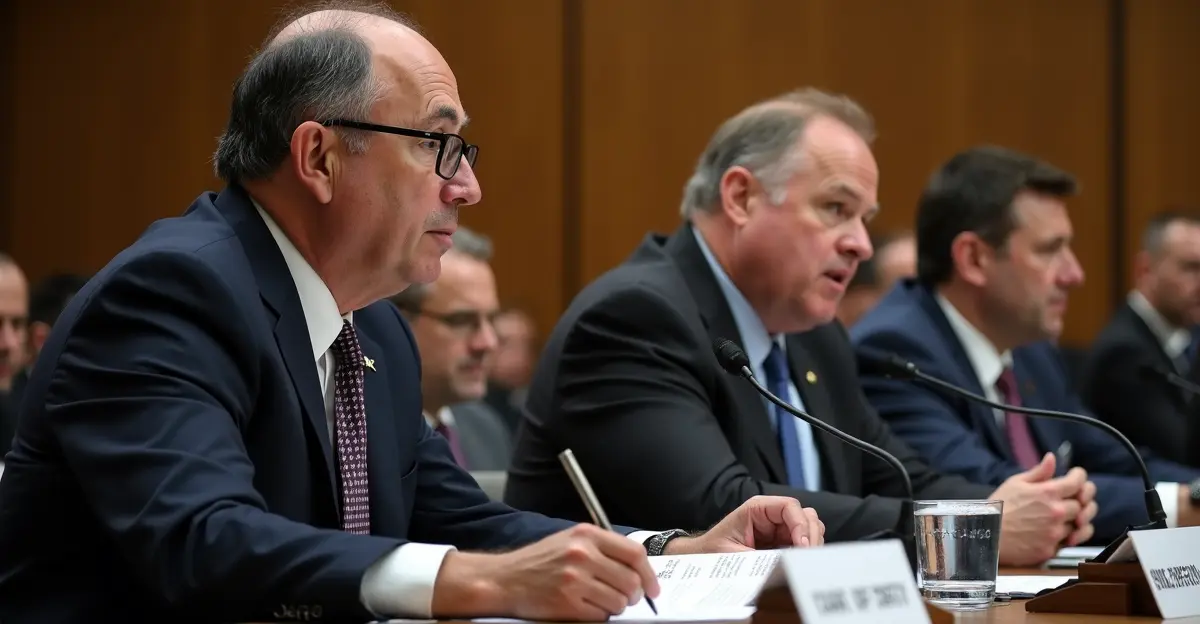
A recent congressional hearing on antitrust enforcement against major digital platforms has highlighted significant tensions between regulators, lawmakers, and industry representatives. The hearing, which focused on regulatory concerns, potential remedies, and industry responses, revealed a complex landscape where traditional antitrust principles are being tested against rapidly evolving digital markets.
Regulatory Concerns Take Center Stage
Lawmakers expressed growing concern about the concentration of power among a handful of tech giants, with particular focus on Alphabet (Google), Amazon, Apple, Meta, and Microsoft. 'We're seeing market dynamics that threaten to stifle innovation and harm consumers,' stated one senior committee member during the proceedings. The hearing examined whether current antitrust laws, many of which were written for industrial-era markets, are adequate for addressing challenges in digital platform ecosystems.
Regulators pointed to several specific concerns: self-preferencing practices where platforms favor their own products, data aggregation that creates insurmountable barriers to entry, and the network effects that can lead to 'winner-takes-all' outcomes. The Department of Justice's Antitrust Division highlighted ongoing cases against Google for allegedly monopolizing digital advertising technology, noting that these cases represent just the beginning of broader enforcement efforts.
Remedies Under Consideration
The hearing explored various potential remedies, ranging from behavioral changes to structural separations. Some lawmakers advocated for measures similar to Europe's Digital Markets Act (DMA), which imposes specific obligations on 'gatekeeper' platforms. These include prohibitions on combining data from different services, requirements for interoperability, and restrictions on self-preferencing.
'Structural remedies may be necessary in some cases to restore competition,' argued one antitrust expert testifying before the committee. However, others cautioned that overly aggressive interventions could harm innovation, particularly in emerging fields like artificial intelligence. The testimony from Joseph V. Coniglio emphasized that the AI industry remains dynamically competitive, with robust competition across foundation models, cloud computing, and chips.
Industry Pushes Back
Tech industry representatives pushed back against calls for sweeping regulatory changes, arguing that current markets are more competitive than they appear. 'What looks like market concentration is often just the natural outcome of network effects in digital markets,' stated one industry executive. They pointed to the rapid emergence of competitors like TikTok challenging established players like Meta, and the growth of alternative search engines following regulatory changes in Europe.
Industry witnesses highlighted investments in AI infrastructure, noting that major tech companies are pouring hundreds of billions into research and development. They argued that partnerships between cloud providers and AI startups provide procompetitive benefits by offering patient capital and resource sharing that might not otherwise be available.
Judicial Trends and Future Outlook
The hearing also examined recent judicial trends, including the Google Search remedies case which revealed judicial reluctance to intervene heavily in rapidly changing markets. As noted in 2026 antitrust previews, courts are increasingly recognizing market dynamism and the emergence of generative AI as competitive threats to established platforms.
Looking ahead, several key trends emerged: increased scrutiny of AI-related conduct, continued enforcement against Big Tech with mixed results, and growing state-federal conflicts as states defend their own digital market regulations. The overall picture suggests a period of regulatory experimentation, with enforcers balancing traditional antitrust principles against the unique characteristics of digital markets.
The hearing concluded without consensus but with clear recognition that antitrust enforcement in digital markets will remain a contentious and evolving area. As one lawmaker summarized, 'We're writing the rules for the digital economy in real-time, and we need to get this right for future generations.'





Follow Discussion