Nederlands
 English
 Deutsch
 Français
 Español
 Português
Bulgaria faces its eighth snap election in five years after political parties failed to form a government, continuing Europe's most persistent political crisis amid recent euro adoption.
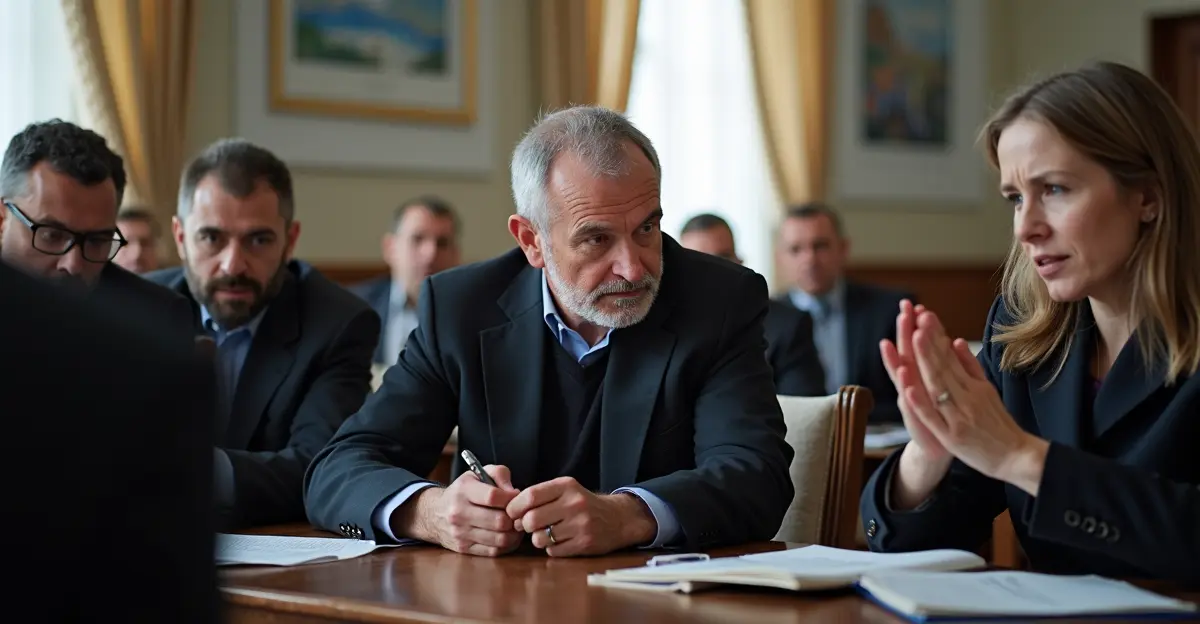
Bulgaria's Political Crisis Deepens with Eighth Snap Election
Bulgaria is heading to the polls for the eighth time in less than five years, as President Rumen Radev announced new elections after the country's main political parties failed to form a government. This latest political deadlock comes just weeks after Bulgaria officially adopted the euro on January 1, 2026, becoming the 21st member of the eurozone.
A Nation in Political Paralysis
The current crisis began in December 2025 when Prime Minister Rosen Zhelyazkov's government resigned following mass protests against the proposed 2026 budget. 'We are going for elections,' President Radev declared after the three largest parliamentary parties couldn't reach a coalition agreement. This marks Bulgaria's eighth snap election since 2021, continuing what has become Europe's most persistent political instability.
The protests that toppled the government drew up to 250,000 participants nationwide, with demonstrators expressing frustration over corruption, an unfair justice system, and poor economic policies. 'The voice of the people has been heard,' acknowledged the outgoing government when it resigned on December 11, 2025.
Euro Adoption Amid Political Turmoil
Bulgaria's euro adoption on January 1, 2026, represented a significant milestone, but it occurred under a caretaker government and without a proper budget. According to the European Central Bank, Bulgaria maintained monetary policy alignment with the ECB for over 25 years through its currency board. However, public support for the euro remained low, with only 40% of Bulgarians supporting the switch according to polls.
The political fragmentation makes coalition-building exceptionally difficult. The center-right GERB party, led by former Prime Minister Boyko Borisov, leads polls with around 24% support, followed by the anti-corruption coalition We Continue the Change (PP-DB) at 19%. The pro-Russian Revival party, which has capitalized on the political chaos, stands at 13%, alongside the party of oligarch Deljan Peevski.
Roots of the Crisis
The current political crisis traces back to 2020 when massive protests erupted against corruption under then-Prime Minister Boyko Borisov. Since then, Bulgaria has seen seven parliamentary elections and three short-lived governments. The Wikipedia entry on the crisis notes that the country has been governed by various caretaker administrations appointed by President Radev between elections.
Political analyst Maria Ivanova explains: 'The fundamental problem is that anti-corruption parties refuse to work with GERB due to corruption allegations, while pro-European parties won't collaborate with pro-Russian factions. This leaves no viable coalition options.'
What's Next for Bulgaria?
With voter turnout dropping to just 39% in the October 2024 elections and public trust in politics at historic lows, it's unclear whether new elections will break the deadlock. Current polls show little change from previous results, suggesting another inconclusive outcome.
The Reuters report confirms that all major parties have refused the mandate to form a government, forcing the country back to the polls. No election date has been set yet, but political observers expect voting to occur in early spring 2026.
As Bulgaria navigates this latest political crisis while implementing eurozone membership, the country faces the dual challenge of political stability and economic integration. The coming months will test whether Bulgarian democracy can overcome its deepest crisis since the fall of communism.