


 Deutsch
 English
 Español
 Français
 Nederlands
 Português


 Share
Share




Iran's Economic Crisis Sparks Nationwide Unrest
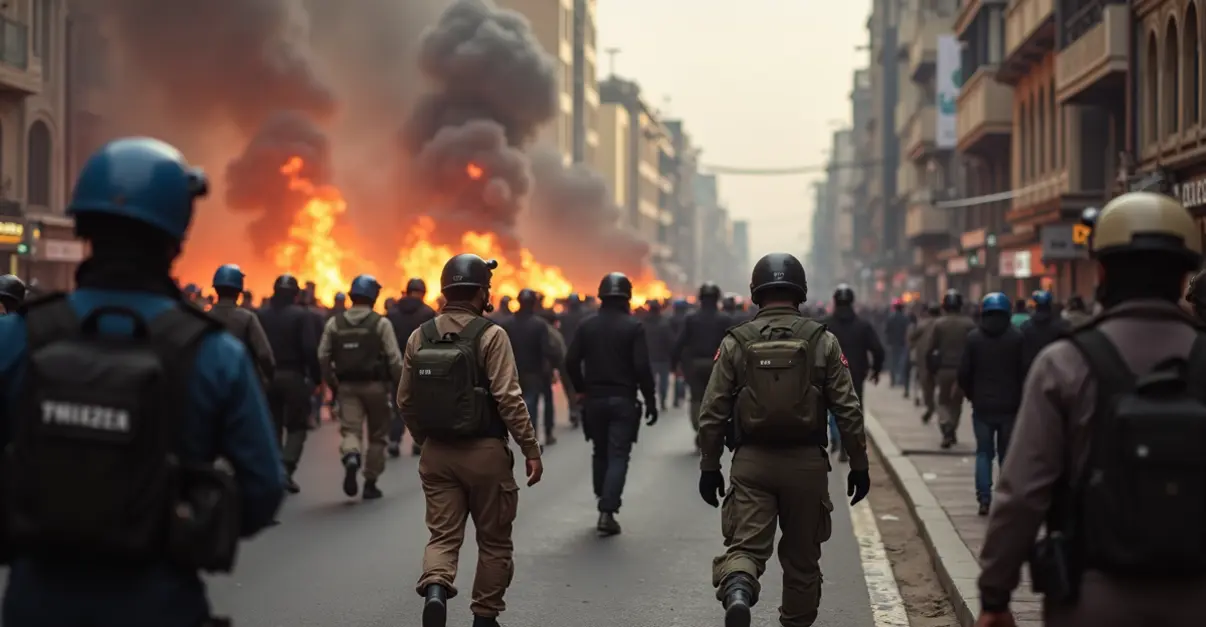
For over a week now, Iran has been gripped by widespread protests that have left at least 16 people dead according to human rights organizations. What began as shopkeeper strikes in Tehran's Grand Bazaar on December 28, 2025, has evolved into the largest anti-government demonstrations since the 2022-2023 Mahsa Amini protests, spreading to at least 30 cities across the country.
Economic Grievances Fuel Demonstrations
The protests were initially sparked by skyrocketing inflation that reached 42.2% in December 2025, combined with record-low currency depreciation where the Iranian rial traded at approximately 1.45 million to one US dollar. 'We can't afford basic food anymore,' said one Tehran shopkeeper who participated in the initial strikes. 'The government talks about nuclear programs while our children go hungry.'
According to the Wikipedia entry on the 2025-2026 Iranian protests, the economic crisis has been worsened by renewed UN sanctions reinstated in September 2025 after a ten-year hiatus. These 'snapback' sanctions, related to Iran's nuclear program, have severely impacted the country's economy, particularly affecting shopkeepers who rely on imported goods.
Human Rights Organizations Document Casualties
Two prominent human rights organizations have been tracking the violence. The Hengaw Organization for Human Rights reports at least 17 deaths since protests began, while the Human Rights Activists News Agency (HRANA) documents 16 fatalities. Both organizations also report approximately 582 arrests, though these figures cannot be independently verified due to government restrictions on media access.
'The pattern of violence against protesters follows a familiar script in Iran,' noted a Middle East human rights researcher. 'Security forces respond to economic protests with disproportionate force, leading to tragic loss of life.'
International Reactions and Accusations
The protests have drawn international attention, particularly from the United States. President Donald Trump tweeted support for the demonstrators, stating: 'If Iran doesn't stop killing protesters, the United States will come to their rescue. We are ready for action.' This statement has been interpreted by some analysts as a potential threat of intervention.
Iranian officials have responded with defiance. Supreme Leader Ayatollah Ali Khamenei declared he would 'not bow to the enemy,' while members of Iran's security council have accused the United States and Israel of instigating the protests. 'This is a foreign plot to destabilize our country,' claimed a security council member on social media platform X.
Broader Context of Economic Collapse
The current protests occur against a backdrop of severe economic deterioration. According to Deutsche Welle analysis, Iran's inflation is projected to remain above 40% in 2026, following 42.4% inflation in 2025. The currency has lost approximately half its value in just six months, devastating ordinary Iranians' purchasing power.
This economic collapse is compounded by environmental crises including water scarcity and severe air pollution in Tehran. Political uncertainty also looms with questions about the health of 86-year-old Supreme Leader Ayatollah Ali Khamenei and potential succession issues.
Historical Patterns of Protest
The current wave of unrest follows earlier protests in 2025, including nationwide strikes by nurses, farmers, workers, bakers, truckers, and drivers in May 2025. These earlier protests were responses to rising insurance premiums, poor road security, high fuel prices, and low freight rates.
As documented in the Wikipedia entry on May 2025 Iranian protests, these strikes affected more than 155 cities and led to significant supply shortages, demonstrating the persistent economic pressures facing Iranian society.
What Comes Next?
As protests enter their second week, analysts are watching several key developments. The response of security forces, potential international intervention, and whether the government offers meaningful economic concessions will determine the trajectory of the unrest. With both protesters and government officials showing no signs of backing down, Iran faces a critical moment that could reshape its political and economic future.
'The people have reached their breaking point,' observed an Iranian economist based abroad. 'When you combine economic desperation with political repression, you create conditions for sustained unrest. The government's response in the coming days will be crucial.'
Follow Discussion