Nederlands
 English
 Deutsch
 Français
 Español
 Português





Key Suspect in Nord Stream Pipeline Sabotage Extradited to Germany
In a significant development in one of Europe's most geopolitically charged investigations, Ukrainian national Serhii K. has been extradited from Italy to Germany to face charges related to the 2022 sabotage of the Nord Stream gas pipelines. The 49-year-old suspect, who was arrested during a vacation in Rimini, Italy, in August 2025, is now in German custody awaiting trial for what prosecutors describe as the 'largest sabotage act in recent German history.'
Defense Claims 'Functional Immunity' in State-Sponsored Act
The suspect's defense team, led by German-Ukrainian attorney Ilona Menaker, is mounting an unprecedented legal challenge based on the principle of 'functional immunity' in international law. 'We believe the German court is not in a position to judge this case at all,' Menaker told reporters from her Berlin office. 'If this was a state action by Ukraine, an individual cannot be held responsible for work performed for that state.'
The defense argues that the sabotage of the Nord Stream pipelines—which occurred in September 2022, seven months after Russia's invasion of Ukraine—should be considered a military action in wartime rather than a criminal act. This legal strategy follows a similar successful argument in Poland, where another suspect, Volodymyr Z., was released in October 2025 after a Polish court ruled that German jurisdiction didn't apply and that the sabotage constituted a military action during wartime.
The Alleged Plot: A Sailboat Mission from Rostock
According to German prosecutors and investigative reports from Nieuwsuur, Serhii K. allegedly coordinated a mission where a group of suspects rented a sailboat from the northern German port city of Rostock. The vessel, sailing under German flag, reportedly carried explosives to the Baltic Sea location of the Nord Stream pipelines, where multiple explosions damaged three of the four pipes on September 26, 2022.
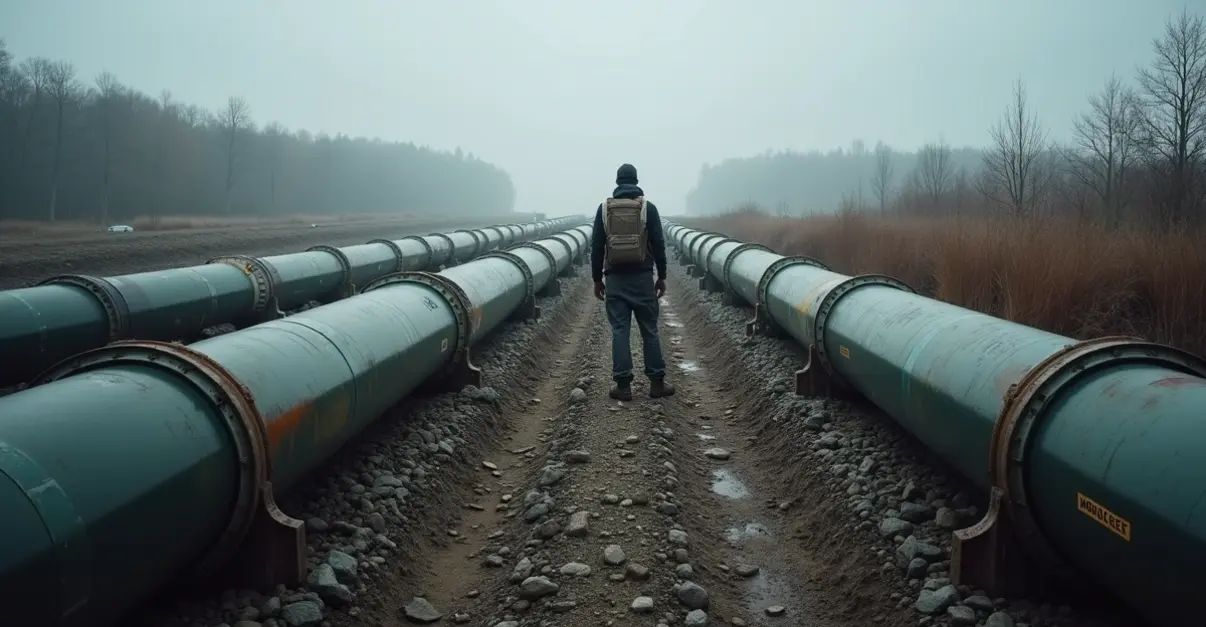
The Nord Stream pipelines, consisting of Nord Stream 1 and Nord Stream 2, were designed to transport Russian natural gas directly to Germany through the Baltic Sea. At the time of the sabotage, neither pipeline was operational—Nord Stream 2 had never entered service due to Germany suspending certification following Russia's invasion of Ukraine, while Nord Stream 1 had been shut down for 'maintenance' by Russian energy giant Gazprom.
Complex Jurisdictional Questions
The case presents numerous legal complexities. The sabotage occurred in international waters within the economic zones of Denmark and Sweden, both of which closed their investigations in February 2024 without identifying perpetrators. Germany's investigation remains active, with prosecutors arguing they have jurisdiction because the attack targeted German critical infrastructure and the sailboat involved flew a German flag.
'He denies everything and we reject all accusations,' Menaker stated about her client. 'He cannot be with his wife and four children in Kyiv, while he wants to be there for them in wartime.' The attorney described her client's difficult detention in Italy, where he was held among IS terror suspects in the country's most heavily guarded prison and went on a hunger strike in protest.
Geopolitical Implications and Ongoing Investigations
The Nord Stream sabotage has remained one of Europe's most mysterious geopolitical events since 2022. According to Reuters, the German investigation has identified seven suspects including former members of a private diving school in Kyiv, one of whom has died. The case has created diplomatic tensions, with Polish officials reportedly defending suspects' actions as legitimate self-defense against Russian aggression.
The pipelines had long been controversial, with Eastern European nations viewing them as bypassing their interests and strengthening Russia's position. The United States had also opposed the projects, with then-President Donald Trump warning in 2019 that Nord Stream 2 could turn Europe into a 'hostage of Russia.'
What Comes Next
With Serhii K. now in German custody, the case moves to what could be a landmark trial testing the boundaries of international law, state immunity, and jurisdiction over wartime actions. The suspect faces charges including collusion to cause an explosion, anti-constitutional sabotage, and destruction of important structures, with potential prison sentences up to 15 years.
Menaker remains optimistic about her client's release: 'He deserves freedom to return to his wife, his children, and his country.' However, German authorities appear determined to pursue what they consider an attack on the nation's energy security, setting the stage for a complex legal battle that will be closely watched across Europe and beyond.