Nederlands
 English
 Deutsch
 Français
 Español
 Português
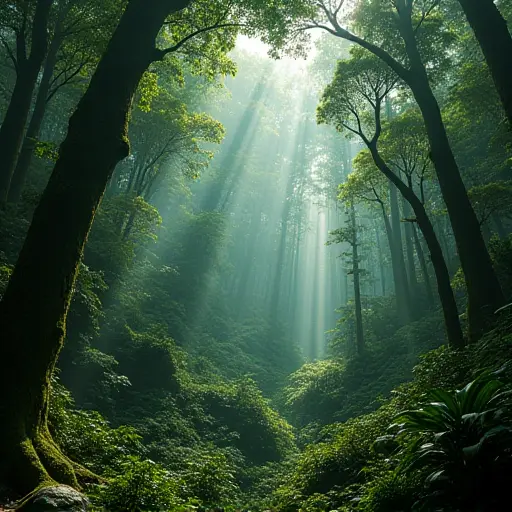





Tropical forests worldwide are experiencing a significant increase in liana vines, which are now visible from space due to their unique light-reflecting properties. Researchers have found that lianas are growing 10 to 24 percent every decade, overshadowing trees and altering forest ecosystems.
Using mathematical models and field studies in Panama, scientists discovered that liana leaves reflect more light and infrared radiation than tree leaves. Their flat, selfish growth pattern blocks sunlight from reaching lower forest layers, making them detectable by satellites.
This 'liana pandemic' threatens tropical forests by increasing tree mortality and stifling biodiversity. While lianas play a role in their ecosystems, their rapid spread—linked to higher CO2 levels—demands monitoring and potential mitigation efforts.