Earth Spins Faster Making Tuesday Shortest Day Ever Recorded

Earth's rotation accelerated on Tuesday, shortening the day by 1.25 milliseconds due to lunar positioning, atmospheric changes, and core shifts. This marks the third such event this summer, potentially requiring history's first negative leap second for timekeeping systems.

Earth Spins Faster Making Tuesday Shortest Day Ever Recorded
Facebook X LinkedIn Bluesky WhatsApp
de flag en flag es flag fr flag nl flag pt flag

Earth's Unusual Speed Boost

On Tuesday, Earth completed its rotation 1.25 milliseconds faster than usual, making it the shortest day recorded since precise measurements began. This phenomenon marks the third such acceleration event this summer, following similar occurrences on July 10 (-1.36 ms) and July 22 (-1.34 ms).

Scientific Explanation

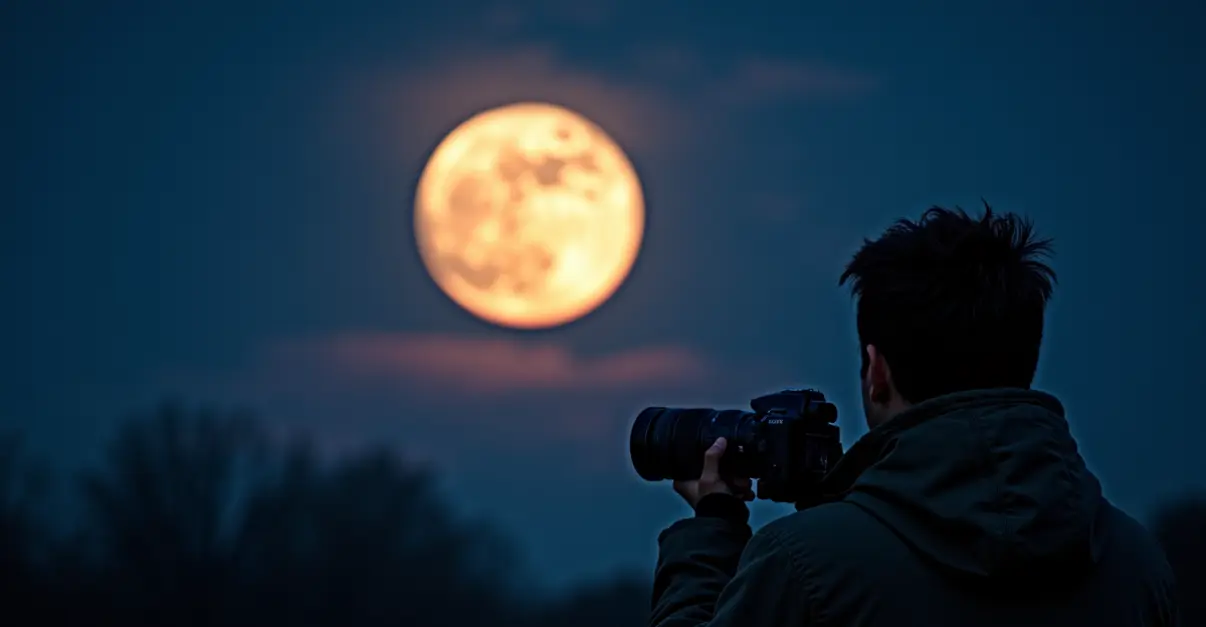
Professor Katrien Kolenberg explains: "Like a skater pulling in their arms, Earth spins faster when mass redistributes closer to its axis. Currently, three factors converge: the Moon's position farther from Earth's equator brings tides closer, summer atmospheric patterns alter wind circulation, and shifts in Earth's molten core cause the outer layers to accelerate."

Historical Context

This acceleration reverses Earth's long-term slowing trend. Over 4.5 billion years, Earth's rotation has gradually slowed from 10-hour days to our current 24-hour cycle, mainly due to the Moon's gravitational pull. Since 1972, 27 leap seconds have been added to compensate for this slowing.

Future Implications

If acceleration continues, scientists may implement the first negative leap second - removing one second from global timekeeping. While imperceptible to humans, this poses challenges for GPS satellites, financial systems, and computer networks where millisecond precision matters. The International Earth Rotation Service monitors these changes to determine if timekeeping adjustments become necessary.


Related

Moonlight to Dim 2025 Perseid Meteor Shower Visibility
Space
AI relevance 94.4%

Moonlight to Dim 2025 Perseid Meteor Shower Visibility

A bright moon will reduce 2025 Perseid meteor visibility to 10-20/hour during August 12-13 peak. Optimal viewing is...

November 2025 Supermoon: Brightest Beaver Moon of the Year
Science
AI relevance 88.9%

November 2025 Supermoon: Brightest Beaver Moon of the Year

The November 2025 supermoon is the year's brightest and closest full moon, appearing 14% larger and 30% brighter...

Asteroid 2026 JH2 Skims Earth: Closest Flyby Without Impact
Space
AI relevance 83.3%

Asteroid 2026 JH2 Skims Earth: Closest Flyby Without Impact

Asteroid 2026 JH2, discovered just 8 days ago, will skim Earth at 91,500 km on May 18, 2026 — closer than the Moon....

Japan's Rare Earth Discovery 2026: Deep-Sea Mining Breakthrough Cuts China Dependency
Geopolitics
AI relevance 77.8%

Japan's Rare Earth Discovery 2026: Deep-Sea Mining Breakthrough Cuts China Dependency

Japan discovers 16M tonnes of rare earths at 6,000m depths in February 2026, reducing 70% China dependency for EV,...

China's Rare Earth Export Controls: The New Geopolitical Chokepoint in Energy Transition
Geopolitics
AI relevance 72.2%

China's Rare Earth Export Controls: The New Geopolitical Chokepoint in Energy Transition

China's October 2025 expansion of rare earth export controls on 12 elements creates immediate supply chain...

China's Rare Earth Stranglehold: How Export Controls Rewire Global Supply Chains in 2026
Trade War
AI relevance 66.7%

China's Rare Earth Stranglehold: How Export Controls Rewire Global Supply Chains in 2026

China's 2025-2026 rare earth export controls, including extraterritorial licensing, have driven European prices to...