Deutsch
 English
 Español
 Français
 Nederlands
 Português

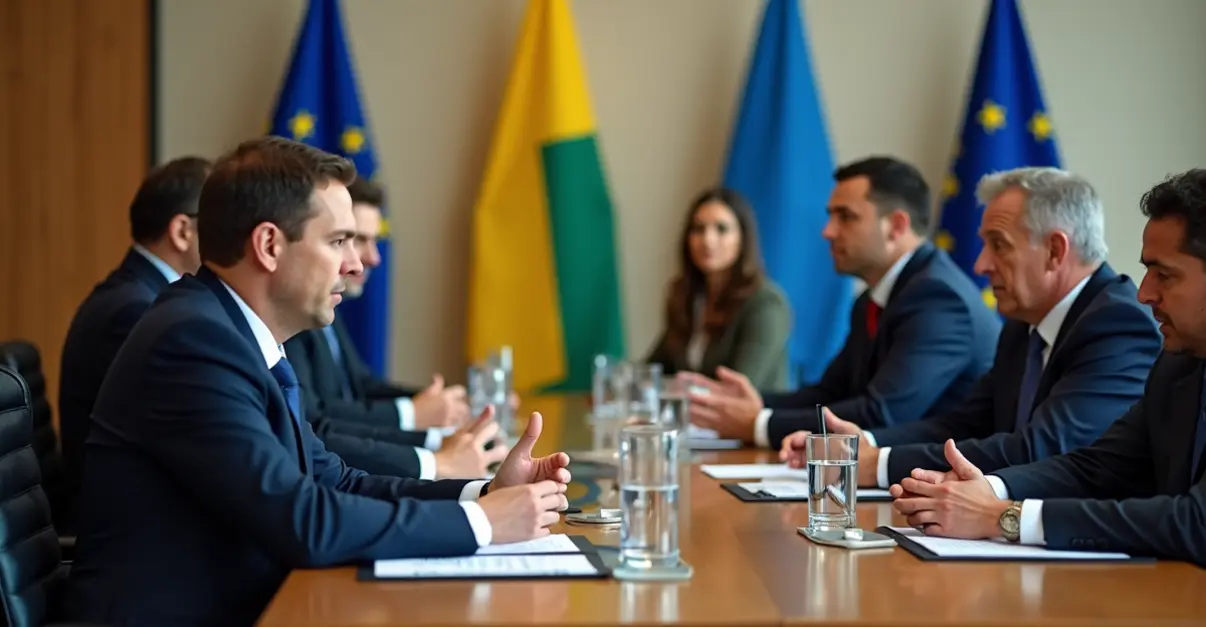





From Deadlock to Deal: EU-Mercosur Agreement Finally Reached
After a quarter-century of negotiations, the European Union is set to formally sign a landmark trade agreement with the Mercosur bloc of South American nations. The breakthrough came on January 9, 2026, when a qualified majority of EU member states gave their approval, with 21 countries voting in favor, five against, and Belgium abstaining.
European Commission President Ursula von der Leyen hailed the decision as historic, stating: 'Today Europe has sent a strong signal that we are serious about our commitment to diversify our trade and reduce our dependencies.' The signing ceremony is scheduled for January 17 in Asunción, Paraguay, with von der Leyen and European Council President António Costa representing the EU.
Economic Impact and Industrial Benefits
The agreement would create the world's largest free trade zone, encompassing over 700 million consumers. According to European Commission projections, the deal could increase EU exports to Mercosur countries by up to 39 percent, or €49 billion annually, potentially supporting more than 440,000 jobs across Europe.
German Chancellor Friedrich Merz welcomed the breakthrough as a 'milestone in European trade policy and an important signal of our strategic sovereignty and ability to act.' The automotive industry stands to benefit significantly, with current 35 percent tariffs on car imports to Mercosur countries set to be eliminated gradually over 15 years.
Hildegard Müller, President of the German Association of the Automotive Industry, called the agreement 'long overdue and very good news' for Europe's business location, noting that German automakers produced 524,000 cars in Brazil and Argentina in 2024 but exported only 25,700 vehicles to Mercosur countries.
Farmers' Fury and Political Opposition
Despite the economic promise, the agreement faces fierce opposition from European farmers who fear being undercut by cheaper agricultural imports from Brazil and its neighbors. Thousands of farmers have protested across Europe, with tractors blocking roads in Belgium, France, Poland, and Ireland.
French Agriculture Minister Annie Genevard argued that the approval was 'not the end of the story', as the European Parliament must still vote on the deal. She highlighted that 'the anger of farmers is deep and their demands are legitimate.'
In Ireland, where thousands protested in Athlone, farmers fear the agreement could allow an additional 99,000 tonnes of low-cost beef into the EU market, potentially devastating Ireland's farming sector.
Safeguards and Compromises
To secure approval, the EU negotiated significant safeguards. The threshold triggering investigations on sensitive agricultural products was reduced from 8 percent to 5 percent, meaning the Commission can intervene when import volumes increase by 5 percent or prices drop by 5 percent for products like beef, poultry, rice, and sugar.
Italy's Prime Minister Giorgia Meloni emphasized that her country's approval was made possible 'thanks to the guarantees obtained for our farmers', which now make the balance 'sustainable.' Additional concessions include a €6.3 billion compensation fund, increased plant health controls, and the possibility of allocating an additional €45 billion from the next EU budget to the Common Agricultural Policy.
The agreement will protect over 340 traditional EU food products with geographical indications and includes caps on tariff-free imports of beef, pork, and poultry from Mercosur.
Next Steps and Parliamentary Hurdles
While the Council approval represents a major breakthrough, the agreement still faces significant hurdles. It must be ratified by the European Parliament, where voting coalitions have become more volatile and unpredictable. No date has been announced for the parliamentary vote.
According to the Wikipedia entry on the EU-Mercosur Association Agreement, the deal represents the largest trade agreement struck by both blocs in terms of population involved. Once ratified, both sides will gradually reduce import duties on 91-92% of exports over a 15-year period.
As European Commission President von der Leyen tweeted: 'Today's Council decision to support the EU-Mercosur deal is historic. Europe is sending a strong signal. We are serious about creating growth, jobs and securing the interests of Europeans consumers and businesses.'