


 Deutsch
 English
 Español
 Français
 Nederlands
 Português


 Share
Share




Fusion Research Milestone 2026: Complete Guide to Breakthroughs, Policy & Market Impact
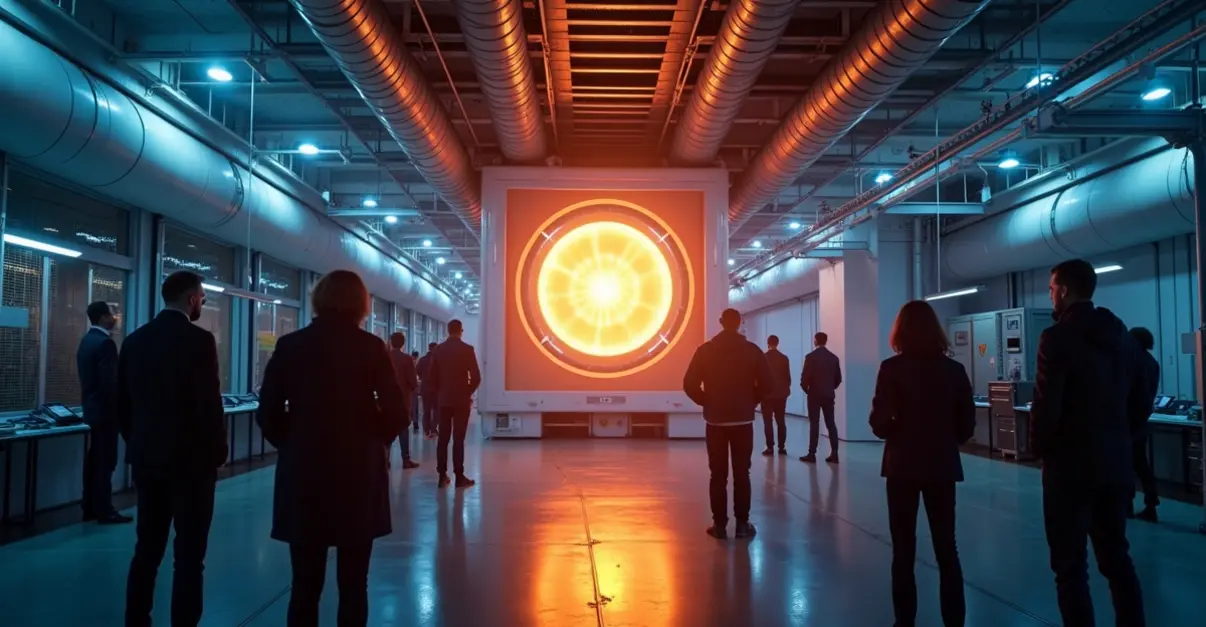
Fusion energy research has reached a critical commercialization milestone in 2026, with Commonwealth Fusion Systems' SPARC project entering its assembly and commissioning phase, marking a pivotal transition from scientific research to credible commercial readiness. This breakthrough involves high-temperature superconducting magnets performing beyond specifications, accelerating the timeline for achieving net energy gain (Q>1) and bringing commercial fusion power closer to reality than ever before. The fusion industry has experienced dramatic growth with cumulative investment surpassing $15 billion, transitioning from government-funded research to a diverse mix of public and private capital that signals a fundamental shift in how humanity approaches clean energy generation.
What is Fusion Energy and Why Does This Milestone Matter?
Fusion energy represents the process of combining light atomic nuclei to form heavier ones, releasing enormous amounts of energy in the process—the same reaction that powers the sun and stars. Unlike nuclear fission, which splits atoms and produces radioactive waste, fusion offers carbon-neutral, abundant power with deuterium-tritium fuel releasing energy equivalent to 13,000 tons of coal per kilogram. The recent milestone achieved by Commonwealth Fusion Systems involves their SPARC demonstration reactor, which is designed to produce 50-100 MW of fusion power at temperatures exceeding 100 million degrees Celsius. This breakthrough matters because it represents the transition from scientific research to commercial viability, potentially accelerating the timeline for delivering clean, abundant fusion energy to the grid by years.
The SPARC Project: Technical Breakthroughs Explained
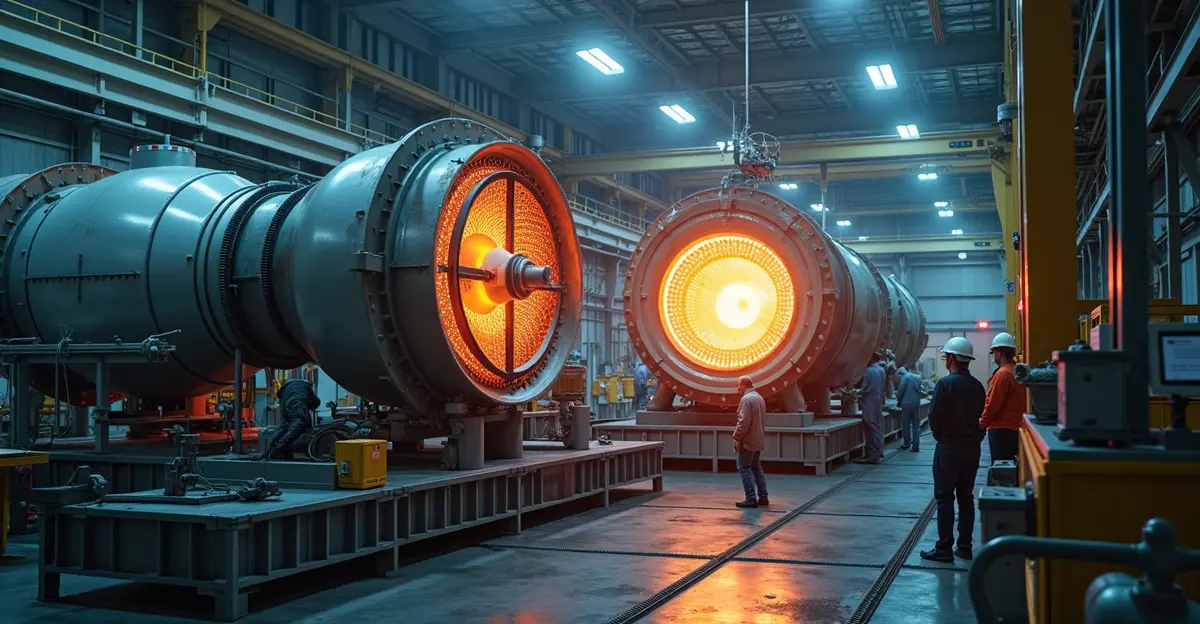
Commonwealth Fusion Systems (CFS), backed by Bill Gates' Breakthrough Energy Ventures, has achieved multiple construction milestones for its SPARC demonstration reactor. The company successfully completed manufacturing and testing of key superconducting magnets, earning an $8 million award through the DOE's Milestone-Based Fusion Development Program. The cryostat base—a 24-foot wide, 75-ton stainless steel component—forms the foundation of the tokamak (the doughnut-shaped heart of the fusion reactor) and acts like a thermos to maintain the extremely cold temperatures (-253°C) needed for superconducting magnets that confine plasma.
Key Technical Achievements
- High-Temperature Superconducting Magnets: Performing beyond specifications, enabling stronger magnetic fields with smaller reactors
- Cryostat Base Installation: Completed in 2025, marking transition from facility construction to actual fusion machine assembly
- Digital Twin Development: Unveiled at CES 2026 in partnership with Siemens and Nvidia, using AI for development optimization
- Milestone-Based Validation: Three DOE milestones completed with independent verification of technical achievements
SPARC is expected to come online in 2027 and aims to be the first tokamak to produce more power than it consumes, potentially proving commercial fusion feasibility. CFS projects its subsequent ARC power plant could deliver 400 MWe to Virginia's grid in the early 2030s, with Google already committing to purchase 200 megawatts of that output.
Investment Landscape: Where the Money is Flowing in 2026
The fusion energy industry has transformed dramatically, with private investment surging past $10 billion globally and $1.7 billion raised in 2025 alone. According to Clean Energy Platform analysis, the industry now employs over 5,000 people directly with an additional 10,000+ in supply chains. Key investment trends for 2026 include:
| Investment Category | 2026 Trends | Key Players |
|---|---|---|
| Technological Collaborations | AI and digital engineering partnerships | NVIDIA, Siemens with CFS |
| Infrastructure Development | 'Site-as-a-Service' models emerging | Multiple fusion startups |
| Supply Chain Investments | $543 million in 2025, growing in 2026 | Material science companies |
| Strategic Capital | Venture funds, energy giants, sovereign wealth | Breakthrough Energy, government funds |
The fusion investment landscape is becoming increasingly strategic as fusion moves toward commercial deployment in the early 2030s. While U.S. government funding has dropped significantly, international investments are growing substantially, including the UK's £2.5 billion STEP program and China's $3 billion annual government investment in fusion research and development.
Policy Implications: Regulatory Framework and Government Support
The policy landscape for fusion energy is evolving rapidly, with the 2024 Fusion Energy Act providing crucial regulatory certainty. The DOE's Milestone-Based Fusion Development Program operates on a milestone-based model where payments are only made after independent validation of technical achievements, minimizing taxpayer risk while accelerating commercial fusion development. CFS argues that scaling up this program could have transformative effects similar to NASA's successful Commercial Orbital Transportation Services (COTS) program, which catalyzed the commercial space industry.
Key Policy Developments
- DOE Milestone Program: Authorized $415 million, though only a fraction has been appropriated to date
- International Coordination: ITER project continues as world's largest fusion experiment with international collaboration
- State-Level Initiatives: Virginia positioning for first commercial fusion plant with CFS's ARC project
- Regulatory Certainty: Fusion classified separately from fission, streamlining approval processes
Experts warn that fusion requires bolstered academic research and critical supply chains to succeed on a climate-relevant timeline. The current policy approach represents a hybrid model combining public-private partnerships with milestone-based funding that rewards demonstrated progress rather than promises.
Market Impact and Commercial Timeline
The commercial timeline for fusion energy has accelerated significantly, with physics demonstrations expected in the mid-2020s to early 2030s, first grid-connected pilot plants in early-to-mid 2030s, and meaningful global generation contributions not expected until the 2040s. Fusion is increasingly positioned as a potential long-term firm low-carbon option complementing renewables, rather than a near-term substitute for existing energy sources.
According to energy market analysts, fusion could provide reliable baseload power to complement intermittent renewables like solar and wind. The technology is transitioning from being marketed as "Green Energy" to "AI Energy" as hyperscalers seek power for AI infrastructure, potentially leading to power purchase agreements for data center campuses. Major technology companies are showing increasing interest, with Google's commitment to purchase 200 megawatts from CFS's ARC plant representing a significant validation of commercial viability.
Expert Perspectives on the Fusion Milestone
Industry leaders emphasize that fusion is no longer just a science project but an emerging technology with bipartisan support. "Fusion is transitioning from scientific research to credible commercial readiness," notes a senior analyst at the Kleinman Center for Energy Policy. "The milestone-based approach minimizes risk while accelerating development, similar to what worked for commercial space."
CFS CEO Bob Mumgaard has emphasized the significance of recent achievements: "We're building the foundation for a clean energy future, and these milestones prove that fusion is moving from the laboratory toward practical implementation." The industry faces competition from multiple approaches including tokamaks, stellarators, inertial confinement, and alternative concepts, with 25 leading fusion ventures currently advancing simultaneously.
Frequently Asked Questions (FAQ)
What is the SPARC fusion project?
SPARC is Commonwealth Fusion Systems' demonstration reactor designed to produce 50-100 MW of fusion power and achieve net energy gain (Q>1). It's expected to come online in 2027 and uses high-temperature superconducting magnets.
When will fusion power be commercially available?
First grid-connected pilot plants are projected for early-to-mid 2030s, with meaningful global generation contributions not expected until the 2040s. CFS plans its first commercial plant (ARC) in Virginia in the early 2030s.
How much has been invested in fusion energy?
Cumulative investment has surpassed $15 billion globally, with $1.7 billion raised in 2025 alone. Private investment has surged past $10 billion as the industry transitions from government research to commercial development.
What are the main challenges facing fusion energy?
Key challenges include engineering problems with materials that must withstand extreme heat and radiation, tritium fuel supply scaling, high infrastructure costs, and sustaining fusion plasmas for practical power generation.
How does fusion differ from current nuclear power?
Fusion combines light atoms (like in the sun) rather than splitting heavy atoms (fission). It produces no long-lived radioactive waste, uses abundant fuel (deuterium from water), and cannot melt down like fission reactors.
Conclusion: The Path Forward for Fusion Energy
The 2026 fusion research milestone represents a pivotal moment in the decades-long quest for practical fusion energy. With SPARC entering assembly and commissioning, high-temperature superconducting magnets exceeding specifications, and investment surpassing $15 billion, fusion has transitioned from scientific curiosity to credible commercial endeavor. While significant challenges remain—including materials science, fuel supply, and cost reduction—the accelerated timeline suggests that fusion power could begin contributing to global energy grids within the next decade. The energy transition landscape is evolving rapidly, and fusion appears poised to play a complementary role alongside renewables in achieving deep decarbonization of the global energy system.

Follow Discussion