


 Deutsch
 English
 Español
 Français
 Nederlands
 Português


 Share
Share




Fusion Energy Takes Major Step Toward Commercial Reality
The race to commercialize fusion energy has received a significant boost with major new funding for demonstration plants across the globe. As governments and private investors pour billions into fusion technology, the timeline for practical fusion power is accelerating faster than many experts predicted just a few years ago.
Prototype Scale Expectations and Commercialization Pathways
According to the U.S. Department of Energy's Fusion Science & Technology Roadmap released in October 2025, the United States has established a clear national strategy to commercialize fusion energy with the ambitious goal of delivering power to the grid by the mid-2030s. The roadmap adopts a three-pronged 'Build-Innovate-Grow' approach that focuses on building key infrastructure, innovating fusion science through industry-informed research, and growing the U.S. fusion ecosystem.
'We're seeing a fundamental shift from pure scientific research to industrial-scale development,' says Dr. Maria Chen, a fusion energy analyst at the Massachusetts Institute of Technology. 'The additional funding for demonstration plants represents a critical bridge between experimental reactors like ITER and commercial power stations.'
Major Players and Their Timelines
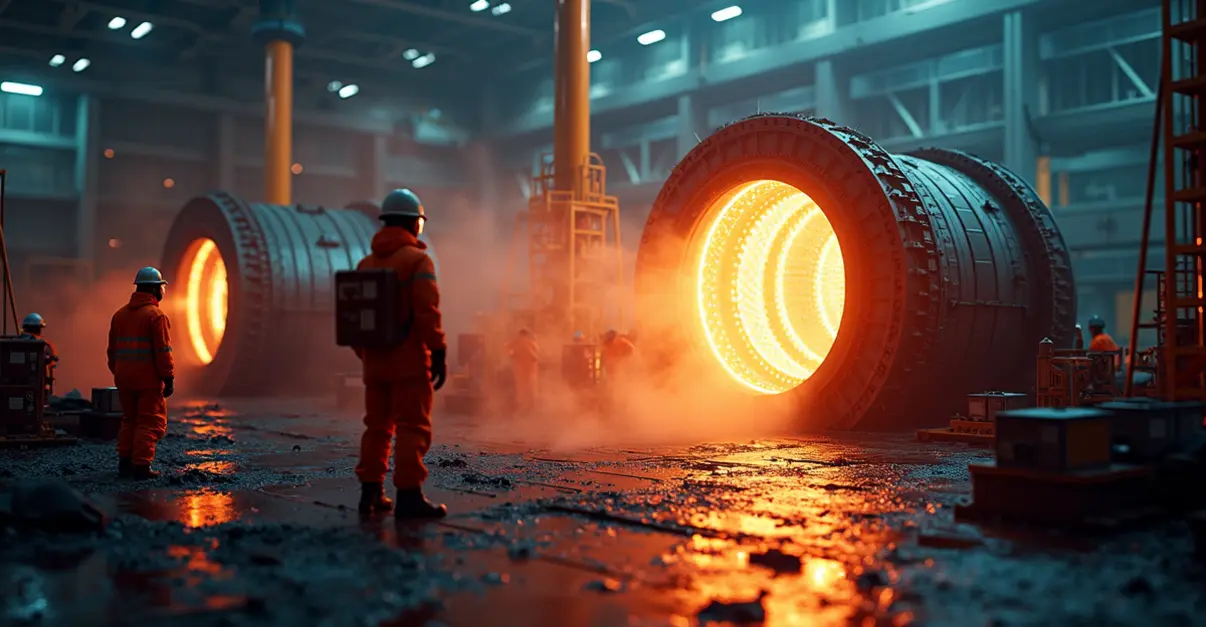
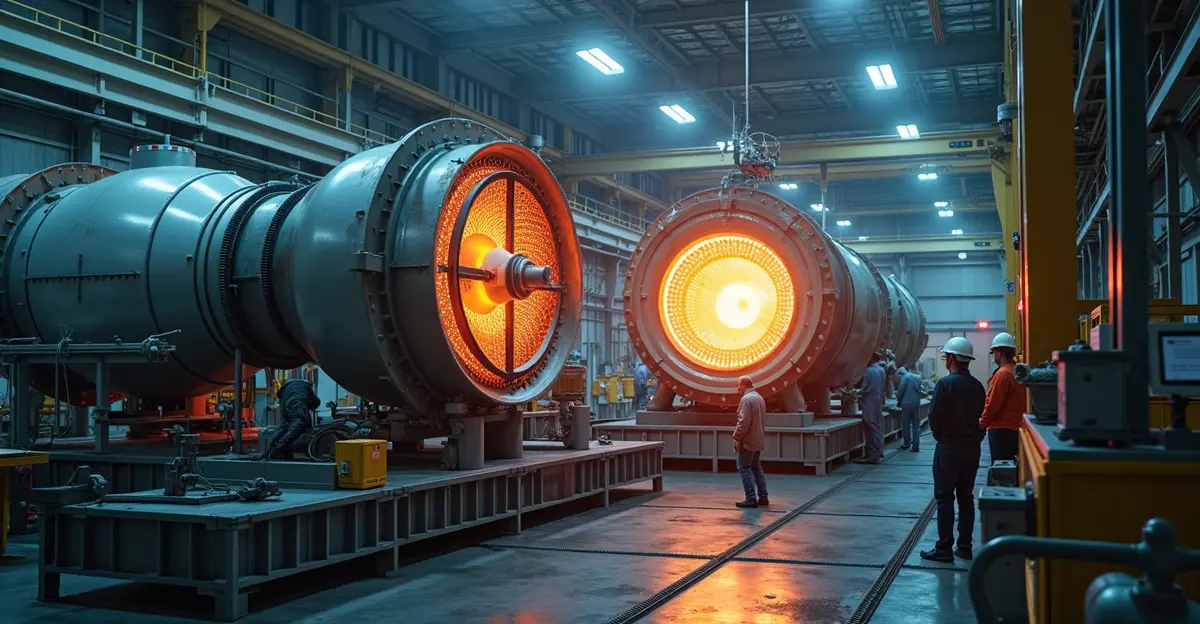
Commonwealth Fusion Systems (CFS) has emerged as a leader in the field, having raised nearly $3 billion in total funding for its SPARC demonstration machine. The company recently received its first 48-ton vacuum vessel and installed the first of 18 high-field superconducting magnets. According to their latest progress report, CFS has formed strategic partnerships with NVIDIA and Siemens to create a digital twin of SPARC for real-time simulation.
'By mid-2026, we aim to complete magnet installation and begin predictive AI simulations,' says CFS CEO Bob Mumgaard. 'This positions fusion as a viable commercial energy source alongside solar and wind.'
SPARC is scheduled to produce its first plasma energy in 2027, with the company planning to build its first commercial fusion plant, ARC, in the early 2030s in Virginia. The ARC plant would provide 400 megawatts of power for about 300,000 homes.
Global Landscape and Funding Challenges
The global fusion energy landscape shows significant progress with multiple teams achieving record energy gains (Q > 1) and billion-dollar funding rounds. However, a GAO report from 2025 reveals that the Department of Energy's Fusion Energy Sciences program has invested only about 1.2% ($36 million average) of its funding in public-private partnerships for commercialization from 2020-2023, with the majority going to basic science research.
Despite these challenges, private sector momentum continues to grow. U.S. fusion startups have raised nearly $10 billion, with companies like Helion Energy and TAE Technologies developing their own pilot plants and commercial projects. The European Union continues with its DEMO (DEMOnstration Power Plant) program, which aims to produce at least 2000 megawatts of fusion power on a continuous basis, with operation planned to begin in 2051.
Realistic Commercialization Timelines
While optimistic claims suggest commercial fusion by 2030, most experts point to a more realistic timeline. According to industry analysis from 2026, physics demonstrations are expected in the mid-2020s to early 2030s, first grid-connected pilot plants in the early-to-mid 2030s, and meaningful global generation contributions (over 1% of TWh) by the 2040s.
'Fusion is positioned as a long-term firm low-carbon option rather than a near-term substitute for renewables,' explains energy economist Dr. James Peterson. 'Target LCOE ranges from $90-$150/MWh for first-of-a-kind plants to $40-$80/MWh for mature fleets.'
The additional funding for demonstration plants represents a critical inflection point in fusion energy development. As these projects move from concept to construction, they're testing not just the physics of fusion, but the engineering, materials science, and economic models needed to make fusion power a commercial reality. With continued investment and technological breakthroughs, the dream of clean, abundant fusion energy may be closer than ever before.


Follow Discussion