Deutsch
 English
 Español
 Français
 Nederlands
 Português






Landmark Agreement Balances Automation with Job Security
In a groundbreaking development that could reshape global maritime operations, the International Longshoremen's Association (ILA) and the United States Maritime Alliance (USMX) have reached a historic six-year labor agreement that establishes a comprehensive blueprint for port automation while protecting workers' livelihoods. The deal, finalized just days before a January 15 strike deadline, represents what union leadership calls 'the greatest collective bargaining agreement ever negotiated' and offers a model for how traditional industries can navigate technological transformation.
The Automation Compromise
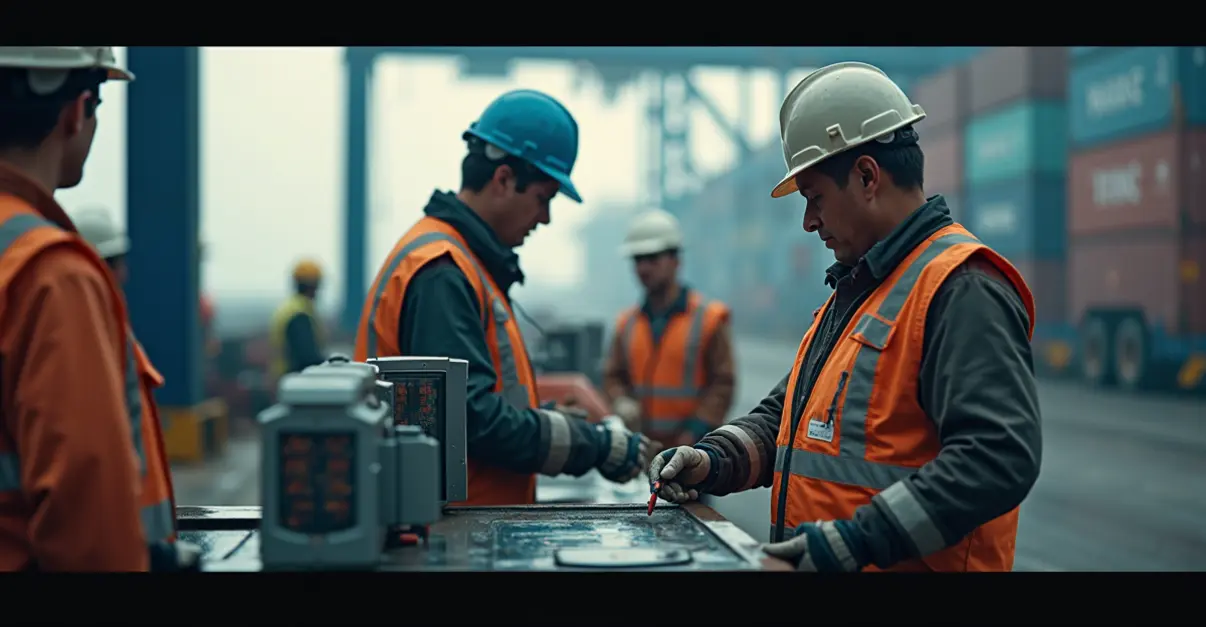
The centerpiece of the agreement is a carefully crafted automation framework that allows for technological advancement while maintaining human oversight. According to the terms, employers are prohibited from implementing equipment 'devoid of human interaction' - effectively blocking fully automated systems that would eliminate jobs entirely. However, the deal permits semi-automated technology with crucial safeguards: for every semi-automated crane implemented, employers must create one additional job.
'This isn't about stopping progress,' explained labor analyst Maria Rodriguez. 'It's about ensuring that when ports modernize, workers aren't left behind. The one-to-one job creation requirement is particularly innovative - it acknowledges that new technology creates new types of work.'
Economic Implications and Wage Gains
The financial package accompanying the automation framework is substantial. Workers will receive a 62% wage increase over the six-year contract period, along with restored full container royalty payments per ton of cargo handled. For workers in high-volume ports like New York/New Jersey and Savannah, this could translate to tens of thousands of dollars in additional annual income.
From a market perspective, the agreement provides much-needed stability for supply chains that have been volatile since the pandemic. 'Operational predictability at critical ports reduces value-at-risk for everyone in the supply chain,' noted Moody's analysts in their recent assessment. The deal covers 45,000 dockworkers across East and Gulf Coast ports, representing more than half of U.S. ocean imports.
Port-Specific Implementation Strategies
What makes this agreement particularly noteworthy is its bespoke approach to different port environments. Rather than imposing a one-size-fits-all automation model, the plan recognizes that each major port has unique needs and challenges:
Port of New York and New Jersey: Will adopt semi-automated cranes with real-time tracking systems, maintaining human operators while improving efficiency.
Savannah: Plans to expand its fleet of automated guided vehicles (AGVs) for container movement, with displaced workers receiving training for higher-skilled monitoring and maintenance roles.
Houston: Will implement automation primarily for energy export operations, leveraging the port's specialization in petroleum and liquefied natural gas.
Charleston and New Orleans: Will employ hybrid systems that combine traditional and automated elements, allowing for gradual transition.
Community and Policy Implications
The agreement extends beyond the docks to address broader community concerns. As World Economic Forum analysis highlights, ports are uniquely positioned to lead what they term a 'just transition' - balancing technological progress with social responsibility. The training programs embedded in the agreement prepare workers not just for remaining port jobs, but for emerging roles in adjacent industries like offshore wind maintenance and clean fuel distribution.
Policy experts see this as a potential template for other industries facing automation pressures. 'This demonstrates that with proper negotiation and foresight, automation doesn't have to mean job loss,' said transportation policy director James Wilson. 'It can mean job transformation and creation of new economic opportunities for port communities.'
Global Context and Future Outlook
The ILA's success comes amid growing global concern about automation's impact on maritime jobs. The union recently organized an Anti-Automation Conference in Lisbon, Portugal, forming a Global Maritime Alliance to coordinate international resistance to job-killing technology. However, the new agreement suggests a more nuanced approach may be emerging - one that embraces technological efficiency while protecting workers.
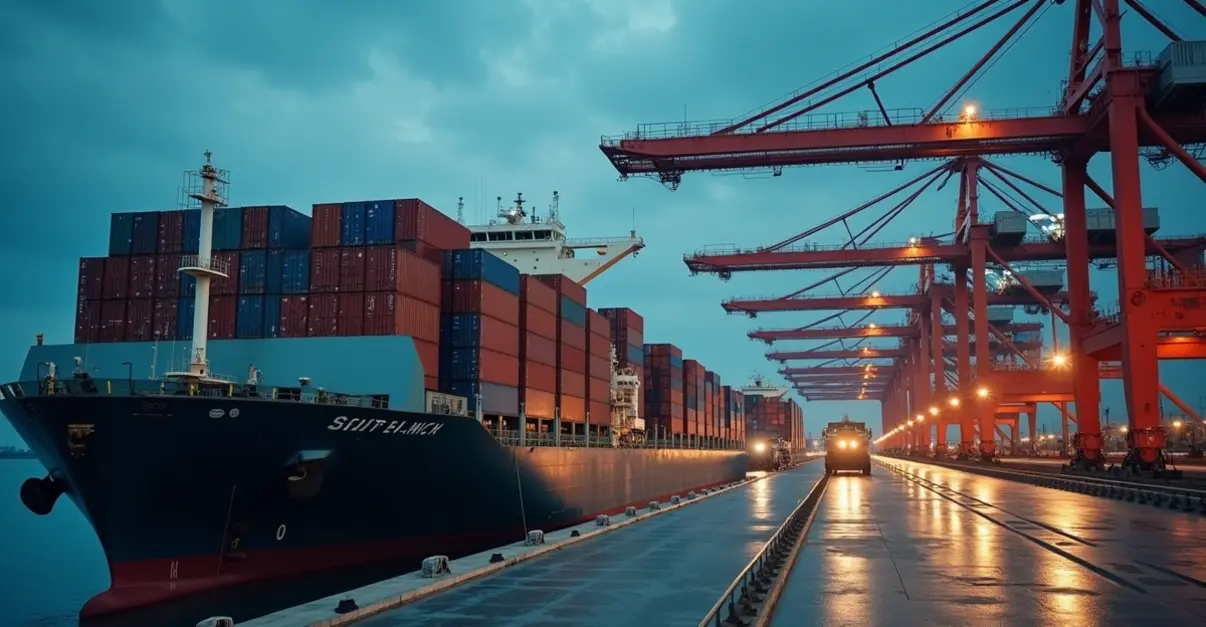
Looking ahead, the implementation of this transition plan will be closely watched by industries worldwide. As ports handle nearly 90% of global trade, their approach to balancing automation with employment could influence everything from manufacturing to logistics. The six-year timeframe allows for gradual adaptation, with regular assessments of how technology implementation affects both productivity and workforce satisfaction.
The deal's timing is particularly significant, coming just before President-elect Donald Trump's inauguration and avoiding what could have been a devastating strike during a politically sensitive period. While some union members have expressed frustration about negotiation transparency, the overwhelming sentiment appears to be relief that a potentially catastrophic labor disruption has been averted while securing substantial gains for workers facing an automated future.