


 Deutsch
 English
 Español
 Français
 Nederlands
 Português


 Share
Share




Breakthrough in Agricultural Science
Field trials of heat-resilient crops have demonstrated significant yield increases under extreme temperatures, offering hope for global food security as climate change intensifies. Researchers from the University of Illinois report that modifying plant characteristics like leaf orientation and photosynthetic processes can maintain productivity during heat waves that traditionally devastate crops.
Innovative Approaches
Scientists have successfully tested multiple approaches in laboratory and field conditions:
- Altering leaf orientation to optimize light distribution
- Increasing leaf reflectivity to reduce scorching
- Modifying the Rubisco enzyme for better heat tolerance
- Adjusting water regulation through leaf pores
These modifications help plants better manage heat stress while maintaining photosynthetic efficiency. "Many studies focus on Rubisco, the most abundant protein on our planet," explained Professor Stephen Long. "Giving soybean plants a more efficient Rubisco enzyme from another species improves performance in hotter conditions."
Field Trial Success
At the University of Illinois' Soybean Free-Air Concentration Enrichment Facility, researchers simulated future climate conditions. Crops with modified traits showed 6-16% higher yields compared to conventional varieties under extreme heat. This is particularly significant since projected temperature increases between 2010 and 2050 are expected to depress yields just as global demand increases by over 50%.
Implementation Challenges
Despite promising results, implementing these innovations faces significant hurdles. The breeding cycle for conventional traits takes 10-12 years, while bioengineered solutions face regulatory challenges costing approximately $115 million per trait. "The timeline from identifying a beneficial trait to getting it in a farmer's field is long," noted Professor Donald Ort. Gene editing techniques that enhance existing plant genes without introducing foreign DNA may offer a faster pathway to market.
Climate Change Context
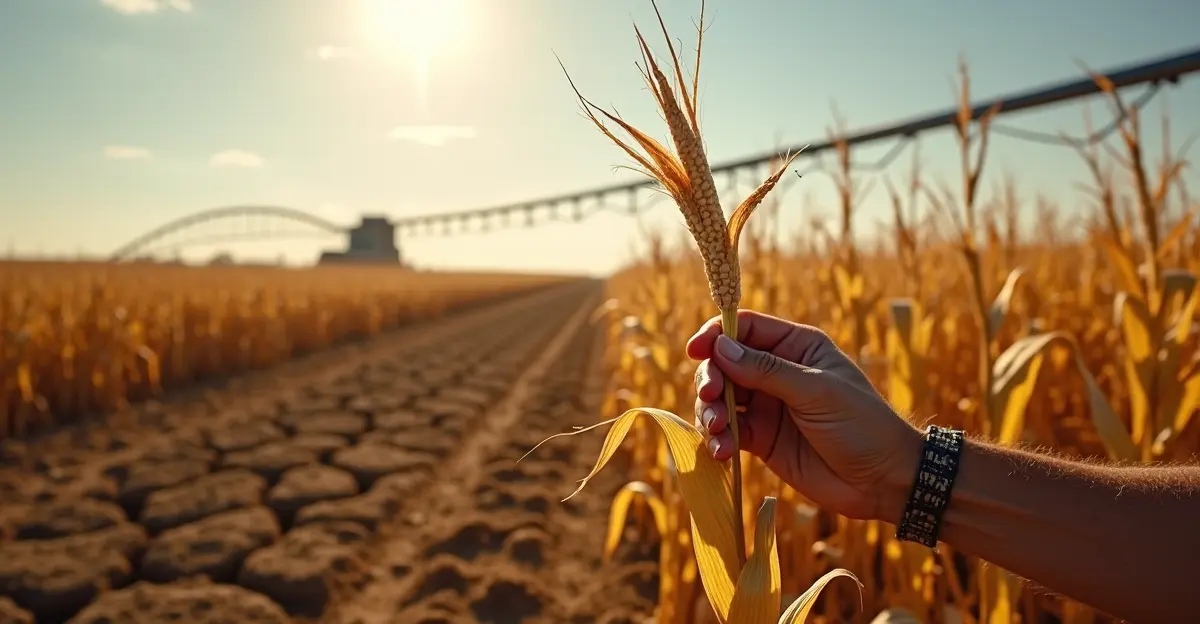
This research comes as heat domes - weather phenomena where high-pressure systems trap hot air - become more frequent and intense due to climate change. These events create stagnant atmospheric conditions that exacerbate crop stress and increase evaporation rates, worsening drought conditions in agricultural regions like California's Central Valley.
"There are real opportunities to address temperature increases, to future-proof the crop against rising temperatures," Long emphasized. "It isn't an impossibility. But it's going to mean significant, very significant effort."


Follow Discussion