


 Deutsch
 English
 Español
 Français
 Nederlands
 Português


 Share
Share




What is Heat Stress Crop Yield Alert?
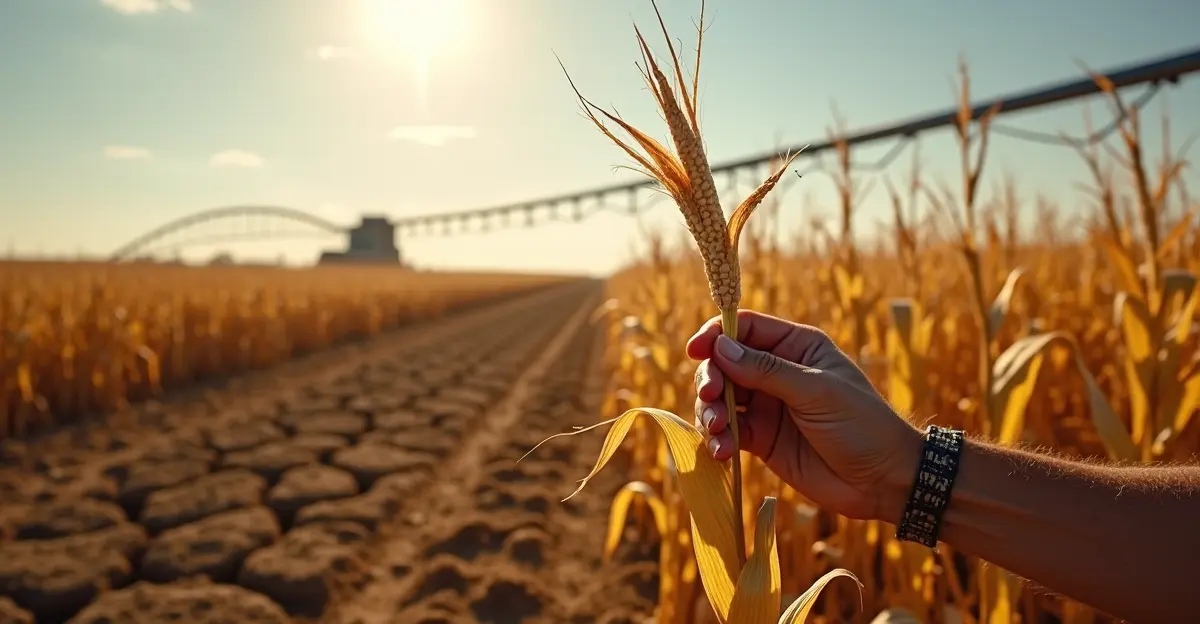
A heat stress crop yield alert represents a critical warning system for agricultural regions facing temperature extremes that threaten food production. With climate change intensifying, major crop-producing areas worldwide are experiencing unprecedented heat stress that reduces yields of essential staples like wheat, maize, rice, and soybeans. According to a 2025 Stanford University study, rising heat and dry air are significantly cutting global crop yields, with projections showing wheat losses increasing from 6.1% to 8.2% per 1°C warming when temperatures exceed 2.38°C thresholds. This comprehensive advisory outlines three key intervention areas: irrigation scheduling optimization, varietal support programs, and market signal adjustments to protect global food security.
Context and Background: The Growing Threat
Climate change has fundamentally altered agricultural risk profiles across the world's main producing regions. The 2025 global crop yields climate change research reveals that what was once considered extreme heat is becoming the new normal during critical growth phases. A 2026 study published in Climatic Change warns that short periods of extreme heat during wheat flowering could become the biggest threat to global wheat production in coming decades, with losses potentially increasing by over three-quarters by 2090. The North American Great Plains, China's North China Plain, India's Punjab region, and Australia's wheat belt face particularly severe challenges. These regions collectively produce over 60% of the world's staple crops, making their vulnerability a global food security concern.
Advisory Measure 1: Irrigation Scheduling Optimization
Traditional irrigation approaches are proving inadequate against intensifying heat stress. A 2023 Agricultural Water Management study found that intensified irrigation is not an effective climate adaptation strategy because heat stress reduces plant productivity and water demand. However, smart irrigation scheduling represents a crucial adaptation tool.
Precision Water Management Strategies
Advanced irrigation scheduling must account for both temperature thresholds and humidity effects. Research from the University of Nebraska's Daugherty Water for Food Global Institute reveals that irrigation's impact depends heavily on the specific heat stress metric used. For humidity-focused metrics, irrigation intensifies humid heat extremes by up to 9°F, while temperature-focused metrics show irrigation actually mitigates heat intensity. Farmers should implement:
- Soil moisture monitoring with IoT sensors
- Evapotranspiration-based scheduling systems
- Night-time irrigation to reduce evaporation losses
- Drip irrigation for targeted water delivery
Advisory Measure 2: Varietal Support Programs
Developing and deploying heat-tolerant crop varieties represents the most promising long-term solution. The agricultural biotechnology advancements in recent years have accelerated breeding programs, but adoption rates remain concerningly low in many regions.
Heat-Tolerant Crop Development
Plant breeders are focusing on developing wheat varieties with improved heat tolerance during flowering, the most sensitive stage in development where even a few days of high temperatures can significantly reduce grain numbers. According to the 2025 book 'Drought and Heat Stress in Agriculture: Implications, Mitigation and Policy Approaches', crop yields in Africa, Asia, and the Middle East are reduced by 15-35% with temperature increases of 3-4°C. Key initiatives include:
- Public-private breeding partnerships for staple crops
- Farmer field schools demonstrating new varieties
- Subsidy programs for heat-tolerant seeds
- Regional adaptation trials across different microclimates
Advisory Measure 3: Market Signal Adjustments
Agricultural markets must better reflect climate risks to incentivize adaptation. The USDA Risk Management Agency's 2026 Crop Year projected prices and price volatility factors, announced in August 2025, represent important steps toward climate-informed pricing. However, more comprehensive reforms are needed.
Risk Management and Price Signals
Crop insurance programs need updating to account for heat stress probabilities rather than just historical averages. The agricultural insurance reform initiatives in several countries are beginning to incorporate climate models into premium calculations. Key market adjustments include:
- Futures contracts that reflect regional climate vulnerabilities
- Insurance products with heat stress triggers
- Price discovery mechanisms incorporating climate forecasts
- Supply chain contracts with climate resilience clauses
Regional Impacts and Implementation Challenges
Different regions face unique heat stress challenges requiring tailored responses. A 2026 Field Crops Research study examining wheat yield reduction under future climate extremes in China found Northwest China faces the most severe reductions (30-40%) due to heavy precipitation and cold extremes, while the Yangtze River Basin (19-36% reduction) and North China Plain (17-25% reduction) are primarily affected by hot extremes. The global food security projections indicate that without mitigation and adaptation, countries in South Asia, sub-Saharan Africa, North America, and Oceania could face challenges meeting national calorie demand by century's end.
Expert Perspectives on Heat Stress Management
Agricultural researchers emphasize the urgency of coordinated action. "We're seeing temperature thresholds being crossed more frequently than climate models predicted," notes Dr. Elena Rodriguez, lead author of the 2025 Scientific Reports study on crop yield responses. "The nonlinear nature of heat stress impacts means we can't rely on gradual adaptation—we need transformative changes in how we grow food." Similarly, policy experts warn that market signals must evolve faster. "Current agricultural markets don't adequately price climate risk," explains Michael Chen of the World Food Programme. "Farmers need clearer economic incentives to adopt heat-resilient practices."
Frequently Asked Questions (FAQ)
What temperature threshold causes significant crop damage?
Research shows wheat experiences accelerated yield loss (6.1% to 8.2% per 1°C) when temperatures exceed 2.38°C above historical averages, while rice shows dramatic increases (1.1% to 7.1% loss per °C) beyond 3.13°C thresholds.
How does irrigation affect heat stress differently?
Irrigation lowers air temperature but increases humidity, creating complex effects. For humidity-focused metrics, irrigation intensifies humid heat extremes by up to 9°F, while for temperature-focused metrics, it decreases temperatures by up to 1.8°F.
What are the most vulnerable crop growth stages?
Flowering represents the most sensitive stage for wheat, where even a few days of high temperatures can significantly reduce grain numbers. For maize, the pollination period is particularly vulnerable to heat stress.
How can farmers access heat-tolerant varieties?
Public breeding programs, agricultural extension services, and seed companies are increasingly offering heat-tolerant varieties. Government subsidy programs in many countries help reduce adoption costs for farmers.
What market tools help manage heat stress risk?
Crop insurance with heat stress triggers, futures contracts reflecting regional vulnerabilities, and supply chain agreements with climate resilience clauses represent emerging tools for risk management.
Conclusion: Building Climate-Resilient Food Systems
The heat stress crop yield alert underscores the urgent need for integrated approaches combining technological innovation, policy reform, and market evolution. As temperatures continue rising, the window for effective adaptation is narrowing. The three advisory measures—irrigation scheduling optimization, varietal support programs, and market signal adjustments—must be implemented in coordination to protect global food production. With projections showing potential yield reductions of -22% for maize, -9% for rice, -15% for soy, and -14% for wheat by 2080-2100 under business-as-usual scenarios, the time for decisive action is now. The sustainable agriculture practices that incorporate these measures will determine whether we can maintain food security in a warming world.

Follow Discussion