


 Deutsch
 English
 Español
 Français
 Nederlands
 Português


 Share
Share




What is India's Traffic Noise Crisis?
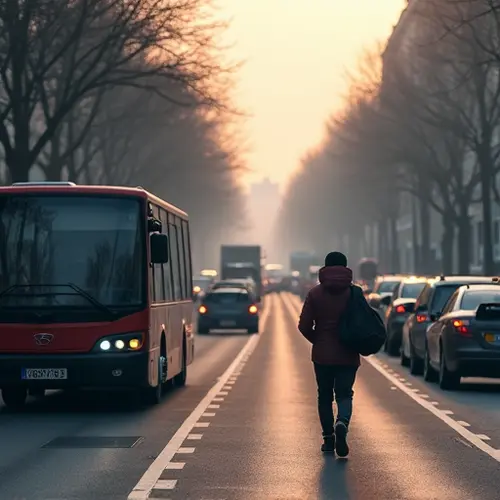
India's traffic noise pollution, driven by a pervasive honking culture, has escalated into a major public health emergency. In cities like Delhi, Mumbai, and Kolkata, average decibel levels routinely exceed WHO guidelines by four times, with peaks over 100 dB — comparable to a chainsaw. This constant cacophony is not just an annoyance; it is a ticking time bomb for the health of over 60 million Indians already suffering from hearing loss, and a severe drag on the economy.
The 'Honking Culture' Explained
In India, the car horn has evolved from a warning device into an essential communication tool. Poor urban planning forces trucks, rickshaws, and pedestrians into shared spaces, making the horn a multifunctional signal. Trucks often bear the text 'Horn Please' on their rear, encouraging others to honk when overtaking. The auto industry has adapted: Mercedes-Benz builds extra-robust horns for the Indian market due to their extreme usage. In Kolkata, the average e-scooter rider honks 131 times per hour, according to recent studies.
Decibel Levels in Indian Cities vs. WHO Standards
According to 2022 United Nations data, Indian cities rank among the noisiest on Earth. Delhi's average noise level hovers around 75 dB — four times the WHO's recommended limit. Peaks exceeding 100 dB are common. The table below compares Indian cities to safe limits:
| Location | Average Noise Level (dB) | WHO Recommended Limit (dB) |
|---|---|---|
| Delhi | 75 | 55 |
| Mumbai (festival peak) | 120 | 55 |
| Kolkata (traffic) | 89 | 55 |
| Moradabad (peak recorded) | 114 | 55 |
Health Consequences: Beyond Hearing Loss
The impact of constant noise extends far beyond the ears. More than 60 million Indians now suffer from hearing loss. Research shows that chronic noise activates the body's stress response, disrupts sleep, and raises blood pressure over time. A study found that a 5 dB increase in traffic noise can slow children's working memory development by 11%. Researcher Manish Manohare of IIT Delhi conducted an experiment comparing noise recordings from Delhi and London. British subjects showed immediate physiological stress to Delhi's noise, while Indian participants appeared unfazed. 'Indians may become mentally accustomed to the sound, but their hearts and blood vessels do not,' Manohare warned, noting a significantly increased risk of heart attacks. The health effects of noise pollution are often underestimated in policy debates.
Economic Impact: A Hidden Cost
While specific Indian figures are lacking, European data offers a grim benchmark: traffic noise health costs amount to 0.6% of GDP annually in Europe. Given India's extreme noise levels, the economic toll is likely far higher. A 2025 Lancet Countdown report estimated that air and noise pollution together cost India $339.4 billion, or 9.5% of GDP. The economic burden of pollution in India is a growing concern for policymakers.
Failed and Proposed Solutions
Several innovative solutions have been attempted, but none have scaled effectively:
- Musical horns: Minister Nitin Gadkari proposed replacing harsh honks with sounds of Indian instruments like flutes or tablas.
- Anti-honk device: Behavioral scientist Anand Damani created a device that emits an irritating beep inside the car whenever the driver honks, reducing usage by 61% in trials — but it was never widely adopted.
- Silent zones: Areas around hospitals and schools often exceed noise limits by double, rendering the measure ineffective.
China offers a contrasting success story, using noise barriers, quieter asphalt, and strict government policy to reduce urban noise. But for India, as the article notes, it remains a case of 'mopping the floor while the tap is still running.' The urban noise reduction strategies in China provide a potential roadmap.
FAQ: India's Traffic Noise Crisis
What is the main cause of noise pollution in India?
The primary cause is the excessive use of vehicle horns, compounded by poor urban planning, mixed traffic (trucks, rickshaws, pedestrians sharing roads), and lax enforcement of noise regulations.
How does traffic noise affect health?
Chronic exposure causes hearing loss, cardiovascular disease, sleep disturbance, stress, and cognitive impairment in children. Studies link it to hypertension, heart attacks, and reduced work performance.
What are the legal noise limits in India?
Under the Noise Pollution (Regulation and Control) Rules, 2000, the limit for commercial areas is 65 dB during the day and 55 dB at night. Residential areas have limits of 55 dB day and 45 dB night, but these are routinely violated.
Is India's noise problem worse than other countries?
Yes. Indian cities consistently rank among the noisiest globally. Delhi's average of 75 dB is four times the WHO guideline. For comparison, London averages around 55-60 dB.
What can be done to reduce honking?
Solutions include stricter enforcement of noise laws, better road design to separate traffic types, public awareness campaigns, technological fixes like anti-honk devices, and adopting quieter road surfaces and vehicle standards.




Follow Discussion