


 Deutsch
 English
 Español
 Français
 Nederlands
 Português


 Share
Share




Trump to Visit China for State Visit at Xi Jinping's Invitation
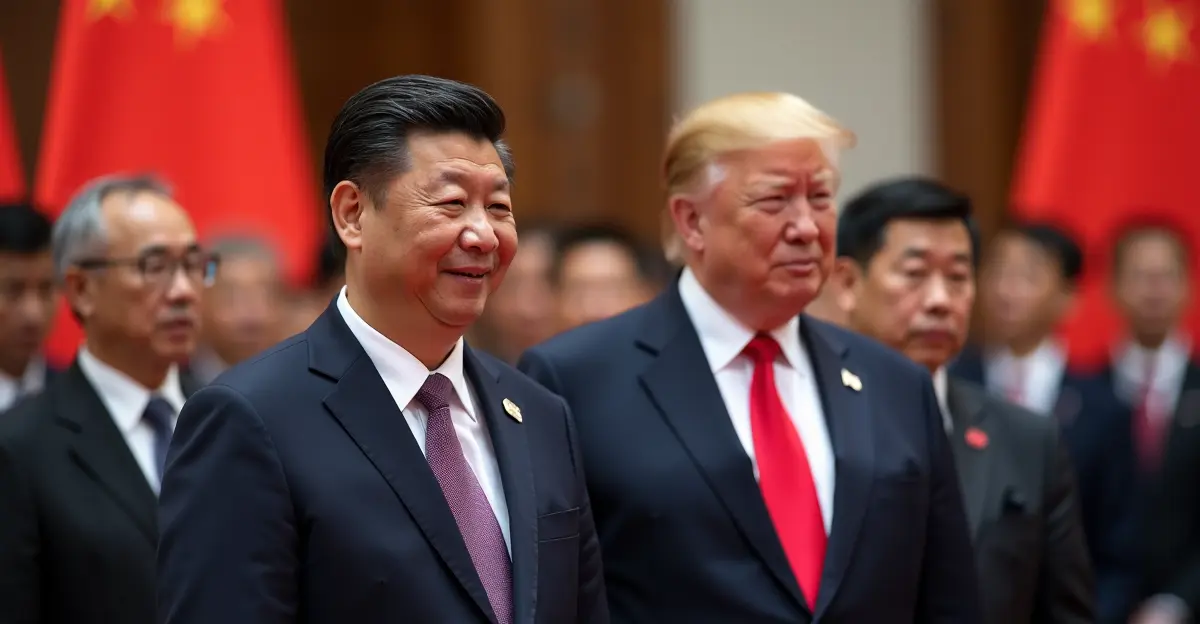
US President Donald Trump will travel to China from May 13 to 15, 2026, for a state visit at the invitation of Chinese President Xi Jinping, marking the first visit by an American president to China since 2017. The visit, confirmed by China's Ministry of Foreign Affairs, comes after a postponement from late March due to the ongoing US-Iran war. The summit is expected to address a range of critical issues including trade tensions, the Iran conflict, Taiwan, and technology controls.
The visit was first announced by Trump during the APEC summit in Busan, South Korea, in October 2025, but was delayed as the US military campaign against Iran escalated. On March 25, 2026, the White House confirmed the new dates, and China officially confirmed the visit on May 10, consistent with Beijing's practice of announcing state visits only days before they occur.
Background: From Postponement to Diplomatic Reset
Trump's second state visit to China was originally scheduled for early April 2026 but was postponed as the US focused on military operations against Iran, which began on February 28. The White House indicated that Trump needed to remain in the US during active combat, but denied that ending the war was a precondition for the meeting. White House press secretary Karoline Leavitt stated that the administration estimated the conflict would last approximately four to six weeks, adding: 'You could do the math on that.'
In the lead-up to the summit, significant preparatory work took place. On April 16, Defense Secretary Pete Hegseth announced that Beijing had provided high-level assurances to the White House that it would not send weapons to Iran, explicitly ruling out the potential transfer of surface-to-air missiles. Hegseth attributed this breakthrough to the 'strong and direct relationship' between Trump and Xi. A bipartisan US Senate delegation led by Steve Daines visited Beijing and Shanghai in early May, and on May 7, Chinese Premier Li Qiang met with the delegation. Two US Air Force C-17 planes were spotted at Beijing Capital International Airport on May 3, likely transporting the presidential motorcade, including 'The Beast' limousine.
This visit comes amid a period of strained US-China relations, with Trump's tariffs on Chinese goods continuing to impact bilateral trade. The summit is seen as a critical opportunity to stabilize ties and manage competition.
Key Agenda Items for the Trump-Xi Summit
Iran and Energy Security
The Iran war is expected to dominate discussions. China remains the largest buyer of Iranian oil, with 'teapot' refineries continuing to purchase crude despite US sanctions. The Trump administration has warned of secondary sanctions and is pressing Beijing to further reduce oil purchases from Iran, which account for approximately 90% of Iran's energy exports. US Treasury Secretary Scott Bessent accused China of 'funding' Iran. China has called for an end to the conflict but refuses to recognize unilateral US sanctions. A fragile ceasefire brokered with China's help as a major Iranian oil buyer could be a key topic.
Trade and Economic Relations
Trade imbalances and tariff disputes remain central. Trump's tariffs targeting Chinese manufacturers have strained relations, and Beijing is unlikely to offer major breakthroughs, with analysts noting China is strategically 'working backward from our midterm elections' and believes leverage will increase closer to Election Day. Potential outcomes include a Board of Trade mechanism and Chinese purchases of US crops, Boeing aircraft, and American energy. A delegation of American CEOs, including from Boeing and Mastercard, is expected to join Trump on the visit to signal business engagement.
Taiwan and Regional Security
The status of Taiwan is a core issue. The US recently approved a record $11 billion arms sale to Taipei, including ATACMS and HIMARS systems, drawing strong objections from Beijing. China insists Taiwan is a core interest and warns against ambiguous US handling. Taiwan's Foreign Minister Lin Chia-lung expressed confidence in stable Taiwan-US relations but noted close monitoring of the summit. China has continued military activities near Taiwan, calling them 'entirely justified.' The diversion of US resources to the Middle East due to the Iran war could give China greater leverage in any potential Taiwan contingency, according to some experts.
Technology and Rare Earths
Technology controls and rare earth minerals are also on the agenda. The US has maintained export controls on advanced semiconductors and AI technology to China, while China has restricted exports of rare earth minerals critical for US defense and green energy industries. The summit may explore mutual de-escalation or new frameworks for technology competition.
Analysis: A Muted Grandeur Amidst Global Tensions
Unlike Trump's lavish 2017 'state visit-plus' reception at the Forbidden City, this trip is expected to be more subdued. The visit lasts only parts of three days, and the ongoing Iran war casts a shadow over the proceedings. However, the symbolism remains significant: it is the first US presidential visit to China in nine years and the first face-to-face meeting between Trump and Xi since their APEC encounter in October 2025.
The Council on Foreign Relations described the meeting as an effort to stabilize relations, while CSIS experts are providing real-time analysis on the wide range of issues. Trump has praised Xi as a 'formidable leader' and predicted warm feelings during the visit, but analysts caution that concrete outcomes may be limited. A reciprocal visit by Xi to the White House is planned for later in 2026, with potential for multiple meetings between the two leaders this year.
On the domestic front, Trump's son Eric and his wife Lara will accompany the president in a personal capacity, a move that Reuters noted may represent a conflict of interest given the family's business dealings. The 2026 US midterm elections loom large over the diplomatic calculus, with both leaders aware of the domestic political implications.
FAQ: Trump's 2026 China State Visit
When is Trump visiting China in 2026?
President Donald Trump's state visit to China takes place from May 13 to 15, 2026, with the main summit on May 14-15 in Beijing.
Why was Trump's China visit postponed?
The visit was originally scheduled for late March 2026 but was postponed due to the US-Iran war that began on February 28, 2026. Trump needed to remain in the US during active combat operations.
What topics will Trump and Xi discuss?
The agenda includes the Iran war and oil sanctions, trade tensions and tariffs, Taiwan security, technology export controls, rare earth minerals, and potential cooperation on global issues. A delegation of US CEOs will also discuss business opportunities.
Is this Trump's first visit to China as president?
No, this is Trump's second state visit to China. His first was in November 2017 during his first term. However, it is the first US presidential visit to China since then.
Will Xi Jinping visit the US in return?
Yes, a reciprocal visit by President Xi to the White House is planned for later in 2026, with the possibility of multiple meetings between the two leaders this year.


Follow Discussion