


 Deutsch
 English
 Español
 Français
 Nederlands
 Português


 Share
Share




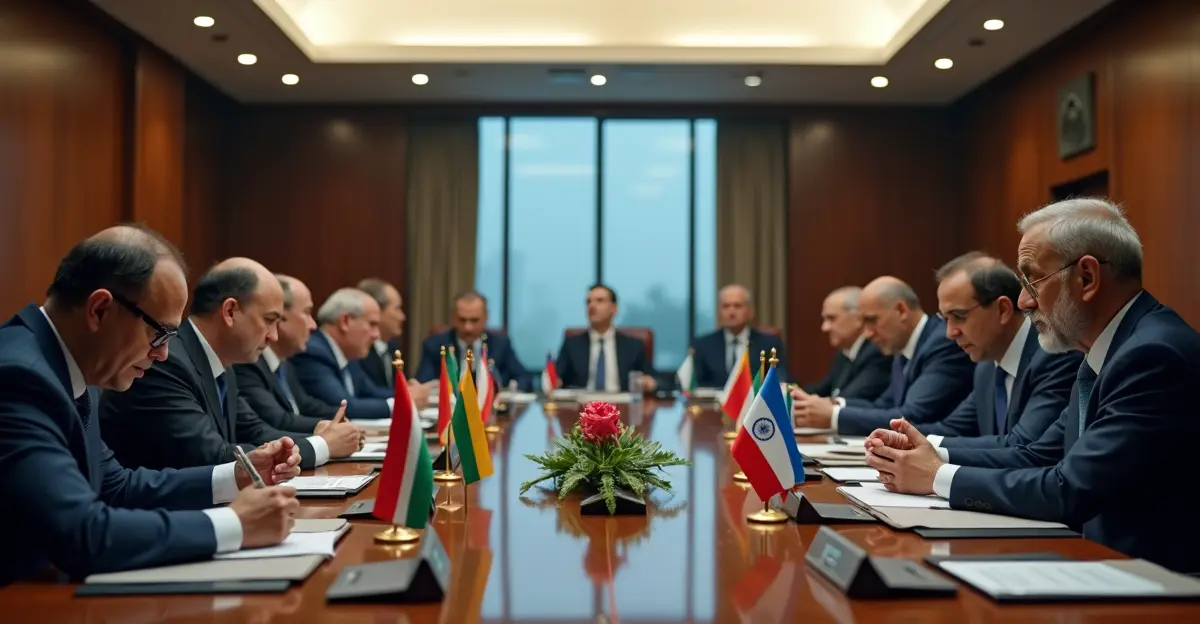
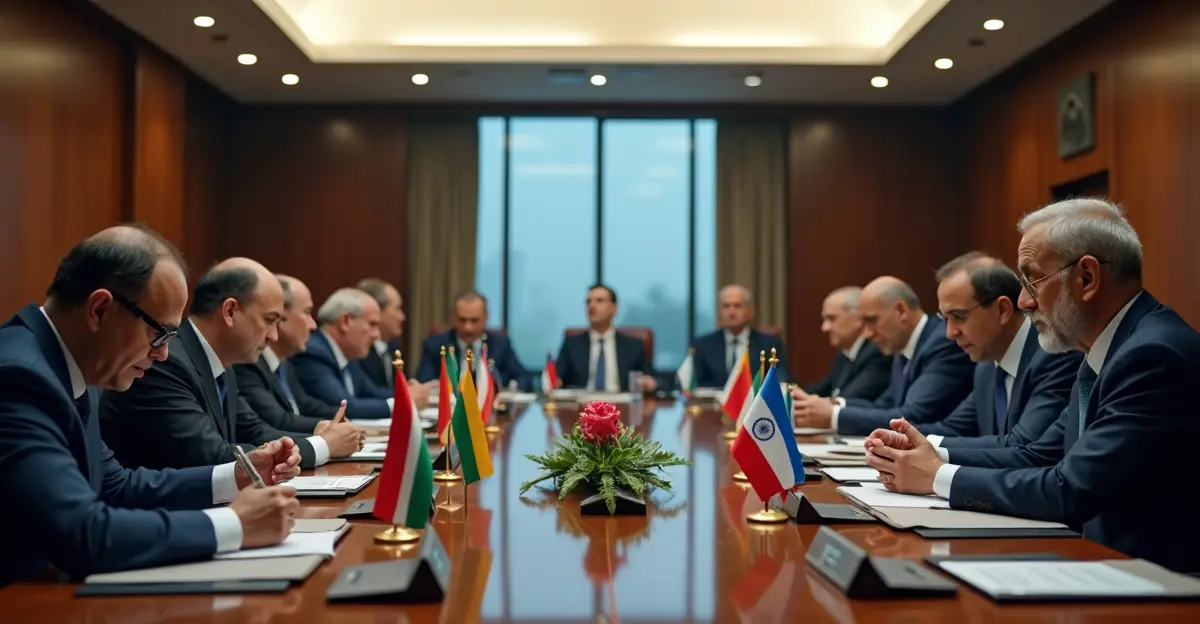
Under India's 2026 BRICS chairship, the bloc is launching mBridge — a unified cross-border payment architecture using central bank digital currencies (CBDCs) — as its most concrete step yet toward de-dollarization. Simultaneously, McKinsey's 2026 trade update confirms global commerce is fracturing along geopolitical lines, with aligned nations trading increasingly within blocs. This article analyzes how CBDC-based settlement systems could accelerate the fragmentation of the dollar-dominated financial order, and what it means for multinational supply chains, sanctions enforcement, and emerging market reserve management.
What Is mBridge and Why Does It Matter?
mBridge, also known as the Multiple CBDC Bridge, is a blockchain-based platform developed by the Hong Kong Monetary Authority, the Bank of Thailand, the Central Bank of the UAE, the People's Bank of China's Digital Currency Research Institute, and the BIS Innovation Hub. The Saudi Central Bank joined in June 2024. The platform enables real-time, peer-to-peer cross-border payments and foreign exchange transactions using CBDCs, bypassing the SWIFT network and reducing reliance on the US dollar.
By 2024, mBridge reached a Minimum Viable Product (MVP) stage, with commercial banks executing live transactions. Under India's 2026 BRICS chairship, the Reserve Bank of India has formally proposed linking the CBDCs of all BRICS nations — including India's e-Rupee, China's digital yuan, Brazil's Drex, and Russia's digital ruble — into a unified settlement framework. The initiative aims to reduce cross-border transaction times from 3-5 days to seconds and costs from 6-8% to near zero.
The BRICS de-dollarization strategy has gained momentum as the US dollar's share of global reserves fell to 56% in 2025 — a 30-year low — while BRICS central banks accumulated over 2,100 tonnes of gold since 2022.
McKinsey's Geometry of Global Trade: 2026 Update
McKinsey Global Institute's March 2026 report, "Geopolitics and the Geometry of Global Trade," provides a quantitative baseline for measuring the real impact of these developments. Key findings include:
- Global goods trade grew approximately 6.5% in 2025, but the composition shifted dramatically toward geopolitically aligned partners.
- The US-China trade corridor shrank by roughly 30%, with over $165 billion in trade redirected to alternative routes.
- US tariff rates on Chinese goods jumped from 2.4% in late 2024 to approximately 22% by April 2025, before settling at around 12% by early 2026.
- AI hardware accounted for about one-third of global trade growth, concentrated in Taiwan, South Korea, and ASEAN nations.
- China pivoted from consumer goods to industrial components, with intermediate goods exports up 9%.
The report warns that most organizations' static contracts and fragmented governance models are ill-equipped for this volatility, losing approximately 9% of contract value on average. The fragmentation of global trade is not a temporary disruption but a structural shift.
How CBDC Settlement Systems Accelerate De-Dollarization
Bypassing SWIFT and Reducing Dollar Dependency
mBridge's architecture allows participating central banks to maintain sovereign control over their digital currencies while a neutral bridge layer enables payment-versus-payment (PvP) FX settlement. This preserves each nation's monetary sovereignty without creating a single shared BRICS currency — a politically sensitive issue that has divided members.
Russia and Iran push aggressively for de-dollarization, while India and Brazil favor a multi-currency approach that reduces dollar dependency without eliminating the greenback entirely. The mBridge framework accommodates both perspectives by enabling direct settlements between any pair of CBDCs.
Sanctions Enforcement Under Pressure
The BIS decided to withdraw from mBridge in 2025, with CEO Agustín Carstens stating the platform was "not created to serve BRICS or violate sanctions." However, countries supporting the project — including China, Thailand, Saudi Arabia, Hong Kong, and the UAE — can continue independently using China's key technology. Russian President Vladimir Putin has explicitly viewed the platform as a model for a unified BRICS system to avoid financial sanctions.
Chinese regulators have already directed banks to use mBridge, and it has been used by firms operating in Xinjiang to avoid US sanctions. This raises critical questions about the future of financial sanctions effectiveness as alternative payment rails gain traction.
Impact on Multinational Supply Chains and Reserve Management
For multinational corporations, the implications are profound. McKinsey's report advises companies to treat geopolitical alignment as a supply chain criterion, treat AI components as strategic commodities, audit tier-2 and tier-3 supply chains for Chinese content, and reassess EU pricing strategies. The rise of CBDC-based settlement systems adds another layer of complexity: treasuries must now prepare for a world where payments can settle in multiple digital currencies outside the traditional correspondent banking system.
CFOs are advised to ensure treasury software supports ISO 20022 standards and multi-wallet solutions. The mBridge linkage promises up to 80% reduction in remittance costs and atomic T+0 settlement via smart contracts, but it also introduces new operational risks around compliance and capital controls.
For emerging market reserve managers, the trend is clear: the dollar's dominance is eroding. BRICS central banks have purchased over 1,000 tonnes of gold annually for three consecutive years. While the dollar still settles 88% of global forex transactions, experts point to an emerging multipolar reserve system where the dollar shares dominance with the euro, renminbi, and gold. The CBDC interoperability framework could accelerate this shift by providing a practical alternative to dollar-denominated settlement.
Expert Perspectives
"The mBridge initiative under India's chairship represents the most tangible de-dollarization development in years," says Dr. Ananya Sharma, a geopolitical economist at the Observer Research Foundation. "Unlike previous BRICS proposals that remained aspirational, mBridge is a live platform with real transactions. The question is no longer whether CBDC-based cross-border payments will happen, but how quickly they scale."
However, skeptics caution that internal BRICS divergences — including the India-China border dispute and differing attitudes toward the dollar — could slow progress. "India and Brazil are not interested in destroying the dollar system; they want a seat at the table," notes a former RBI official who spoke on condition of anonymity. "The mBridge framework reflects that pragmatism."
Frequently Asked Questions
What is mBridge?
mBridge is a blockchain-based platform for cross-border payments using central bank digital currencies (CBDCs). It enables real-time, peer-to-peer transactions between participating countries without relying on the SWIFT network or the US dollar.
How does mBridge relate to BRICS de-dollarization?
Under India's 2026 BRICS chairship, mBridge is being expanded to include all BRICS members' CBDCs — including India's e-Rupee, China's digital yuan, Brazil's Drex, and Russia's digital ruble — creating a parallel payment infrastructure that reduces dependency on the dollar.
What does McKinsey's 2026 trade update say about global trade fragmentation?
McKinsey's report finds that global goods trade grew 6.5% in 2025, but the US-China trade corridor shrank by 30%, with over $165 billion redirected. Trade is increasingly flowing between geopolitically aligned blocs, a trend that CBDC-based settlement systems could accelerate.
Can mBridge be used to evade sanctions?
The BIS withdrew from mBridge partly due to concerns about sanctions evasion. Chinese firms in Xinjiang have reportedly used the platform to avoid US sanctions. However, the platform's governance structure includes compliance with international standards against financial crimes.
What should businesses do to prepare for CBDC-based trade settlement?
CFOs should ensure treasury software supports ISO 20022 standards, evaluate multi-wallet solutions, audit supply chains for geopolitical exposure, and monitor BRICS developments for potential impacts on payment flows and currency risk.
Conclusion: A Multipolar Payment Future
The convergence of India's BRICS chairship, the mBridge CBDC rollout, and McKinsey's trade geometry data paints a clear picture: the dollar-dominated financial order is fracturing, and CBDC-based settlement systems are emerging as the infrastructure of a multipolar world. While the dollar will not disappear overnight, the future of global payments is increasingly fragmented along geopolitical lines. For businesses, policymakers, and investors, the message is clear: prepare for a world where trade settles in multiple digital currencies, and the geometry of commerce is defined by alignment, not efficiency.



Follow Discussion