


 Deutsch
 English
 Español
 Français
 Nederlands
 Português


 Share
Share




German Chancellor Denies Connection Between Public Dispute and US Military Drawdown
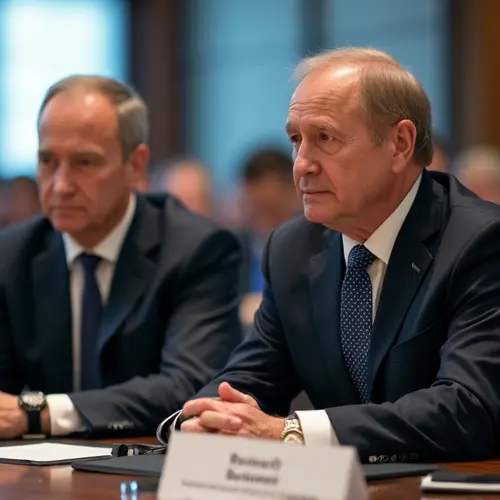
German Chancellor Friedrich Merz has firmly denied that the United States' decision to withdraw 5,000 troops from Germany is linked to his recent public criticism of President Donald Trump's Iran strategy. In an interview with German public broadcaster ARD, Merz stated there is 'no connection' between the heated exchange and the Pentagon's order to reduce America's military footprint in Europe.
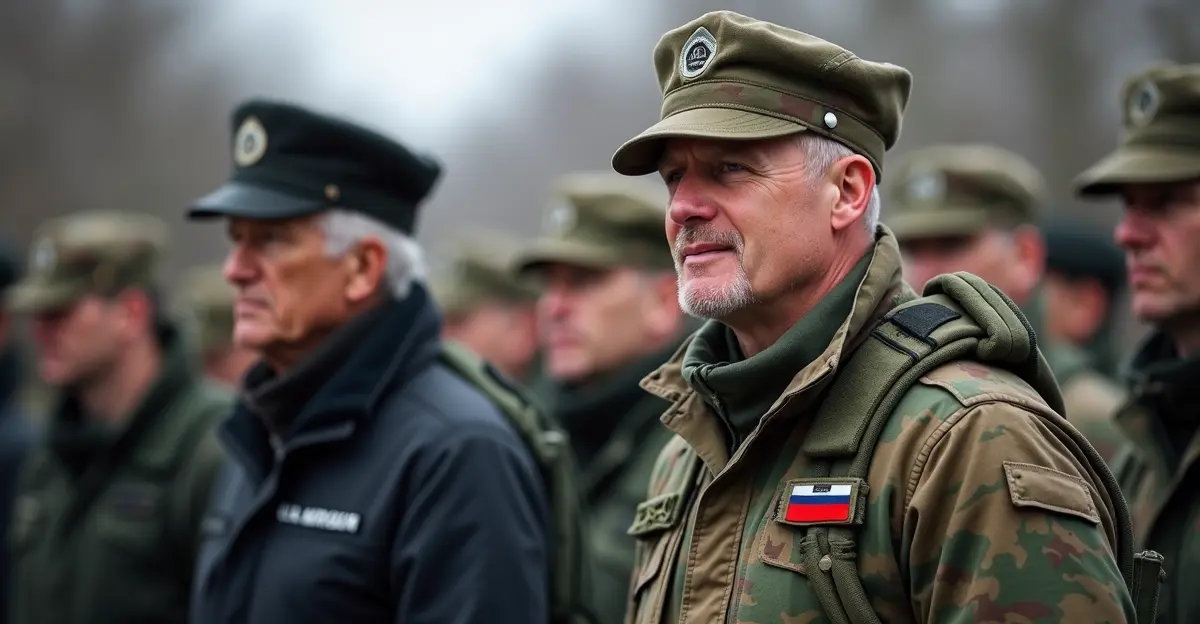
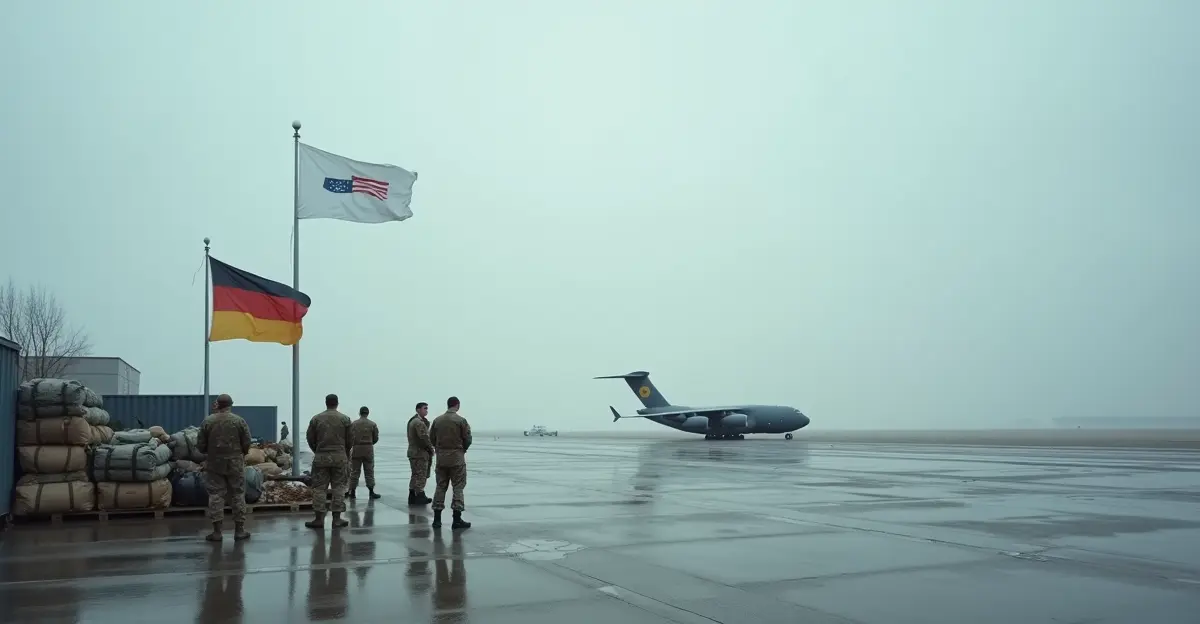
The troop withdrawal, ordered by US Defense Secretary Pete Hegseth on May 1, 2026, will reduce the US force in Germany from approximately 38,000 to roughly 33,000 over the next six to twelve months. The move has sent shockwaves through NATO and raised questions about the future of transatlantic security cooperation.
Background: The Iran Strategy Dispute
The tensions began when Merz, speaking at a high school in Marsberg, western Germany, accused the Trump administration of lacking a coherent strategy in Iran. 'The Americans clearly have no strategy. An entire nation is being humiliated by the Iranian leadership,' Merz told students. The remarks were a sharp departure from his earlier support for US efforts in the region, reflecting growing frustration as the conflict dragged on with no clear exit plan.
President Trump responded swiftly on his social media platform Truth Social, writing that Merz 'has no idea what he's talking about' and that it was 'no surprise' Germany was struggling economically and on 'other fronts.' The exchange marked a significant escalation in what had already been a strained relationship between the two leaders, who had previously clashed over tariffs and NATO defense spending.
Pentagon Confirms Drawdown
Days after the verbal sparring, the Pentagon announced the formal withdrawal order. Chief Pentagon spokesman Sean Parnell confirmed the decision followed a review of force posture in Europe, stating it was 'based on theater requirements.' However, a senior Pentagon official acknowledged to ABC News that Trump's frustration with European allies and German rhetoric played a role in the timing and messaging of the decision.
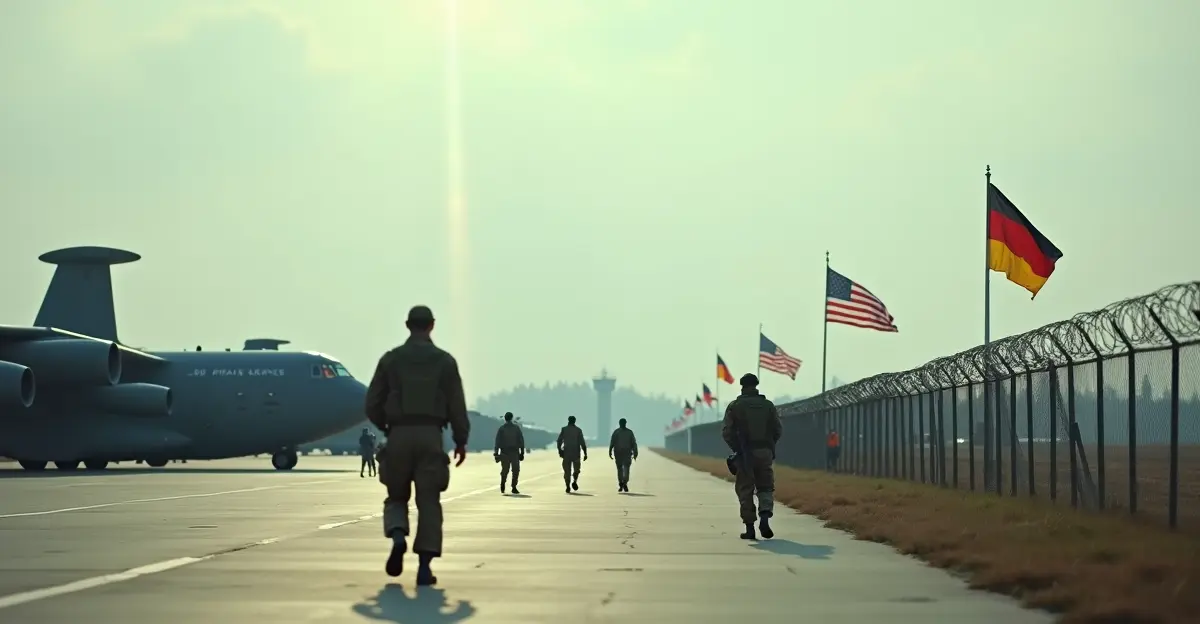
The withdrawal affects approximately 14% of US forces stationed in Germany, which has hosted the largest American military contingent in Europe since the Cold War. Key installations such as Ramstein Air Base—headquarters for US Air Forces in Europe—will see reduced personnel levels. The drawdown is reminiscent of a similar 2020 order by Trump that faced bipartisan resistance in Congress and was never fully implemented. However, officials indicate this order will be carried out.
Merz: 'No Connection' to Dispute
In the ARD interview, Merz sought to minimize the fallout. 'I must accept that the American president has a different view on these issues than we do,' he said. 'But that does not change the fact that I remain convinced the Americans are important partners for us.' He characterized the troop reduction as part of a longstanding pattern, noting Trump had frequently spoken about reducing US forces in Europe. 'It may be a bit exaggerated, but it is not new,' Merz added.
German Defense Minister Boris Pistorius echoed this sentiment, calling the reduction 'anticipated' and stressing that European nations must take greater responsibility for their own defense. 'The train has not departed for future cooperation,' Merz emphasized, calling the US 'our most important partners in the North Atlantic alliance.'
The US-Germany NATO alliance has been a cornerstone of European security for decades. Analysts warn that the withdrawal could embolden Russia and undermine deterrence on NATO's eastern flank. Republican and Democratic lawmakers alike criticized the decision, with Senate Armed Services Committee leaders calling it 'a gift to Vladimir Putin.'
Tomahawk Missile Deployment Halted
Compounding the military shift, Merz confirmed that the planned deployment of US Tomahawk cruise missiles to Germany—promised by former President Joe Biden as a deterrent against Russia—will not proceed. Merz explained that Trump had never officially agreed to Biden's commitment and that the US currently lacks sufficient missiles due to depleted arsenals from the wars in Iran and Ukraine. 'The Americans themselves do not have enough at the moment,' Merz said.
Germany had viewed the long-range missiles as a critical bridge until Europe could develop comparable weapons systems. Their absence leaves a significant gap in NATO's conventional deterrence capabilities, though Merz stressed that the US continues to guarantee nuclear deterrence within NATO territory. 'There is no doubt about that,' he asserted.
Impact on Transatlantic Relations
The troop withdrawal comes at a delicate time for European defense strategy and NATO cohesion. Merz's chancellorship, which began in May 2025, has been marked by efforts to balance strong transatlantic ties with growing European strategic autonomy. The Iran war has strained relations further, with Germany refusing NATO involvement in the conflict, insisting it 'is not NATO's war.' However, Berlin has indicated willingness to consider a limited role securing the Strait of Hormuz once hostilities cease.
Trump has also threatened increased tariffs on EU cars and trucks, adding economic pressure to the military tensions. The cumulative effect has raised concerns about a broader decoupling between the US and its European allies. Merz, however, remains publicly optimistic. 'We are working here, and at many levels, together with the Americans,' he said during a visit to the German army's armored training school in Munster.
The future of US military presence in Europe remains uncertain. While the current withdrawal affects 5,000 troops, Trump has suggested further cuts could follow if European allies do not increase defense spending. Germany has pledged to meet NATO's 2% GDP target, but the political will for deeper commitments faces domestic headwinds.
Expert Analysis
Dr. Claudia Major, a security expert at the German Institute for International and Security Affairs (SWP), described the situation as 'a watershed moment for NATO.' She told the Guardian: 'Even if Merz downplays the connection, the timing and context make clear that personal diplomacy and public spats now have direct consequences for military posture. The transatlantic relationship is entering uncharted territory.'
Similarly, former US Ambassador to Germany John Emerson noted: 'This withdrawal sends exactly the wrong signal at exactly the wrong time. Russia is watching, and so are our other adversaries. The United States is undermining its own credibility.'
FAQ
How many US troops are being withdrawn from Germany?
Approximately 5,000 US troops are being withdrawn from Germany, reducing the total from about 38,000 to roughly 33,000. The drawdown will take place over six to twelve months.
Why did Trump order the troop withdrawal?
President Trump ordered the withdrawal following public criticism from Chancellor Merz regarding the US strategy in Iran. While the Pentagon cites theater requirements, officials acknowledge Trump's frustration with German rhetoric played a role.
What did Merz say about Iran?
Merz said the US 'clearly has no strategy' in Iran and that 'an entire nation is being humiliated by the Iranian leadership.' He made the comments at a high school in Marsberg, Germany.
Will the Tomahawk missiles still come to Germany?
No. The planned deployment of US Tomahawk cruise missiles to Germany has been halted. Merz stated that Trump never agreed to Biden's promise and that the US lacks sufficient missiles due to depleted arsenals.
How has NATO reacted to the withdrawal?
NATO allies have expressed concern. US lawmakers from both parties criticized the decision, warning it undermines deterrence against Russia. German officials stress that Europeans must take more responsibility for their own security.
Sources
- ARD interview with Friedrich Merz, May 3, 2026
- Pentagon announcement via Defense Secretary Pete Hegseth, May 1, 2026
- ABC News: 'US to withdraw 5,000 troops from Germany'
- Politico: 'Hegseth orders withdrawal of 5,000 US troops from Germany'
- The Guardian: 'Merz not giving up on working with Trump despite Iran war spat'
- Newsweek: 'Merz: Trump Iran row not linked to US troop cuts'
- Al Jazeera: 'Germany's Merz downplays rift with Washington despite US troop drawdown'

Follow Discussion