


 Deutsch
 English
 Español
 Français
 Nederlands
 Português


 Share
Share




Heightened Maritime Tensions in the Strait of Hormuz
The strategic Strait of Hormuz has become a flashpoint in the ongoing Israel-Iran conflict, with naval agencies reporting significant disruptions to global shipping lanes. According to the US-led Combined Maritime Force's Joint Maritime Information Center (JMIC), electronic interference originating from Iran's Port of Bandar Abbas has intensified throughout the Gulf region, affecting vessels' ability to accurately transmit positional data via automated identification systems (AIS). 'The interference is creating serious operational and navigational challenges for maritime traffic,' a JMIC spokesperson told reporters.
Escalation Timeline and Ceasefire
The current crisis began on June 13, 2025, when Israel launched a major military operation targeting Iran's nuclear facilities, military sites, and regime infrastructure. This followed nearly two years of conflict between Israel and Iran-backed militant groups. The operation resulted in the deaths of several top Iranian military leaders, including Hossein Salami, head of the Islamic Revolutionary Guard Corps (IRGC), and Mohammed Bagheri, chief of staff of the Iranian armed forces.
On June 22, 2025, the United States conducted strikes against three key Iranian nuclear sites, including the deep underground Fordow uranium enrichment facility, using GBU-57 Massive Ordnance Penetrator weapons and B-2 Spirit bombers. President Trump stated the U.S. strikes were taken 'to advance U.S. national interests and in collective self-defense of Israel.'
A fragile ceasefire was announced on June 24, 2025, ending the 12-day war that resulted in over 600 deaths in Iran and 29 in Israel. However, both sides have reserved the right to self-defense, leaving the region in a tense standoff.
Impact on Global Shipping and Energy Markets
The Strait of Hormuz is one of the world's most critical maritime choke points, with approximately 20% of global liquefied natural gas and 25% of seaborne oil trade passing through annually. The recent disruptions have caused significant concern among shipping companies and energy traders.
'Any closure of the Strait of Hormuz could push oil prices to $80-$110 per barrel,' warned energy analyst Sarah Chen from Al Jazeera Economics. Following the ceasefire announcement, Brent Crude prices dropped over 5.6% to around $66 per barrel after hitting five-month highs during the conflict.
The UK Maritime Trade Operations agency has reported increased navigational interference in the area, while Greek authorities have urged their merchant fleet to log all voyages through the strait. Greek operators are among the world's biggest tanker providers, making their compliance particularly significant.
Recent Maritime Incidents
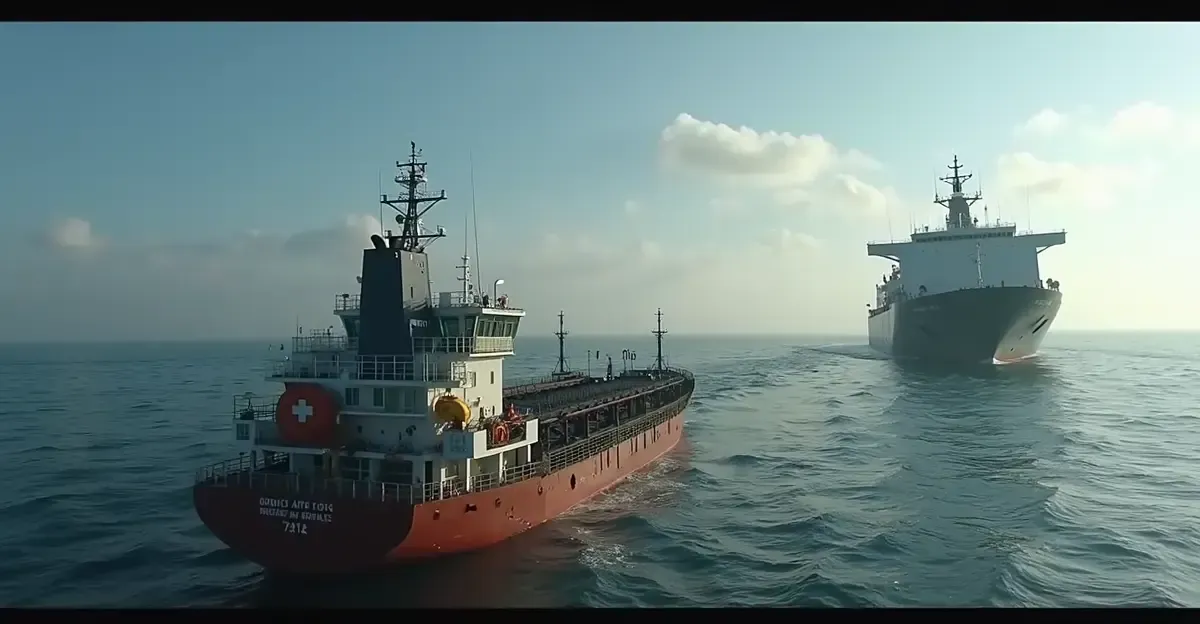
On June 17, 2025, two oil tankers—the Adalynn and Front Eagle—collided in the Strait of Hormuz. The Front Eagle was carrying 2 million barrels of Iraqi crude to China, while the Adalynn was empty and heading to Egypt's Suez Canal. Although British maritime security monitor Ambrey stated the incident was not security-related, it occurred amid heightened regional tensions.
A fire on the Front Eagle was extinguished, and 24 people were evacuated from the Adalynn. Maritime experts note increasing wariness among shipowners using the strait due to the electronic interference and ongoing conflicts.
Geopolitical Implications and Future Outlook
The conflict stems from decades of enmity since the 1979 Iranian Revolution, with Iran's nuclear program being a primary tension point. The 2015 Joint Comprehensive Plan of Action (JCPOA) nuclear deal had limited Iran's program, but the US withdrew in 2018, leading Iran to resume uranium enrichment.
According to a Congressional Research Service report, the U.S. strikes caused significant damage to Iranian nuclear facilities, with CIA Director John Ratcliffe indicating some facilities would require years to rebuild. Israeli attacks degraded Iranian military, government, and energy facilities while reportedly destroying a significant portion of Iran's ballistic missile launchers.
The regional maritime threat level remains elevated as both nations continue to posture militarily. While Iran has threatened to close the Strait of Hormuz in retaliation for Western pressure, it has not taken this drastic step, suggesting economic retaliation isn't their primary focus according to analysts.
Market volatility has decreased since the ceasefire, with major stock indexes gaining over 1% as investors responded positively to the de-escalation. However, experts warn that tensions could flare again, potentially reversing recent price declines and disrupting global trade patterns.


Follow Discussion