


 Deutsch
 English
 Español
 Français
 Nederlands
 Português


 Share
Share




International Coalition Strengthens Maritime Security at Critical Waterways
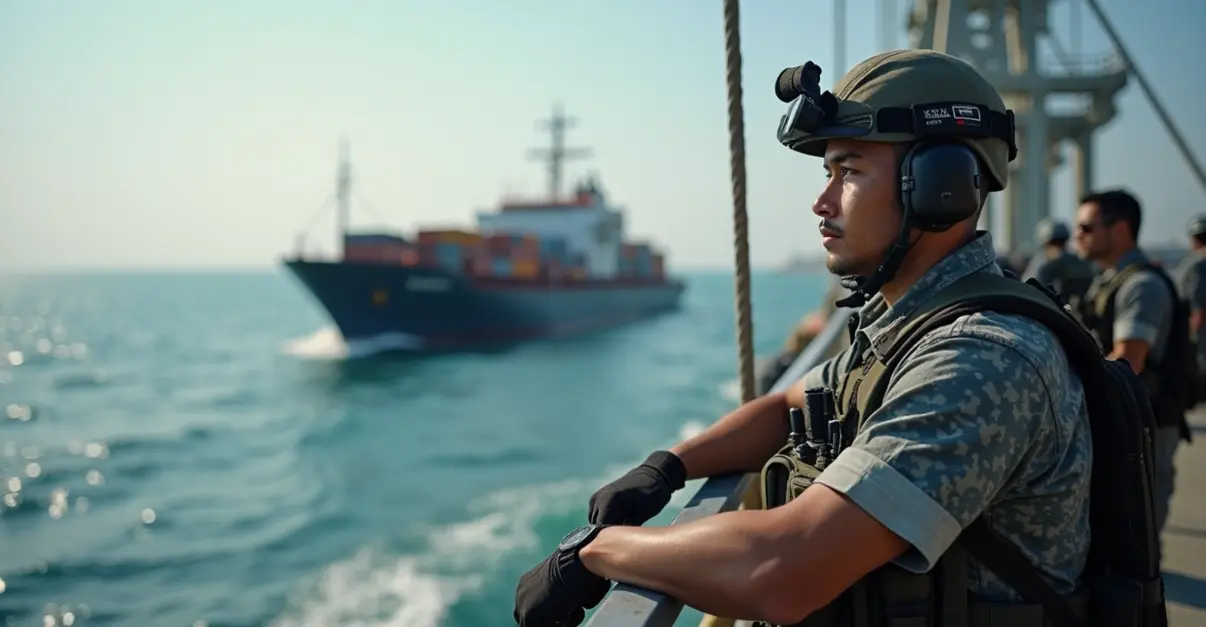
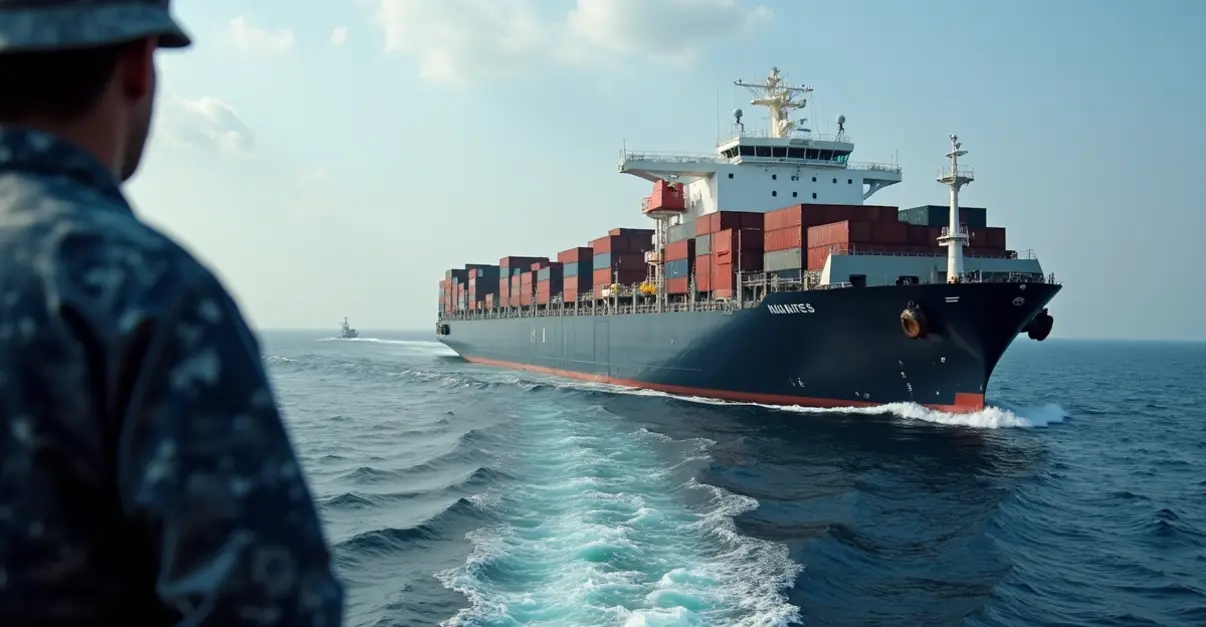
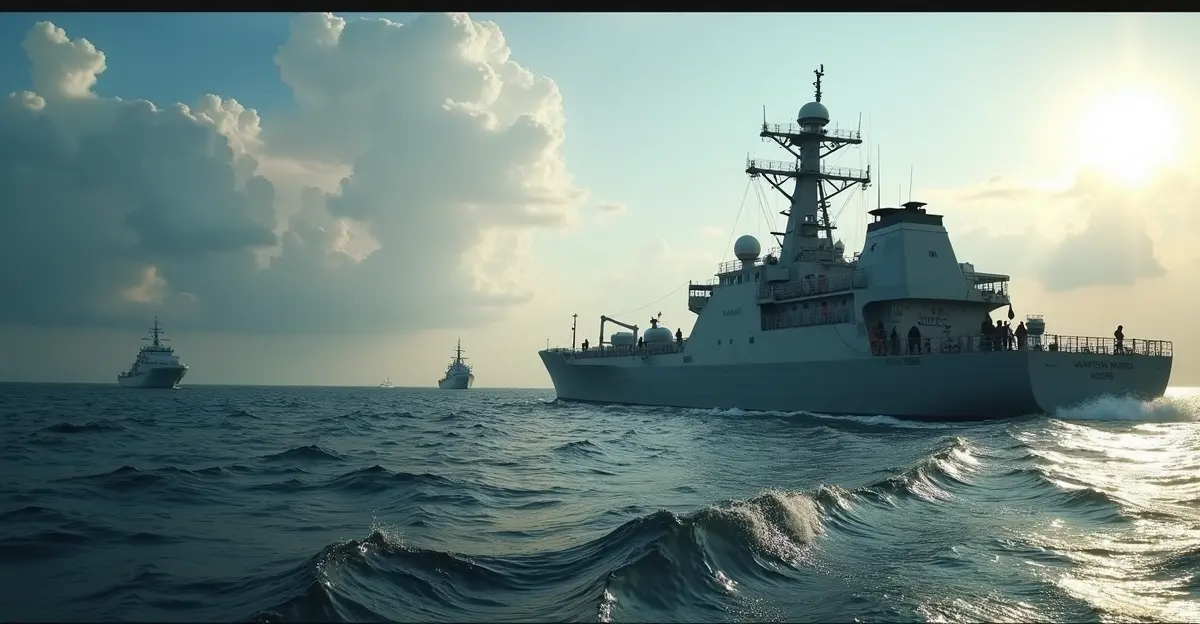
In a coordinated global effort to protect vital shipping lanes, multinational maritime security patrols have intensified operations at key strategic chokepoints worldwide. The initiative, which brings together naval forces from over 30 nations, focuses on intelligence sharing, joint operations, and enhanced merchant vessel guidance to counter growing threats to global trade routes.
Critical Chokepoints Under Protection
The operation concentrates on several of the world's most crucial maritime passages, including the Strait of Hormuz, through which approximately 20% of the world's oil passes daily, the Strait of Malacca handling about 25% of global trade, and the Bab el-Mandeb connecting the Red Sea to the Gulf of Aden. These narrow waterways represent critical vulnerabilities in global supply chains, with disruptions potentially causing economic shocks worldwide.
'The security of these chokepoints is not just a regional concern—it's a global economic imperative,' says Admiral James Thornton, commander of the Combined Maritime Forces. 'When one major passage faces disruption, the ripple effects are felt in markets from Tokyo to New York.'
Enhanced Intelligence Sharing Framework
A cornerstone of the initiative is the newly established Maritime Intelligence Fusion Center, which processes real-time data from satellite surveillance, drone reconnaissance, and merchant vessel reporting. According to the 2025 U.S. National Security Strategy, maritime domain awareness has moved to the core of national security interests, with predictive intelligence becoming essential for threat detection and attribution.
The system enables participating nations to share threat assessments, suspicious vessel tracking, and pattern analysis of illicit activities. 'We're seeing unprecedented levels of cooperation between military, coast guard, and commercial shipping entities,' notes maritime security analyst Dr. Sarah Chen. 'The real-time intelligence flow has prevented at least 15 potential incidents in the past quarter alone.'
Merchant Vessel Guidance and Best Practices
In parallel with military operations, major shipping associations including BIMCO, ICS, and INTERTANKO have launched a consolidated Best Management Practices (BMP) for Maritime Security. This interactive online resource provides actionable guidance for vessels transiting high-risk areas, replacing previous regional publications with a single comprehensive guide.
The 2025 BMP comes in response to unprecedented security challenges, including over 100 attacks in the Southern Red Sea and Black Sea regions last year, with 126 seafarers held hostage and 12 kidnapped. 'This isn't just about protecting cargo—it's about protecting people,' emphasizes Captain Maria Rodriguez of the International Chamber of Shipping. 'The new guidance gives crews practical tools to detect, avoid, and report threats while ensuring their welfare remains a priority.'
Operational Challenges and Coordination
Despite progress, significant coordination challenges persist. A recent GAO report (GAO-25-108525) highlights gaps in federal efforts to secure maritime borders against illicit activities. The report notes that while the Department of Homeland Security has agreed to 23 recommendations for improving coordination, only four have been implemented as of May 2025.
Training discrepancies between agencies, lack of effectiveness measurement targets, and insufficient assessment of future mission requirements continue to hamper optimal coordination. Criminal organizations are increasingly sophisticated in exploiting these gaps, using maritime routes to smuggle drugs, weapons, and people—with provisional data showing about 80,000 drug overdose deaths in the 12-month period ending December 2024.
Cybersecurity Threats to Maritime Infrastructure
Beyond physical security, the maritime sector faces growing cyber threats. According to a NATO Cooperative Cyber Defence Centre of Excellence policy brief, state-linked cyber operations increasingly target port operations, shipping logistics, and navigation systems. These digital attacks pose significant risks to critical maritime infrastructure that supports global trade.
'The convergence of physical and cyber threats creates complex vulnerabilities,' explains cybersecurity expert Professor Kenji Tanaka. 'An attack on port management systems during peak transit times could cause cascading disruptions across multiple chokepoints.'
Future Outlook and Strategic Importance
As geopolitical tensions continue to play out through shipping lanes and maritime infrastructure, the strategic importance of these patrols grows. The 2025 security landscape reflects what analysts describe as 'gray-zone' competition—activities below the threshold of conventional warfare but with significant disruptive potential.
The joint patrols represent a model of international cooperation that balances sovereign interests with collective security needs. With over 80% of global trade by volume moving by sea, the economic stakes couldn't be higher. As Admiral Thornton concludes: 'We're not just patrolling waterways—we're safeguarding the arteries of the global economy. Every safe passage represents jobs, goods, and stability for millions of people worldwide.'



Follow Discussion