Nederlands
 English
 Deutsch
 Français
 Español
 Português





Red Sea Insurance Crisis Disrupts Global Trade Flows
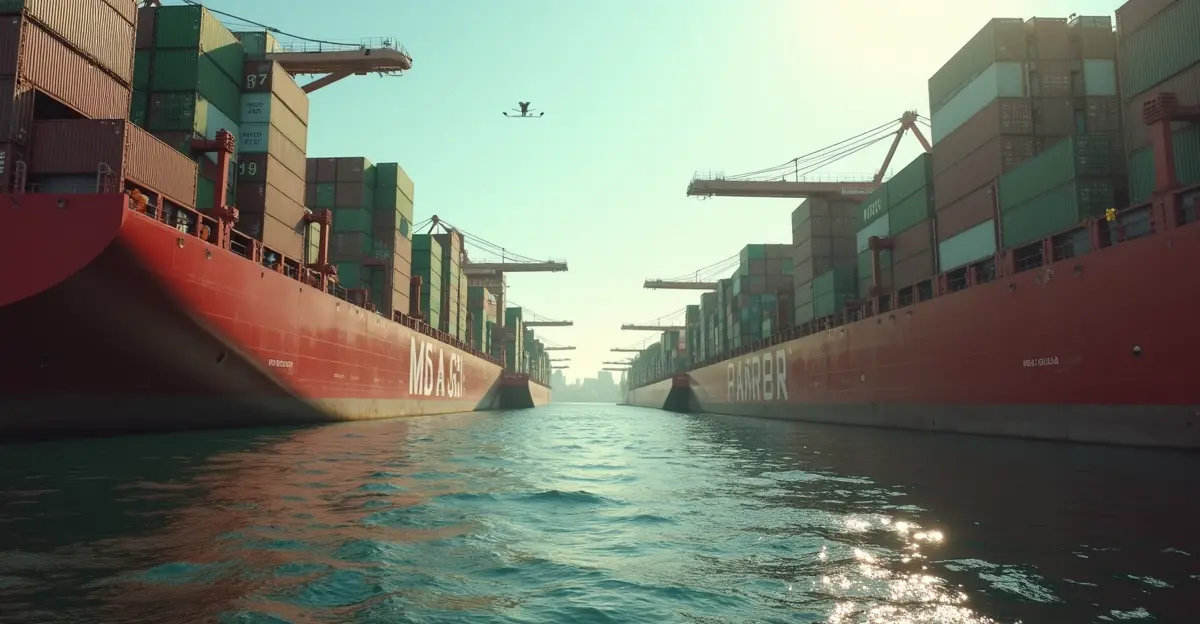
Shipping companies navigating the Red Sea are facing unprecedented cost pressures as insurance premiums have skyrocketed by up to 80% in recent months, creating a major disruption to global trade flows. The strategic waterway, which handles approximately 12% of global trade through the Suez Canal, has become a flashpoint for security concerns following renewed attacks by Houthi rebels based in Yemen.
Insurance Costs Spiral Out of Control
According to recent reports from The Logistic News, war-risk insurance premiums have surged dramatically, with some routes seeing increases of up to 80%. This comes after over 190 attacks on commercial vessels since November 2023, creating what industry experts are calling one of the most dangerous maritime corridors in the world.
'The increased insurance premium is now being passed on to customers,' confirmed a source at a global carrier, speaking to industry analysts. This cost transfer has resulted in shipping rates jumping 22% in just one week, as reported by Container Trade Statistics.
Rerouting Dilemma: Cape of Good Hope vs. Premium Costs
Shipping companies now face a difficult choice: pay the exorbitant insurance premiums to transit the Red Sea, or reroute vessels around Africa's Cape of Good Hope. The latter option adds 10-14 days to Asia-Europe journeys and significantly increases fuel costs, but avoids the dangerous Red Sea corridor entirely.
The economic impact is substantial. 'If costs continue rising unchecked, smaller operators may be forced out of the market,' warned one industry analyst. The Red Sea could become one of the world's most expensive maritime corridors by late summer if current trends continue.
Global Trade Implications
The Red Sea crisis has already caused a dramatic 57.5% reduction in Suez Canal traffic, according to Atlas Institute research. This disruption affects everything from automotive parts to electronics, with production halts reported in several industries. The longer shipping times and increased costs are contributing to inflationary pressures worldwide.
Major shipping firms are responding by negotiating collective insurance packages and forming informal convoys to share security resources. However, these measures only partially offset the rising costs and security risks.
Geopolitical Context and Security Measures
The Houthi attacks, which resumed with renewed intensity in 2025, have prompted international responses including the US-led Operation Prosperity Guardian and the EU's Operation Aspides naval coalitions. Despite these security measures, attacks persist, highlighting the vulnerability of key maritime chokepoints.
A Reuters report from July 2025 noted that insurance costs surged dramatically following deadly attacks by Houthi forces, forcing insurers to reassess risk profiles across the region.
Long-Term Industry Adaptation
The shipping industry is undergoing significant strategic shifts. Some companies are exploring alternative trade routes, including potential Arctic passages, though these come with their own environmental and logistical challenges. Others are investing in enhanced security technologies and vessel protection systems.
The crisis has exposed fundamental vulnerabilities in global supply chains and prompted calls for greater diversification of shipping routes. As one shipping executive noted, 'We can't afford to have 12% of global trade dependent on a single corridor that's this vulnerable to disruption.'
With peak export season approaching, industry observers are watching closely to see how the situation develops. The combination of higher insurance costs, longer transit times, and security concerns represents one of the most significant challenges to global trade in recent years, with implications that could reshape maritime logistics for years to come.