
 Deutsch
 English
 Español
 Français
 Nederlands
 Português






NATO Chief Navigates Transatlantic Rift as US Questions European Reliability
NATO Secretary General Mark Rutte faces one of his most delicate balancing acts yet as he seeks to maintain alliance unity amid escalating tensions between the United States and European Union. The former Dutch prime minister, who assumed NATO's top civilian role in October 2024, finds himself navigating a geopolitical minefield where the alliance's two most powerful blocs are increasingly at odds over fundamental security priorities.
A Divided Alliance
The rift became dramatically apparent with the release of the Trump administration's 2025 National Security Strategy, which openly questions whether European nations will remain "reliable allies" in the coming decades. The document criticizes European immigration policies, declining birthrates, and what it calls suppression of free speech, suggesting these factors could lead to "civilizational erasure" that undermines Europe's military and economic strength.
'If it continues like this, Europe will be unrecognizable in twenty years, raising questions about whether European countries will be economically and militarily strong enough to be reliable allies,' states the strategy document, echoing rhetoric previously associated with Russian President Vladimir Putin.
Rutte's Diplomatic Tightrope
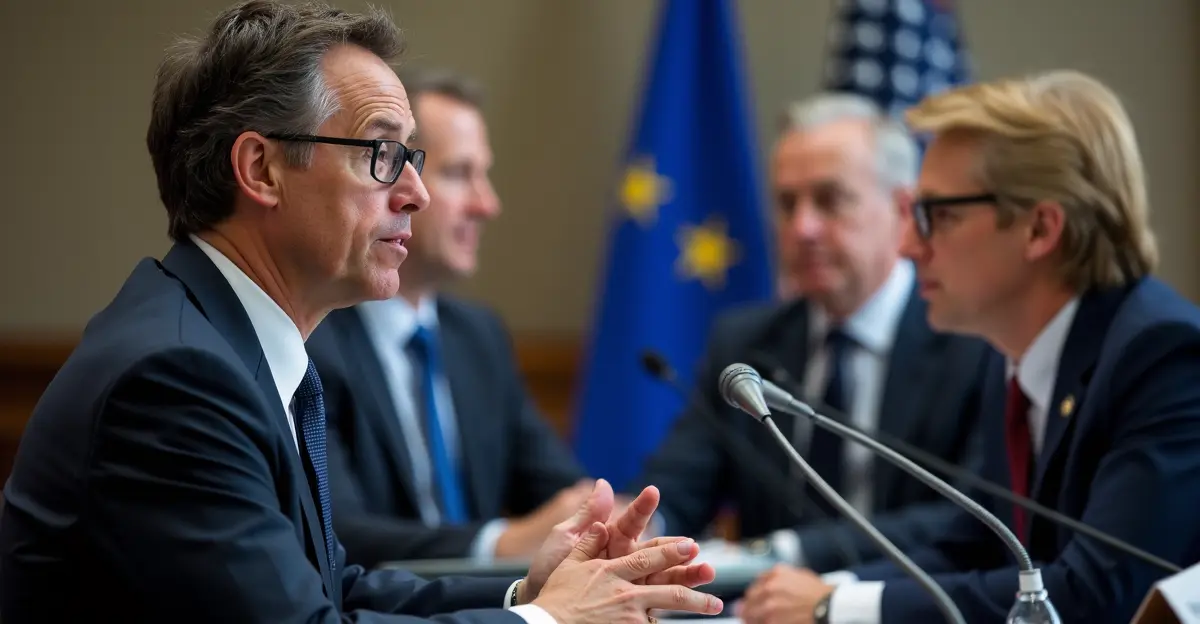
Rutte, speaking at a security conference in Berlin today, emphasized the critical importance of transatlantic unity while carefully avoiding direct criticism of either side. 'This is not the time to go it alone,' Rutte declared in what has become his signature message since taking office. 'Our strength lies in our collective defense and shared commitment to democratic values.'
The NATO chief's visit to Germany comes at a particularly sensitive moment. German Chancellor Friedrich Merz has called American interference in European affairs "unacceptable," while European Council President António Costa has questioned whether the US still behaves as a friend. 'Friends don't come with threats, they respect each other,' Costa remarked recently.
Strategic Realignment
The tensions reflect deeper strategic disagreements that have been brewing since Donald Trump's return to the White House. The US administration has pursued direct negotiations with Russian President Vladimir Putin without European participation, while Vice President J.D. Vance has suggested that Europe's greatest security threats come from within—through mass immigration and what he calls censorship of right-wing parties.
Despite these challenges, Rutte has achieved some notable successes. At the NATO summit in The Hague this summer, all 32 member states agreed to an unprecedented increase in defense spending, committing to reach 5% of GDP—a target that includes support for Ukraine. This came after Washington threatened to reduce its responsibility for European security.
The 'Trump Whisperer' Strategy
Diplomats familiar with Rutte's approach describe his method as "Trump whispering"—maintaining open channels with the American president while reassuring European allies. This delicate dance has involved damage control on several occasions, most notably when Ukrainian President Volodymyr Zelensky was publicly humiliated at the White House. Rutte managed to smooth tensions and facilitate a subsequent meeting between Zelensky and Trump with European leaders.
'As long as European security depends on the Americans, he has no choice,' says a source close to Rutte, explaining the Secretary General's approach. 'The criticism of too much flattery he takes in stride.'
Looking Ahead
The immediate challenge for Rutte is maintaining his credibility with both sides. European leaders want stronger defense of their interests, while the Trump administration expects continued deference to American leadership. Rutte's speech in Berlin today represents another attempt to bridge this growing divide.
As NATO's latest press conference revealed, the alliance continues to face multiple challenges simultaneously: Russia's ongoing war in Ukraine, hybrid threats including cyberattacks and sabotage, and now internal divisions between its most powerful members. How Rutte navigates these competing pressures will likely define his tenure and potentially reshape the future of transatlantic security cooperation.


Follow Discussion