


 Deutsch
 English
 Español
 Français
 Nederlands
 Português


 Share
Share




US Expands Third-Country Deportations to Africa
The Trump administration is rapidly expanding its controversial third-country deportation program to African nations, with five countries now accepting migrants the United States wants to remove. Rwanda, Ghana, Uganda, Eswatini, and South Sudan have all made agreements with Washington to receive deportees who often have no connection to these African nations.
'That there is so little known about these deals, and about the conditions these people end up in, is a major problem,' says Galina Cornelisse, professor of transnational law at Vrije Universiteit Amsterdam. 'Frequently, a plane has already departed before a judge has ruled on whether the deportation is legitimate.'
Financial Incentives Drive Agreements
The financial arrangements behind these deals are becoming increasingly clear. Rwanda is receiving $7.5 million from the US for accepting up to 250 deportees, while Eswatini gets $5.1 million for taking migrants. Human Rights Watch has documented these financial incentives in their recent reports.
'And so a win-win situation is created,' states Laetitia Bader, Horn of Africa director at Human Rights Watch. 'Economic and political advantages for African countries, in exchange for taking in the migrants that the US so desperately wants to get rid of. And migrants are the victims of this.'
Human Rights Concerns Mount
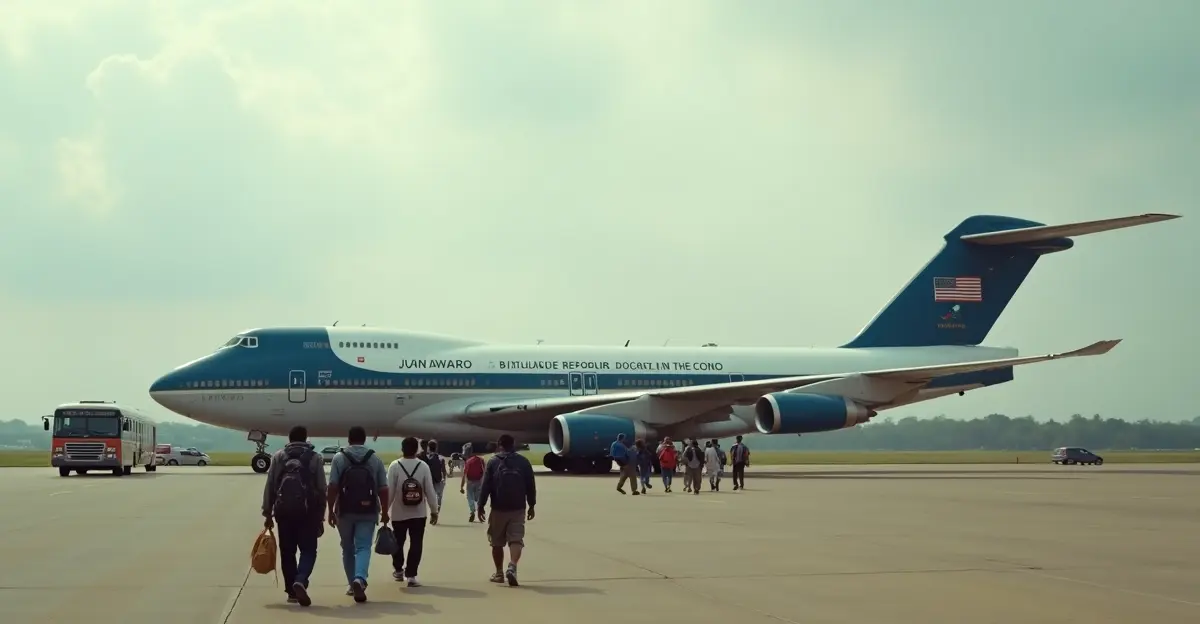
The conditions facing deportees upon arrival raise serious human rights concerns. Lawyers representing migrants sent to Ghana told journalists their clients were 'strapped in straitjackets for sixteen hours' during their flight. After arrival, they were detained in 'terrible conditions.' Similar reports have emerged from South Sudan and Eswatini, where migrants were immediately imprisoned upon landing.
Bader points to the poor conditions in these detention centers: 'They are overcrowded and the hygiene is poor.' According to her, migrants often cannot contact family or lawyers.
Legal Challenges and International Law
The program faces significant legal challenges regarding due process and international law protections. UN human rights experts have expressed serious alarm over the resumption of US deportations to third countries, warning that this practice raises significant human rights concerns.
Cornelisse notes the erosion of international legal systems: 'Other countries see how in the US court rulings are not awaited or ignored, and think: let's try this too.' However, she emphasizes differences between American and European legal systems: 'In Europe, judges can more easily block something, like the United Kingdom's plan to send migrants to Rwanda to await their asylum procedure there.'
Growing List of Partner Countries
The steady growth of African countries willing to accept deported migrants from the US worries experts. 'It's still small numbers now, but there's a real chance this will become much larger,' thinks Cornelisse. 'The more governments agree to these kinds of deals, the more normal it becomes. While it really isn't.'
Not all African nations have been willing to participate. Nigeria has explicitly refused to make agreements with Washington. 'We urgently request African heads of state not to bend,' says Bader.
The expansion of these deportation agreements represents a significant shift in US immigration policy and raises fundamental questions about human rights protections in international migration management.

Follow Discussion