


 Deutsch
 English
 Español
 Français
 Nederlands
 Português


 Share
Share




Coastal Relocation Planning Program Receives Critical Funding
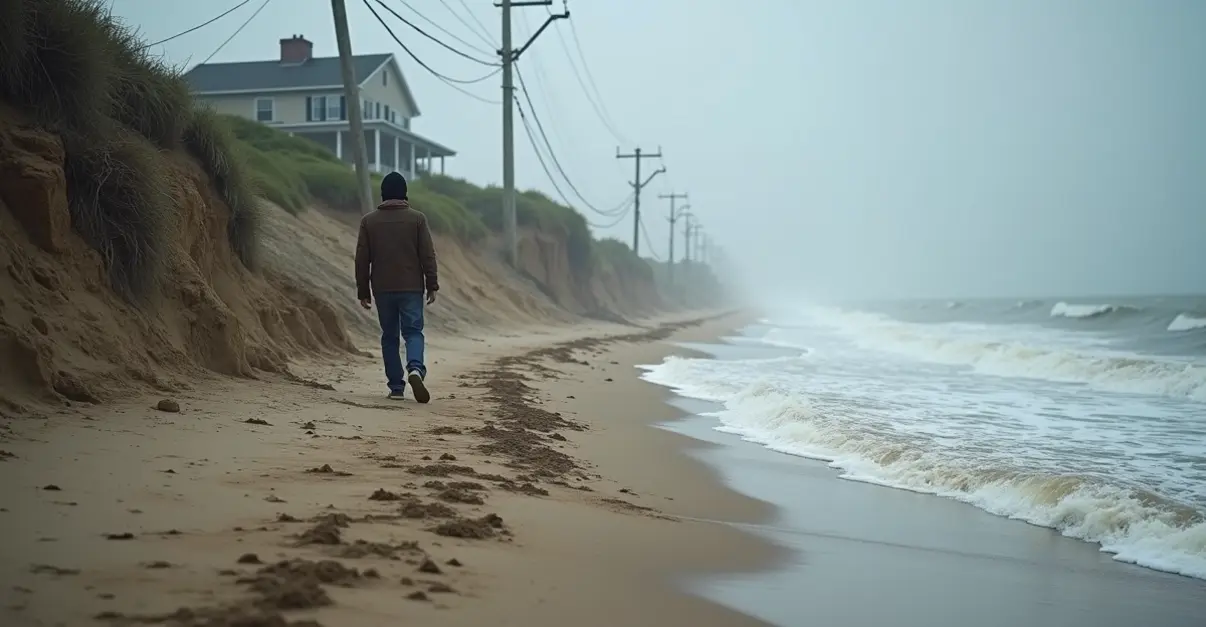
In a significant move to address the growing threat of climate-induced coastal displacement, the Coastal Relocation Planning Program has secured substantial new funding for 2025-2026. This development comes as communities worldwide face existential threats from sea-level rise and intensifying storms, forcing governments to move from theoretical discussions to urgent policy implementation.
Stakeholder Engagement Takes Center Stage
The program's success hinges on comprehensive stakeholder engagement, recognizing that relocation affects not just physical infrastructure but community identity and social fabric. 'We're seeing a paradigm shift from reactive displacement to proactive, justice-centered planned transitions,' explains climate adaptation expert Dr. Maria Chen. 'Successful relocation requires community self-determination and transparent processes that address historical injustices like redlining and discriminatory housing policies.'
According to recent analysis from equitable relocation strategies research, by 2050, an estimated 340-630 million people in coastal areas could face displacement due to sea level rise. The program emphasizes starting planning before disasters strike and addressing equity concerns for low-income and minority communities who have historically been placed in vulnerable areas.
Legal Frameworks Evolve for Managed Retreat
The legal landscape for coastal relocation is rapidly evolving, with complex considerations spanning property rights, eminent domain, regulatory frameworks, and intergovernmental coordination. The Georgetown Climate Center's Managed Retreat Toolkit highlights that these challenges span multiple legal domains including property, environmental, land use, constitutional, and administrative law.
'Current legislative frameworks are inadequate for proactive climate adaptation,' notes legal scholar Professor James Wilson. 'There's significant uncertainty around decision-making responsibilities and compensation mechanisms. We need clarity on government roles and funding pathways for residential property retreat.'
Recent developments in New Zealand show initial direction for climate adaptation policy but highlight significant gaps remain. The upcoming National Policy Statement on Natural Hazards expected by mid-2025 will provide more uniform direction but won't enable pre-emptive managed retreat without additional legislation.
Innovative Compensation Models Emerge
The program introduces innovative compensation models that move beyond traditional property buyouts. One promising approach detailed in recent policy research is 'buyouts with rentbacks' - where governments purchase at-risk coastal properties but allow residents to remain as renters for specified periods.
'This hybrid approach balances the need for managed retreat with the social and economic realities of displacement,' says urban planner Alexander Silva, the program's lead architect. 'It provides a gradual transition pathway that reduces financial burdens on homeowners while enabling long-term coastal resilience planning. The rentback component offers flexibility and reduces community disruption compared to traditional buyout programs.'
However, research from Frontiers in Climate reveals significant challenges with current buyout programs, including inequitable access, structural racism, and inadequate support for displaced residents. Based on workshops across 14 states, the research calls for more holistic approaches to climate-related mobility.
Funding Landscape and Implementation Challenges
The funding comes at a critical time. Federal programs like the National Coastal Resilience Fund, supported by the Bipartisan Infrastructure Law and Inflation Reduction Act, have invested $139 million across 94 projects in 2024 with similar allocations expected for 2025. State-level initiatives are also prominent, with North Carolina awarding $6 million in coastal resilience grants and Florida allocating $311 million for infrastructure in vulnerable communities.
According to 2025 coastal relocation analysis, these funds represent a crucial step toward climate adaptation, though implementation faces significant hurdles requiring flexible, community-centered approaches.
'The human dimension presents our greatest challenge,' Silva emphasizes. 'Relocation affects community identity and requires sensitive engagement. We're integrating nature-based solutions with relocation planning and ensuring that equity concerns for low-income and minority communities are addressed from the outset.'
Research from Communications Earth & Environment shows that while planned relocation can be effective, its success depends on geographic context and future climate scenarios. The study analyzed 17 global relocation cases and found that most communities achieved exposure reduction, but effectiveness varies significantly.
As sea levels are projected to rise over a meter by 2100, this funding represents more than just financial support - it's a commitment to developing sustainable, equitable approaches to one of the most pressing challenges of our time. The program's success will depend on balancing technical solutions with human-centered design, legal innovation with practical implementation, and immediate needs with long-term resilience planning.





Follow Discussion