


 Deutsch
 English
 Español
 Français
 Nederlands
 Português


 Share
Share




Groundbreaking Study Exposes Microplastic Levels in Drinking Water
A comprehensive new study on microplastics in tap water has revealed alarming levels of contamination across water systems, raising urgent questions about public health and environmental policy. The research, released this week, represents one of the most detailed analyses to date of how these tiny plastic particles are infiltrating our drinking water supplies.
What the Study Found
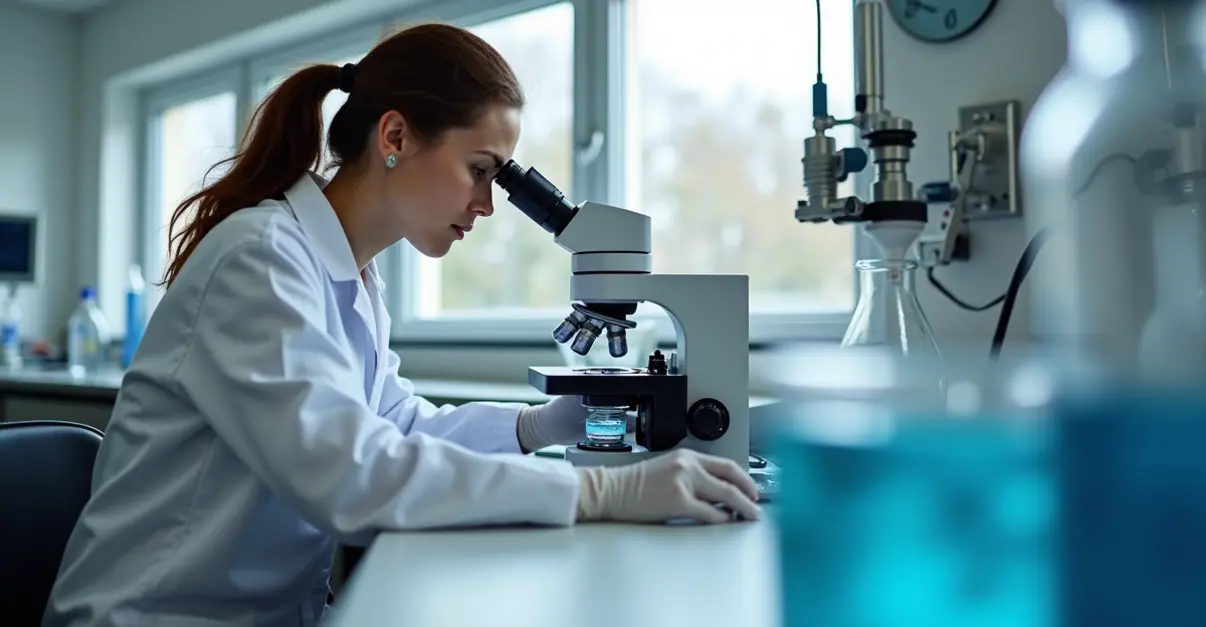
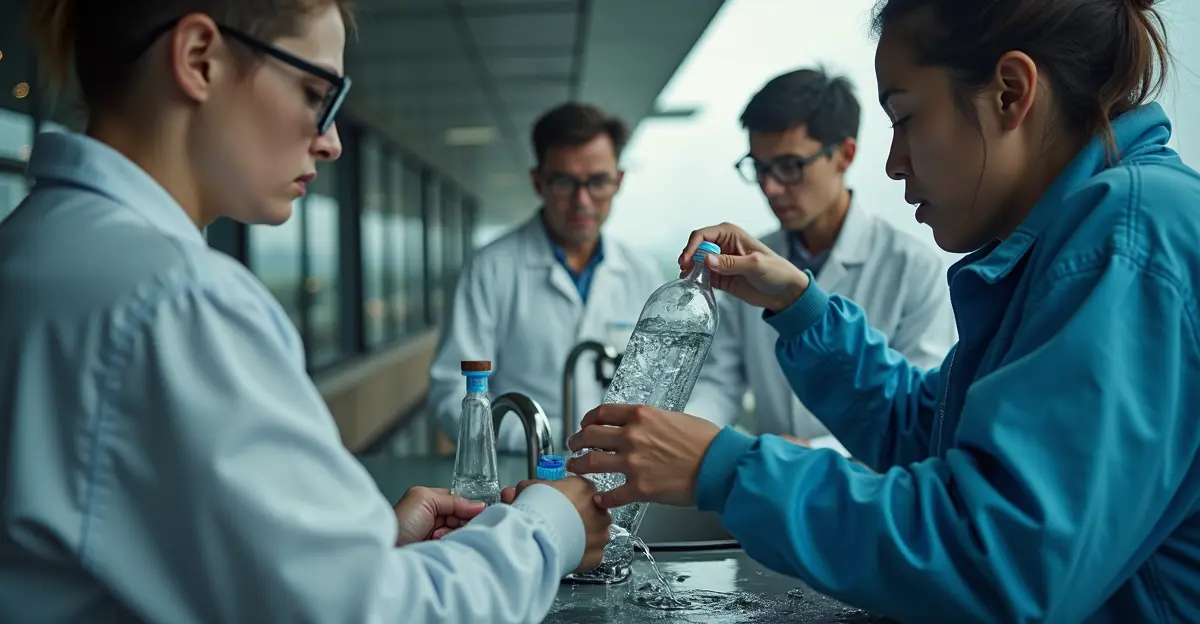
The investigation shows that microplastics—plastic particles smaller than 5 millimeters—are present in drinking water at concerning concentrations. According to the findings, people ingest approximately 176.55 microplastic items daily through drinking water alone. 'We're seeing these particles persist throughout the entire water supply chain—from source to treatment to distribution,' said Dr. Sarah Chen, an environmental scientist involved in the research. 'Even conventional treatment processes only remove 82.1-88.6% of particles, meaning significant amounts are reaching consumers.'
The study identified that microplastics enter water systems through multiple pathways: wastewater treatment plant discharges, plastic pipe degradation, atmospheric deposition, and surface runoff. Plastic pipes themselves release microplastics as they age, while additives from these pipes can leach endocrine-disrupting chemicals into water.
Health Implications and Scientific Concerns
While the long-term health effects of microplastic ingestion are still being studied, researchers have identified several potential risks. 'Microplastics can act as carriers for other contaminants like Bisphenols, PFAS, and antibiotics,' explained Dr. Michael Rodriguez, a public health expert. 'They can cross biological barriers and potentially lead to oxidative stress, inflammation, metabolic dysfunction, and genotoxicity.'
The research highlights particular concern about smaller particles. 'Nanoplastics—particles smaller than 1 micrometer—are especially troubling because they can penetrate cells more easily,' noted Dr. Chen. 'Current detection methods struggle with these smallest particles, so we might be underestimating the problem.'
Policy and Regulatory Landscape
The study's release comes amid growing regulatory activity. In 2025, two key federal bills were introduced: the Microplastics Safety Act (H.R. 4486) directing HHS/FDA to study human health impacts, and the Plastic Health Research Act (H.R. 4903) proposing $10 million annually from 2026-2030 for plastic exposure research.
California has been particularly proactive, implementing Senate Bill 1422 requirements for microplastics monitoring in drinking water. The State Water Resources Control Board has adopted standardized testing methodologies and established a four-year testing program with public disclosure requirements. 'California's approach could serve as a model for other states,' said environmental policy analyst James Wilson. 'But we need federal coordination to avoid a patchwork of regulations.'
Market and Community Impacts
The findings have significant implications for water utilities, filtration companies, and consumers. Water treatment facilities face pressure to upgrade technologies, while companies producing water filtration systems are seeing increased demand. 'Consumers are becoming more aware and seeking solutions,' said industry consultant Lisa Martinez. 'This is driving innovation in filtration technology and creating new market opportunities.'
Communities are responding with various initiatives. Some municipalities are accelerating pipe replacement programs, while others are implementing public education campaigns about reducing plastic pollution at the source.
The Path Forward
Researchers emphasize several key recommendations: standardized testing methods across jurisdictions, improved detection capabilities for nanoplastics, investment in advanced water treatment technologies, and comprehensive public education. 'We need unified approaches to define and measure microplastics,' stressed Dr. Rodriguez. 'Without standardization, we can't accurately assess risks or track progress.'
The study also calls for more research on the health impacts of long-term exposure and the effectiveness of different filtration methods. With plastic production continuing to increase globally, addressing microplastic contamination in drinking water represents one of the most pressing environmental challenges of our time.
As communities grapple with these findings, the conversation is shifting from whether microplastics are in our water to how we can effectively remove them and prevent further contamination. The study serves as both a warning and a call to action for policymakers, industry leaders, and citizens alike.


Follow Discussion