


 Deutsch
 English
 Español
 Français
 Nederlands
 Português


 Share
Share




Global Ocean Conservation Effort Moves from Planning to Action
The landmark Ocean Health Pact, a comprehensive international agreement aimed at protecting marine ecosystems worldwide, has officially transitioned from the negotiation phase to full implementation. This critical shift marks what conservation experts are calling 'the most significant moment for ocean protection in a generation' as nations begin translating ambitious commitments into concrete action on the water.
Funding Mechanisms Take Center Stage
Central to the implementation phase is the establishment of sustainable funding mechanisms for marine protected areas (MPAs). According to recent reports, the global ocean finance gap remains substantial, with current funding of approximately $1.2 billion annually falling far short of the estimated $15.8 billion needed for effective marine conservation. 'We're seeing innovative financial models emerging,' says marine policy expert Dr. Elena Rodriguez. 'From blue bonds to conservation trust funds and tourism fees, the funding landscape is evolving rapidly to support long-term protection.'
The European Commission's adoption of the European Ocean Pact in 2025 represents a major regional implementation effort, with strategic measures for marine biodiversity protection, sustainable fisheries management, and pollution reduction. Meanwhile, initiatives like the Blue Action Fund and Hifadhi Blu Programme are providing targeted grants for marine conservation projects in developing regions, with the latter offering up to $200,000 over two years for eight sites in the Western Indian Ocean.
Monitoring and Enforcement Infrastructure
Effective implementation requires robust monitoring systems to track conservation progress and ensure compliance. The 2025 ocean protection progress report shows marine protected area coverage increased from 8.2% to 9.9% - the largest single-year jump in nearly a decade. However, only 3.1% of the ocean is effectively protected, highlighting the gap between designation and meaningful enforcement.
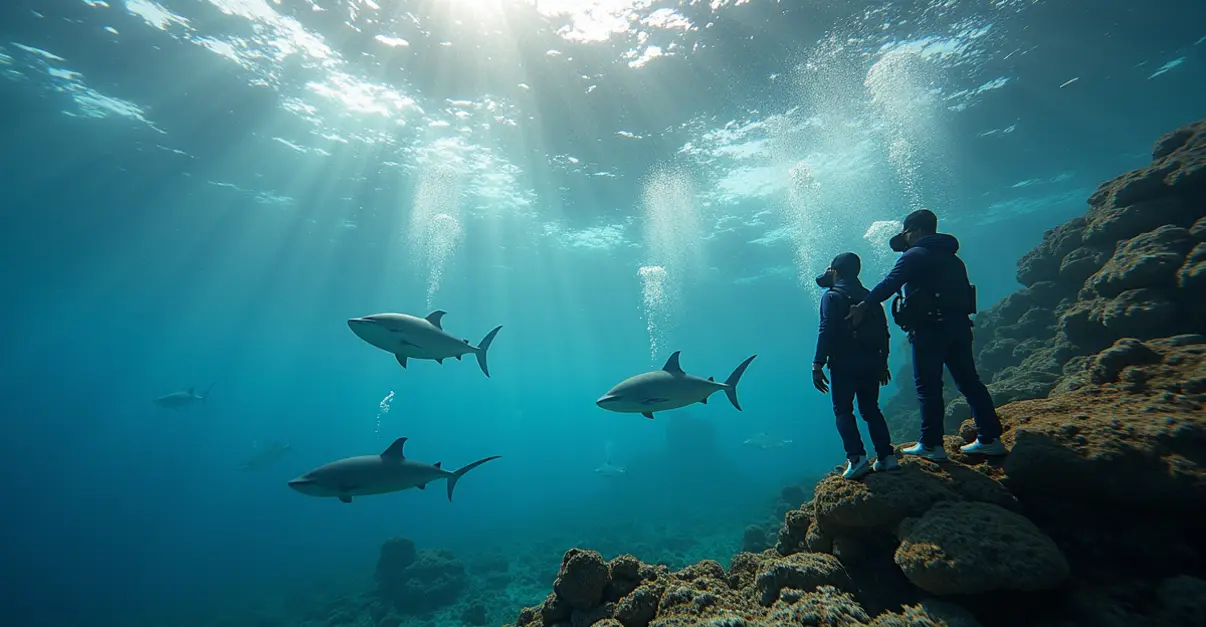
'Technology is revolutionizing how we monitor marine protected areas,' explains conservation technologist Mark Chen. 'From satellite surveillance to underwater drones and acoustic monitoring, we now have tools that can detect illegal fishing activities in real-time and track ecosystem recovery with unprecedented precision.'
National Action Plans Taking Shape
Countries are now developing detailed national action plans as part of their Ocean Health Pact commitments. These plans integrate ocean-based solutions into Nationally Determined Contributions (NDCs) under climate agreements, recognizing that oceans absorb about 25% of CO2 emissions and 90% of excess heat from global warming.
The High Seas Treaty, which reached 78 ratifications and will enter into force in January 2026, provides a crucial framework for protecting 61% of the global ocean that lies beyond national jurisdictions. This treaty implementation represents a major milestone in the Ocean Health Pact's broader goals.
Challenges and Opportunities Ahead
Despite progress, significant challenges remain. Destructive practices like bottom trawling continue in many areas, and the transition to sustainable ocean management requires substantial capacity building, particularly in developing nations. 'The next five years are critical,' emphasizes UN ocean envoy Maria Santos. 'We have the framework, the funding mechanisms are emerging, and the political will is stronger than ever. Now we must deliver measurable results for ocean health.'
Key lessons from 2025 emphasize the importance of multilateral collaboration, meaningful protection backed by sustainable finance, leadership from Small Island Developing States, and technology's role in conservation. With the 2030 deadline for protecting 30% of the world's ocean approaching, 2026 represents a pivotal year for turning Ocean Health Pact commitments into tangible marine conservation outcomes.
Sources: European Commission Ocean Pact, UNFCCC Ocean Action Dialogue, 2025 Ocean Protection Progress Report, Blue Action Fund, Hifadhi Blu Programme


Follow Discussion