Nederlands
 English
 Deutsch
 Français
 Español
 Português






Direct Air Capture Offtake Agreement Signed: A Watershed Moment for Carbon Removal
In a significant development for the carbon removal industry, a major offtake agreement has been signed that includes detailed commitments on pricing, energy inputs, and project timelines. This deal represents a crucial step toward commercializing Direct Air Capture (DAC) technology and establishing a robust market for high-quality carbon dioxide removal credits.
The Deal Structure and Key Terms
The agreement, signed between a leading financial institution and a prominent DAC developer, involves the purchase of 50,000 metric tons of carbon removal credits over a 10-year period. What makes this deal particularly noteworthy is its comprehensive structure, which includes specific pricing mechanisms tied to energy costs and clear project milestones.
'This isn't just about buying carbon credits—it's about building a market infrastructure that can scale,' said Charlotte Garcia, an innovation analyst following the sector. 'The inclusion of energy input pricing and timeline commitments shows how sophisticated these agreements are becoming.'
The deal is structured similarly to power purchase agreements (PPAs) in the renewable energy sector, with phased payments tied to project development stages and actual carbon removal delivery. This approach helps mitigate risk for both parties while ensuring the project receives necessary funding throughout its development cycle.
Energy Inputs and Pricing Dynamics
One of the most innovative aspects of the agreement is how it addresses energy inputs—a critical factor in DAC economics. DAC technology requires significant energy to capture CO2 from ambient air, with current processes consuming between 1,500-2,500 kWh per ton of CO2 captured, depending on the specific technology used.
The agreement includes provisions for renewable energy sourcing and pricing mechanisms that account for energy cost fluctuations. This is particularly important given that energy costs can represent 40-60% of total DAC operating expenses. By locking in energy pricing arrangements, the deal provides greater cost certainty for both the developer and the offtaker.
'Energy is the single biggest cost driver in DAC operations,' explained a project developer familiar with the agreement. 'Having clear energy input pricing in our offtake agreements gives us the confidence to invest in scaling our technology.'
Project Timeline and Scaling Ambitions
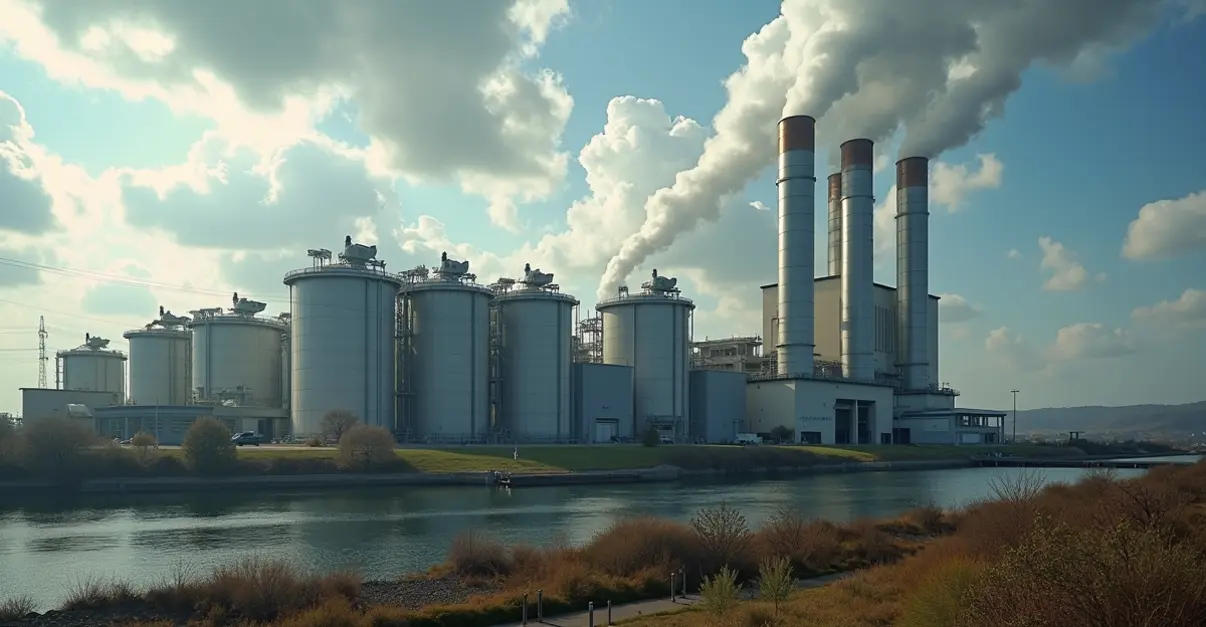
The project timeline outlined in the agreement shows ambitious scaling plans, with initial operations beginning in 2025 and full capacity expected by 2027. The DAC facility, which will be among the world's largest when completed, is designed to capture 500,000 tonnes of CO2 annually at full scale.
This timeline aligns with broader industry projections showing exponential growth in DAC capacity. According to recent data, global DAC capacity is expected to increase by 873% in 2025 alone, driven largely by major projects coming online. The current global DAC capacity stands at just over 10,000 tonnes annually, but over 130 new facilities are in development worldwide.
Market Context and Industry Implications
This agreement comes at a pivotal moment for the carbon removal market. While DAC technology has been in development since 1999, it's only recently begun transitioning from pilot projects to commercial-scale deployment. The current high cost of DAC—averaging around $646 per tonne—remains a significant barrier, but industry experts believe costs will decline dramatically as technology scales.
'We're seeing the carbon removal market mature before our eyes,' noted Garcia. 'Offtake agreements like this one provide the financial certainty that developers need to invest in scaling their operations, which in turn drives down costs through economies of scale.'
The deal also reflects growing corporate interest in high-quality carbon removal solutions. Major companies are increasingly recognizing that temporary carbon offsets are insufficient for achieving net-zero goals, and are instead turning to permanent removal solutions like DAC with geological storage (DACCS).
Technological Innovation and Future Outlook
DAC technology works by using chemical or physical processes to extract carbon dioxide directly from ambient air. The two main approaches are solid sorbent DAC (S-DAC), which uses low-temperature processes, and liquid solvent DAC (L-DAC), which can operate at various temperatures. Both methods involve capturing CO2, separating it from the capture media using energy (typically heat), and then compressing it for storage or utilization.
The sector is seeing rapid innovation, with companies developing more energy-efficient processes and exploring integration with industrial operations. Some developers are pursuing modular designs that can be deployed more flexibly, while others are focusing on co-product generation to improve economics.
Looking ahead, industry observers expect to see more sophisticated offtake agreements that include not just carbon removal credits, but also potential revenue streams from CO2 utilization. As regulatory frameworks like the EU Carbon Removal Certification Framework take shape, the market for high-integrity carbon removal is likely to expand significantly.
'This agreement represents a new chapter in climate action,' concluded Garcia. 'It shows that carbon removal is moving from theoretical discussions to practical, commercially viable solutions that can make a real difference in addressing climate change.'