Nederlands
 English
 Deutsch
 Français
 Español
 Português






Catalytic Climate Finance Facility Launches Fourth Call for Applications
The Catalytic Climate Finance Facility (CC Facility), a partnership between Climate Policy Initiative and Convergence, has officially opened its fourth call for applications, offering up to USD 500,000 in grant funding per project for scalable blended climate finance solutions in developing economies. The application deadline is April 24, 2025, marking a significant opportunity for organizations working on climate adaptation and mitigation in some of the world's most vulnerable regions.
Focus on Sustainable Agriculture and Climate Solutions
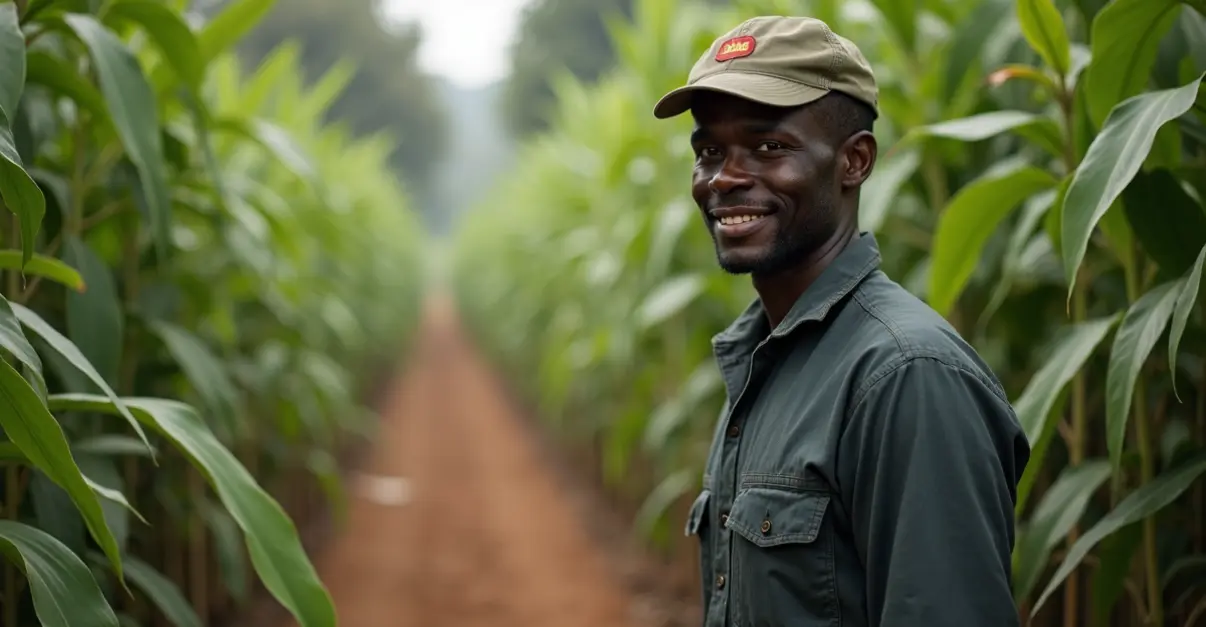
This funding cycle specifically targets sustainable agriculture solutions in sub-Saharan Africa and South Asia, along with other climate adaptation and mitigation initiatives across the Asia-Pacific region. The strategic focus reflects growing recognition that agriculture is both a major contributor to climate change and one of the sectors most vulnerable to its impacts. 'We're seeing tremendous innovation in climate-resilient agriculture, but many promising solutions struggle to attract private capital,' explains Dr. Sarah Chen, Director of Climate Finance at Climate Policy Initiative. 'The CC Facility aims to bridge that gap by providing catalytic funding that helps projects become investment-ready.'
Established in 2023, the CC Facility has already awarded over USD 4 million to 11 global solutions supporting climate-resilient agriculture, marine conservation, biodiversity, adaptation, and renewable energy through various financial instruments including debt, project finance platforms, and venture capital. The facility's ultimate goal is to reach USD 100 million in size, creating a substantial pool of catalytic capital for climate action.
Addressing the Climate Finance Gap
The launch comes at a critical moment for global climate finance. According to the Global Landscape of Climate Finance 2025 report, global climate finance reached a record high of USD 1.9 trillion in 2023, with preliminary data indicating it exceeded USD 2 trillion for the first time in 2024. However, a significant milestone was achieved as private climate finance contributions surpassed USD 1 trillion in 2023, outpacing public investment for the first time.
Despite these positive trends, emerging economies continue to face challenges with access to affordable capital. 'The numbers look impressive until you examine where the money is flowing,' notes climate finance analyst Michael Rodriguez. 'Developed economies still receive the lion's share of climate investment, while developing countries struggle to access the financing they need for both mitigation and adaptation.' International climate finance to emerging markets reached USD 196 billion in 2023, with 78% coming from public sources, highlighting the continued need for mechanisms like the CC Facility that can mobilize private capital.
How the Facility Works
The CC Facility provides both grant funding and tailored technical assistance to help projects overcome market barriers and mobilize private capital. Eligible applicants include advisory firms, foundations, NGOs, fund managers, and private enterprises with structures that have completed proof of concept or pilot phases and are ready to scale. Selected projects receive 12-18 months of customized support and access to a Learning Hub with curated knowledge products, webinars, and toolkits.
'What makes this facility unique is its focus on blended finance structures,' says Convergence CEO Maria Gonzalez. 'We're not just giving grants; we're helping build financial vehicles that can attract multiples of that amount in private investment. It's about creating sustainable funding mechanisms, not just one-time projects.'
Broader Implications for Policy and Markets
The facility's launch has significant implications for climate policy and financial markets. As countries prepare for COP29 and the establishment of a new collective quantified goal (NCQG) to replace the current USD 100 billion annual target, mechanisms like the CC Facility demonstrate how blended finance can help bridge the funding gap. UNCTAD estimates that developing countries need about USD 1.1 trillion from 2025 and USD 1.8 trillion by 2030 for mitigation, adaptation, and loss and damage.
From a market perspective, the facility represents growing sophistication in climate finance instruments. 'We're moving beyond simple grants and loans to more complex financial structures that can leverage public money to attract private investment,' explains investment banker James Wilson. 'This is crucial for scaling climate solutions to the level needed to meet Paris Agreement targets.'
For local communities in developing regions, the facility offers hope for more resilient agricultural systems and climate adaptation projects. Previous grantees have included initiatives supporting smallholder farmers with climate-smart practices, coastal communities with mangrove restoration, and renewable energy projects in remote areas.
Looking Ahead
With applications open until April 24, 2025, the CC Facility represents a timely opportunity for organizations working at the intersection of climate action and financial innovation. As climate impacts intensify and funding needs grow, such catalytic facilities will play an increasingly important role in mobilizing the trillions of dollars needed for a just transition to a low-carbon, climate-resilient future.
The success of this and similar initiatives will be closely watched by policymakers, investors, and communities alike, as they test new models for financing the climate transition in some of the world's most vulnerable regions.