


 Deutsch
 English
 Español
 Français
 Nederlands
 Português


 Share
Share




Fusion Research Milestone Announced in Scandinavia: A Comprehensive Analysis
In a landmark development for clean energy research, Scandinavia has announced a major fusion research milestone in 2026 that promises to reshape the global energy landscape. The breakthrough, centered around the NOVATRON 1 system inaugurated at Stockholm's Royal Institute of Technology (KTH) in June 2025, represents the European Union's first private, fully integrated fusion plasma system and marks a significant Nordic advancement toward commercial fusion energy. This achievement comes at a critical juncture in global energy transition efforts, with fusion positioned as a potential game-changer for achieving net-zero emissions targets while providing reliable baseload power.
What is Fusion Energy and Why Does This Matter?
Nuclear fusion is the process that powers stars like our sun, where atomic nuclei combine under extreme heat and pressure to release enormous amounts of energy. Unlike nuclear fission, which splits atoms and produces radioactive waste, fusion offers a cleaner, safer alternative with virtually limitless fuel from hydrogen isotopes. The Scandinavian milestone represents a crucial step toward harnessing this process for practical energy generation, potentially offering a solution to the world's growing energy demands while addressing climate change concerns. The ITER international fusion project has laid important groundwork, but private initiatives like Novatron Fusion Group's breakthrough demonstrate accelerating progress toward commercialization.
The Scandinavian Fusion Breakthrough: Technical Details
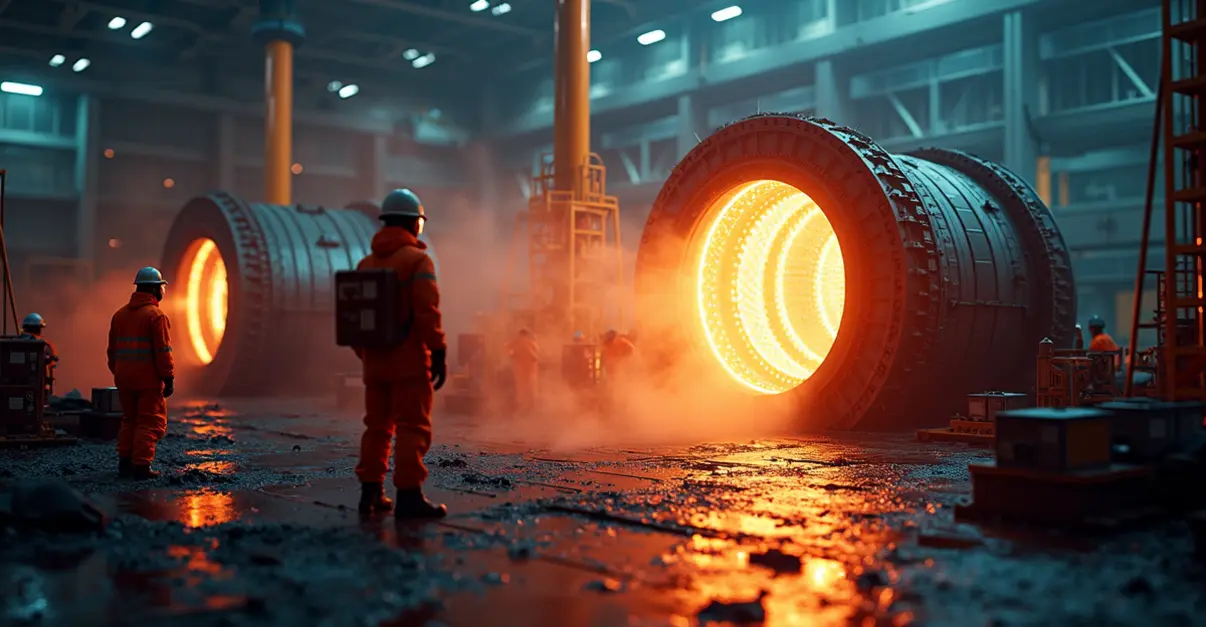
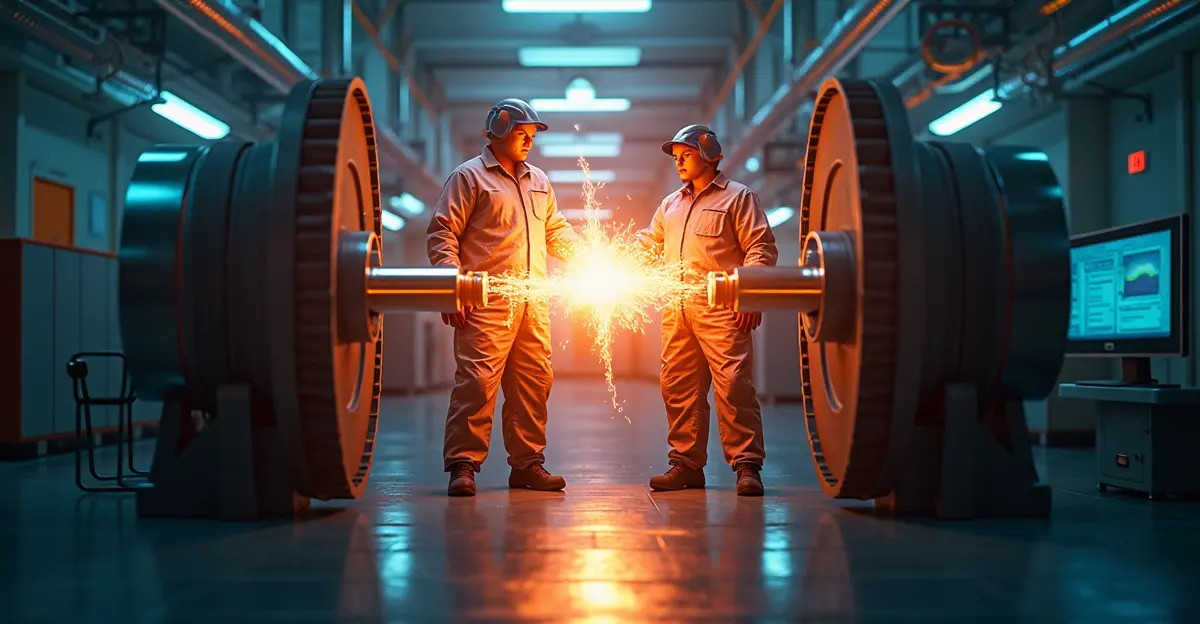
The NOVATRON 1 system, developed by Stockholm-based Novatron Fusion Group (NFG), employs a revolutionary magnetic mirror confinement approach that differs fundamentally from traditional tokamak designs. Unlike the doughnut-shaped tokamaks used in projects like ITER, Novatron's system features a unique concave magnetic field configuration that promises more stable plasma confinement at temperatures exceeding 100 million degrees Celsius. This technical innovation addresses one of fusion's most persistent challenges: maintaining stable plasma conditions long enough for sustained energy production.
Key Technical Achievements
- Stable Plasma Confinement: The system has demonstrated a '1000-fold efficiency boost' in plasma stability according to published research
- Temperature Milestones: Achieving and maintaining plasma temperatures above 100 million degrees Celsius
- Integration Success: First fully integrated private fusion plasma system in the EU
- Scalability Potential: Design principles that theoretically enable lower costs and faster deployment
The inauguration event in June 2025 attracted broad political support, including nearly all members of the Swedish Parliament's Energy Committee, signaling strong governmental backing for fusion research. This contrasts with the more cautious approach seen in some other European nations and reflects Scandinavia's proactive stance on clean energy innovation.
Market Implications and Investment Landscape
The Scandinavian fusion milestone arrives amid unprecedented investment in fusion technology globally. According to industry reports, cumulative fusion funding surpassed $15 billion by early 2026, with private investment reaching record levels. Novatron Fusion Group itself has secured over €18 million in funding, including a €10 million Series A1 round led by Nordic energy company St1 in March 2025. This financial backing reflects growing confidence in fusion's commercial potential, particularly in Scandinavia's well-developed renewable energy ecosystem.
Key Market Developments for 2026
- Investment Diversification: Beyond traditional government research programs, funding now comes from deep-tech venture capital, energy giants, and sovereign wealth funds
- Supply Chain Growth: Fusion supply chain spending reached $543 million by early 2026, focusing on high-temperature superconducting magnets and precision components
- Workforce Expansion: Over 5,000 direct employees in private fusion companies, with 10,000+ in secondary supply chains
- Corporate Partnerships: Tech giants like Google and Microsoft signing pre-purchase agreements for fusion energy
The Scandinavian breakthrough positions the region as a potential hub for fusion technology development, complementing existing strengths in renewable energy infrastructure and advanced manufacturing. A recent study by VTT Technical Research Centre of Finland identified the Helsinki metropolitan area, Stockholm-Nyköping corridor, and Copenhagen-Malmö corridor as particularly promising locations for future fusion facilities, thanks to existing industrial zones, strong transport links, and proximity to research hubs.
Policy and Regulatory Implications
The Scandinavian fusion milestone has significant implications for energy policy across Europe and globally. Finland is actively updating its Nuclear Energy Act to facilitate fusion projects, with changes expected in 2027 that could create a more favorable regulatory environment. Sweden follows closely in regulatory preparedness, having established nuclear legislation that already includes fusion reactors. This proactive approach contrasts with regulatory uncertainty in other regions and could give Scandinavian countries a competitive advantage in attracting fusion investment and talent.
Key Policy Considerations
| Country | Regulatory Status | Key Developments |
|---|---|---|
| Finland | Most Advanced | Nuclear Energy Act reforms expected 2027 |
| Sweden | Well-Prepared | Existing legislation includes fusion reactors |
| Denmark | Moderate Uncertainty | Older nuclear regulations may need updating |
| Norway | Moderate Uncertainty | Similar regulatory challenges as Denmark |
The European Union's broader energy strategy increasingly recognizes fusion as a potential long-term solution for clean baseload power. The Scandinavian breakthrough comes as the EU seeks to reduce dependence on fossil fuel imports while maintaining energy security—a challenge that has gained urgency following recent European energy crises.
Community and Environmental Impact
Beyond technical and economic considerations, the Scandinavian fusion milestone has important implications for local communities and environmental goals. Fusion energy offers several potential advantages over conventional energy sources:
- Minimal Radioactive Waste: Unlike fission reactors, fusion produces no long-lived radioactive waste
- Enhanced Safety: No risk of meltdown or runaway chain reactions
- Abundant Fuel: Hydrogen isotopes can be extracted from seawater, providing virtually limitless fuel
- Baseload Capability: Can provide continuous power regardless of weather conditions
For Scandinavian communities, fusion development could create high-tech jobs, stimulate local economies, and position the region as a global leader in clean energy technology. The educational initiatives hosted by Novatron Fusion Group and similar organizations aim to inspire the next generation of engineers and scientists, building on Scandinavia's strong tradition of technical education and innovation.
Expert Perspectives and Future Outlook
Industry experts view the Scandinavian fusion milestone as part of a broader trend toward commercialization. "2026 represents an inflection point where fusion moves from laboratory experiments to grid-connected demonstration systems," notes one industry analyst. "The Scandinavian breakthrough demonstrates that multiple technological approaches are making progress, which increases the likelihood that at least one will succeed commercially."
Looking ahead, several key developments are anticipated:
- Commercial Timelines: Physics demonstrations with Q > 1 (net energy gain) expected in mid-2020s to early 2030s
- Grid Connection: First pilot plants potentially connecting to grids in early-to-mid 2030s
- Global Impact: Meaningful generation contributions possible by the 2040s if commercialization proceeds smoothly
- Complementary Role: Fusion likely to complement rather than replace renewables in the near term
The Scandinavian achievement also highlights the importance of international collaboration in fusion research. Novatron Fusion Group participates in key international forums including the Nordic Fusion Forum in Helsinki and collaborates with major organizations like ITER and UK Atomic Energy Authority on advanced diagnostic systems. This global network approach accelerates progress by sharing knowledge and resources across borders.
Frequently Asked Questions (FAQ)
What exactly is the Scandinavian fusion milestone?
The milestone refers to the NOVATRON 1 system inaugurated in Stockholm in June 2025—the EU's first private, fully integrated fusion plasma system, representing a major Nordic breakthrough in commercial fusion energy development.
How does Novatron's technology differ from traditional fusion approaches?
Novatron uses a magnetic mirror confinement system with a unique concave magnetic field, unlike traditional tokamak designs. This approach promises more stable plasma confinement and potentially lower costs and faster scalability.
When could fusion energy become commercially available?
Industry experts suggest physics demonstrations with net energy gain in the mid-2020s to early 2030s, first grid-connected pilot plants in early-to-mid 2030s, and meaningful global generation contributions by the 2040s.
What are the main challenges remaining for fusion energy?
Key challenges include engineering complexity, materials durability against neutron damage, tritium breeding for fuel sustainability, plasma stability maintenance, and reducing costs to competitive levels.
How does this Scandinavian breakthrough compare to other global fusion efforts?
The Scandinavian achievement complements other major initiatives like ITER (international), Lawrence Livermore's inertial confinement, and private ventures in the US and Asia, demonstrating that multiple technological pathways are advancing simultaneously.
Conclusion: A Transformative Moment for Clean Energy
The Scandinavian fusion research milestone announced in 2026 represents more than just a technical achievement—it signals a fundamental shift in the global energy landscape. By demonstrating that private initiatives can make meaningful progress alongside large-scale international projects, the breakthrough accelerates the timeline for commercial fusion energy. For Scandinavia, this positions the region as a potential leader in the next generation of clean energy technology, building on existing strengths in renewable energy and advanced manufacturing. As regulatory frameworks evolve and investment continues to flow, fusion energy moves closer to becoming a practical reality that could help address some of humanity's most pressing energy and environmental challenges. The journey from laboratory to grid will require continued innovation, collaboration, and investment, but the Scandinavian milestone shows that the path forward is becoming increasingly clear.


Follow Discussion